
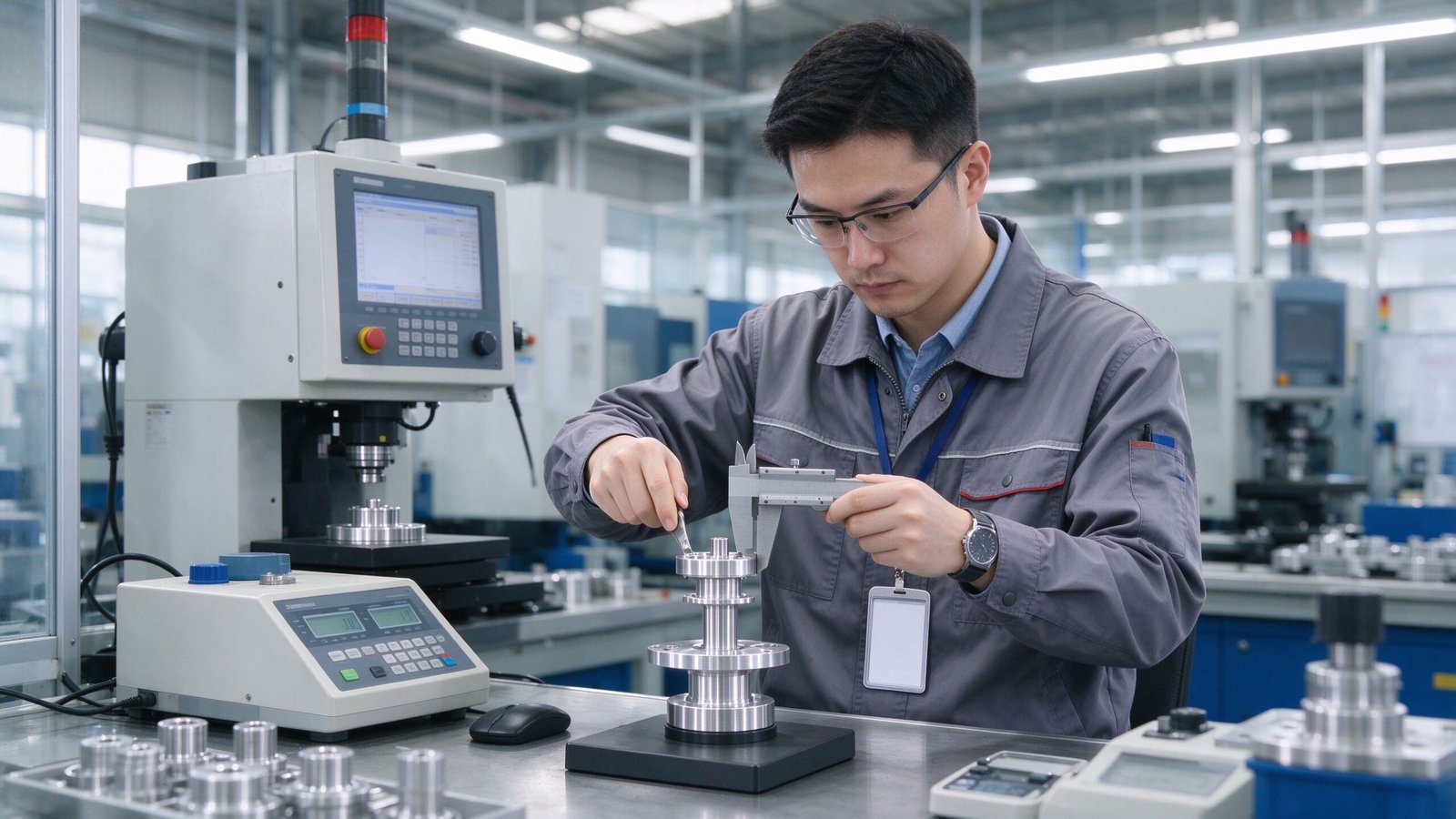
Most buyers know they should inspect goods from China. Fewer buyers know that “inspection” is not a single event — it is a tool you can deploy at different moments in production, and choosing the wrong moment means either paying twice for inspections or catching defects too late. The two workhorses are pre-shipment inspection (PSI) and in-process inspection (DUPRO, during production). This guide explains what each one covers, when each is the right call, how third-party inspection companies work, and how to match the inspection type to your order.
Pre-Shipment Inspection (PSI): The Safety Net Before Loading
A pre-shipment inspection happens when the order is 100% produced and at least 80% packed. A trained inspector visits the factory, samples finished goods according to an agreed statistical standard (usually ANSI/ASQ Z1.4 / AQL 2.5 for major defects), and releases a report before the balance payment is wired.
- Quantity and packing: Carton count, inner/outer packing accuracy, shipping marks, labelling correctness, and whether the master cartons are strong enough for ocean freight.
- Appearance: Surface defects, scratches, color matching against approved samples, print/logo quality, and consistency across the run.
- Functional testing: Random units are tested for the functions you specify — power-on, charging, buttons, hinges, seals, drop tests, and basic performance checks.
- Barcode and labelling verification: Especially critical for Amazon FBA sellers — FNSKU labels, suffocation warnings, country-of-origin marks, and compliance labels.
The huge advantage of PSI is timing: it is your last, cheapest chance to stop a bad shipment before it leaves China. Once the container is on the water, returning goods is usually more expensive than accepting a discount. The limitation: by the time PSI finds a systemic defect, rework is expensive and may delay the shipment by weeks.
In-Process Inspection (DUPRO): Catching Problems Mid-Production
An in-process inspection (often called DUPRO, “during production”) happens when roughly 10–50% of the order is completed. The inspector checks the first finished units coming off the line and the materials already in use, while the rest of the order is still being made.
- Early defect detection: If the first 500 units have a logo misalignment or a wrong material, the factory can correct the remaining 9,500 units instead of fixing 10,000.
- Material and component verification: Confirming that actual BOM components match your approved sample — for example, checking that the plastic grade, fabric weight, or charger spec is what you ordered.
- Workmanship and assembly process: Watching how the line assembles the product reveals process defects that finished-goods sampling may miss.
- Production timeline check: The inspector can also flag whether the factory is on schedule, which is a leading indicator of delays.
The trade-off is that DUPRO samples work-in-progress rather than fully packed units, so it cannot verify final carton packing or final finished consistency on its own. It is best paired with — not used instead of — a later check.
Third-Party Inspection Companies: How They Fit
Most buyers use independent third-party inspection firms rather than relying on the factory’s own QC, because the factory has an incentive to approve its own work.
- Major global providers: Bureau Veritas, SGS, Intertek, TÜV, and Asia Inspections-type regional firms all offer standardized on-site inspection services across China.
- Cost structure: Typically charged per inspector-day (roughly $150–$300 per man-day, depending on the firm and location), plus travel. A PSI for one product in one factory is usually one inspector-day.
- What you receive: A written report with photos, sampled quantities, defect classifications, measured dimensions, functional test results, and a clear “pass/fail” recommendation.
- You define the checklists. A good inspection company will let you build a custom checklist based on your spec sheet. Do not accept a generic template — your product has specific failure modes.
How AQL Sampling Shapes Both Inspections
Both PSI and DUPRO are normally executed using AQL (Acceptance Quality Limit) sampling, the industry-standard approach borrowed from ANSI/ASQ Z1.4. Rather than opening every carton, the inspector samples a statistically representative number of units based on the total order quantity. Typical thresholds are AQL 2.5 for major defects (anything that affects function, safety, or saleability) and AQL 4.0 for minor defects (small cosmetic issues unlikely to bother a customer). Critical defects that create safety or regulatory problems use AQL 0 — a single hit usually rejects the whole batch.
- Sample size scales with order size. A 500-piece order and a 5,000-piece order do not require ten times the difference in inspected units — the sampling table is designed so confidence holds across a wide range of quantities.
- Defects must be classified in advance. Tell the inspection company which issues count as major, minor, or critical. Without that mapping, they will classify everything conservatively and flag passable shipments as failures, or under-report real problems.
- You can tighten the AQL. For high-value or safety-sensitive products, negotiate a stricter AQL (e.g., 1.5 major) and 100% functional testing instead of sampled testing.
Which One Does Your Order Actually Need?
There is no universal answer. Match the inspection strategy to the product and the relationship.
- Simple commodity, trusted factory, repeat order: A single pre-shipment inspection is usually enough. You already know the baseline quality; PSI confirms the run matches it.
- New factory, new product, custom tooling, high defect risk: Use both. DUPRO at 20–30% production to catch process and material issues early, plus PSI at the end to verify final packing and finished quality.
- Complex electronics, medical-adjacent, children’s products: Add a pre-production sample approval (PP/FAI) before mass production starts, then DUPRO, then PSI. The upfront samples prevent tooling-level mistakes that no later inspection can fix cheaply.
- Very low-value, low-risk orders: You may skip formal inspection entirely for small pilot runs — but keep at least one PSI for any order tied to paid marketing or FBA launch.
- Branded / compliance-sensitive goods: Build in barcode, label, and certification checks into the PSI checklist; these are the most common reasons Amazon rejects FBA shipments.
Think of inspections as a layered defense, not a single gate. PSI protects you before the container sails; DUPRO protects you while the order is still fixable; pre-production samples protect you before mass production even begins. Skipping the right layer is what turns “we’ll check it” into a 20% defect rate on your doorstep. To build a complete QC workflow that matches your product and order size, explore our China procurement guides for deeper checklists, inspection report samples, and supplier audit templates.