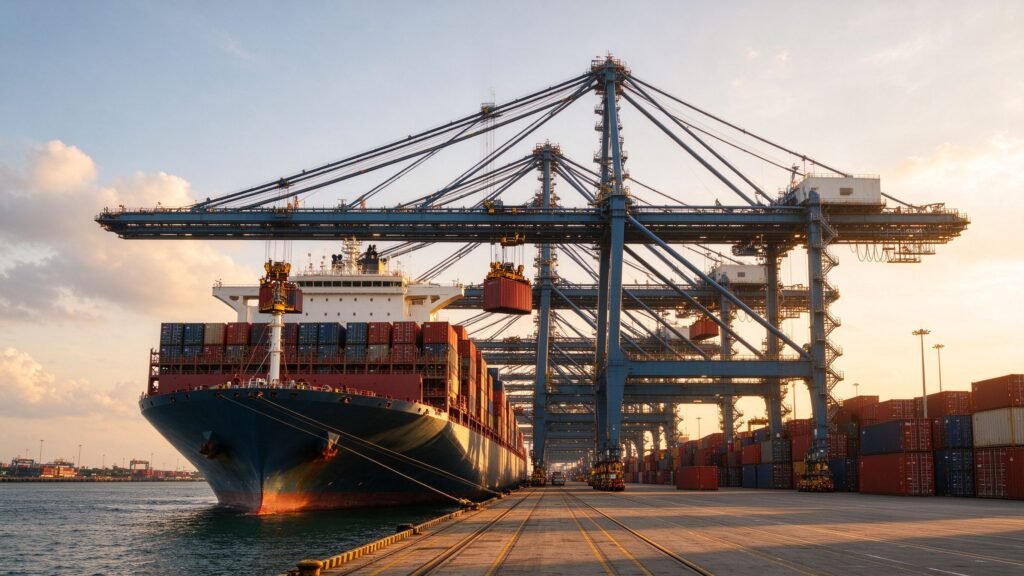
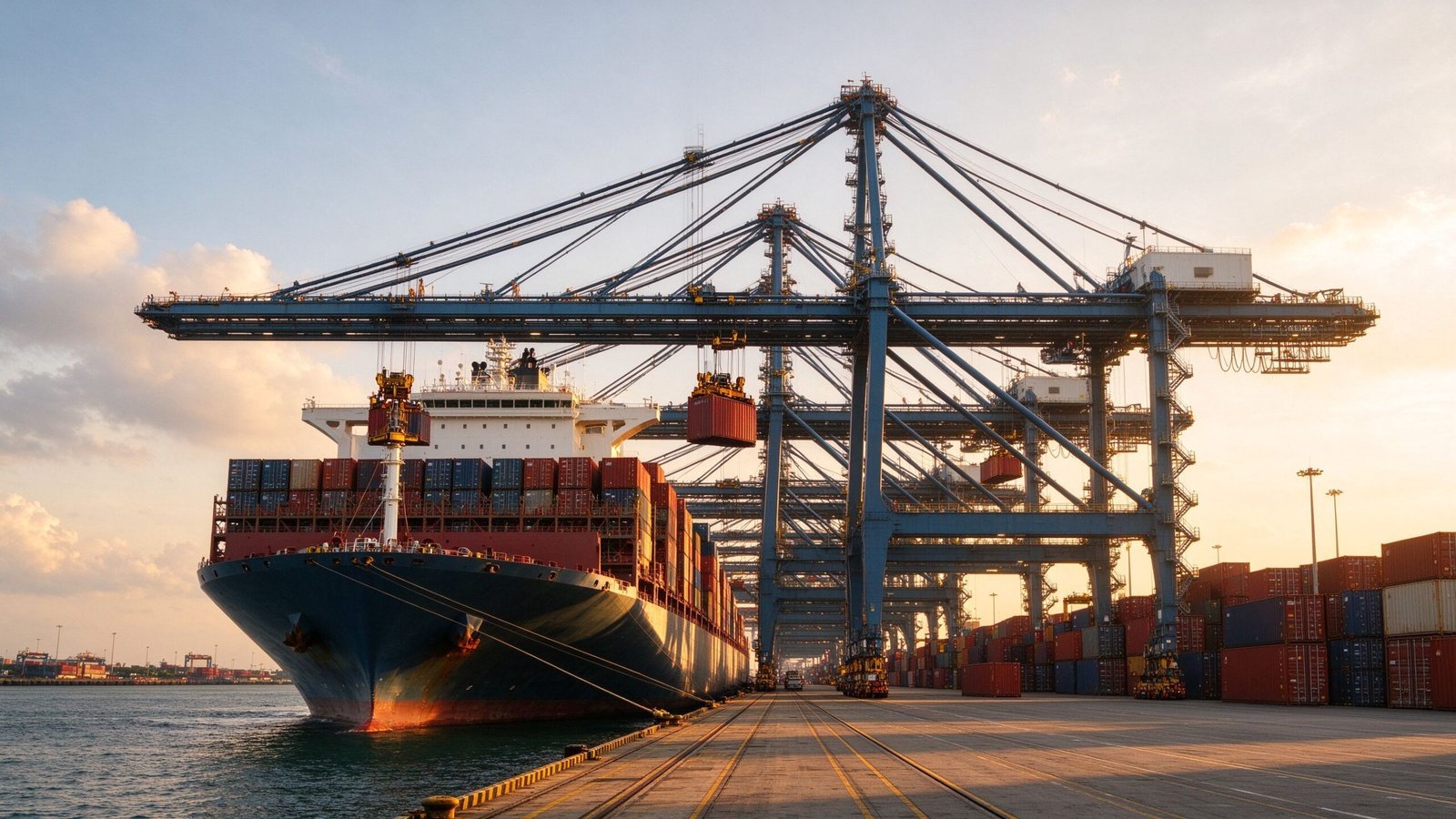
“EXW,” “FOB,” “CIF,” “DDP” — these four letters appear on nearly every Chinese supplier quotation, and they are among the most commonly misunderstood parts of importing. Pick the wrong Incoterm, and you can end up paying inland trucking you did not expect, absorbing cargo damage you thought was the factory’s problem, or losing weeks on customs clearance. This Incoterms explained guide breaks down the four terms most relevant to China-based B2B buyers: who pays what, where risk transfers, common pitfalls, and how to choose the right term for your shipment. Once you understand these four, 90% of your China import quotes will make sense.
1. What Are Incoterms and Why Do They Matter?
Incoterms (International Commercial Terms) are a standardized set of rules published by the International Chamber of Commerce (ICC) that define the responsibilities of buyers and sellers in international shipments. Each Incoterm answers two questions: who pays for each leg of the journey, and at what point does risk transfer from the seller to the buyer.
- They are not shipping methods — they are contractual allocation of cost and risk. The same container can ship EXW, FOB, CIF, or DDP depending on your agreement.
- They do not replace a sales contract, invoice, bill of lading, or insurance policy. They clarify which party handles each piece.
- Using the latest version (Incoterms 2020) is standard practice now. If a quote says “FOB Shenzhen” without a version, assume 2020 terms and confirm in writing.
- The single most expensive mistake importers make is confusing cost transfer with risk transfer. They happen at different points under different terms. A cheap EXW quote can become the most expensive shipment you ever run if the cargo is damaged before it even reaches the port.
2. EXW, FOB, CIF, DDP — Side-by-Side Comparison
These four terms cover almost every China-to-US/EU/Australia shipment. Here is what each one means in practice.
- EXW (Ex Works): The factory’s only obligation is to make the goods available at their premises. You — the buyer — handle absolutely everything from the factory door: inland trucking to the port, export customs declaration, ocean/air freight, insurance, import customs clearance, duties, and final delivery. Risk transfers the moment the goods leave the factory loading dock.
- FOB (Free On Board): The factory delivers the goods onto the vessel at the named Chinese port (e.g., FOB Shenzhen, FOB Ningbo). They pay for inland trucking, export clearance, and loading onto the ship. You pay for ocean freight, insurance, import duties, and delivery. Risk transfers once the goods are on board the vessel.
- CIF (Cost, Insurance & Freight): The factory pays for ocean freight and minimum insurance to the named destination port (e.g., CIF Los Angeles). You handle import customs, duties, and on-carriage from the destination port to your warehouse. Risk transfers when the goods are on board the Chinese vessel — not at the destination port, despite what the name suggests.
- DDP (Delivered Duty Paid): The factory (or their forwarder) handles everything: inland transport, export clearance, international freight, insurance, import customs clearance, duties, taxes, and final delivery to your door. You sign for the package. Risk transfers at your warehouse. DDP is the most buyer-friendly term — but also the one where Chinese sellers most often under-quote and then surcharge you later.
3. Who Pays for What — and Where Risk Transfers
The fastest way to compare these four terms is to map responsibility across the journey. Here is the practical breakdown for a China-to-US warehouse shipment.
- EXW: Buyer pays factory trucking, export docs, freight, insurance, US import clearance, duties, and US delivery. Risk transfers at factory dock.
- FOB: Factory pays to get goods on the Chinese vessel; buyer pays freight onward, insurance, US clearance, duties, and delivery. Risk transfers at the Chinese port on board.
- CIF: Factory pays freight + minimum insurance to US port; buyer pays US import clearance, duties, and inland delivery from port to warehouse. Risk still transfers on board the Chinese vessel, even though factory pays freight.
- DDP: Factory pays everything through to your door, including import duties and US local delivery. Risk transfers at your warehouse — but only if the DDP quote is truly all-in; many Chinese sellers quote “DDP” excluding duties.
The most common misconception: under CIF, the seller is not responsible for damage during the ocean voyage. Risk already transferred on board the vessel in China. The seller only bought minimum insurance — enough to claim against if something goes wrong, but you are the party who must chase the claim. For high-value shipments, buy your own cargo insurance regardless of Incoterm.
4. How to Choose the Right Incoterm for Your Shipment
There is no universally “best” term. The right choice depends on your experience, order size, product value, and how much control you want over the logistics chain.
- Choose EXW if you have an experienced forwarder, you are consolidating multiple suppliers in one container, or you want maximum control over logistics and pricing. New importers should avoid EXW — export documentation in China is not something a foreign buyer can easily handle themselves.
- Choose FOB for most first-time and mid-size importers. It is the industry default, the factory handles Chinese-side logistics, and you can use your own forwarder to negotiate freight. This is the safest middle ground for most China B2B orders.
- Choose CIF for lower-volume ocean shipments where the factory’s freight rate is competitive and you have a US forwarder who can handle port arrival. Avoid CIF for high-value cargo — the included insurance is minimal.
- Choose DDP for small parcels, air freight, e-commerce FBA shipments, or first-time buyers who want a door-to-door experience. But demand a written, all-in DDP quote with named duties and taxes — and watch for hidden fuel surcharges, customs bond fees, or “remote area” delivery charges.
- Never agree to a term without a named location (“FOB Yantian,” not just “FOB”). Vague Incoterms are a classic source of disputes.
Quote Smarter, Land Cheaper
Incoterms are not legal jargon — they are the roadmap of who pays for every leg of your shipment. Once you can read a quote’s Incoterm at a glance, you can compare factories on a true apples-to-apples basis, avoid surprise inland charges, and know exactly when cargo risk becomes your problem. For small or growing importers, FOB is the default, DDP is a convenience you pay for, EXW is a power move for experienced buyers, and CIF is rarely worth its name. To pair this with supplier verification, sampling discipline, and MOQ negotiation, explore our complete China procurement guides and build a sourcing workflow where every quote, contract, and container moves in your favor.