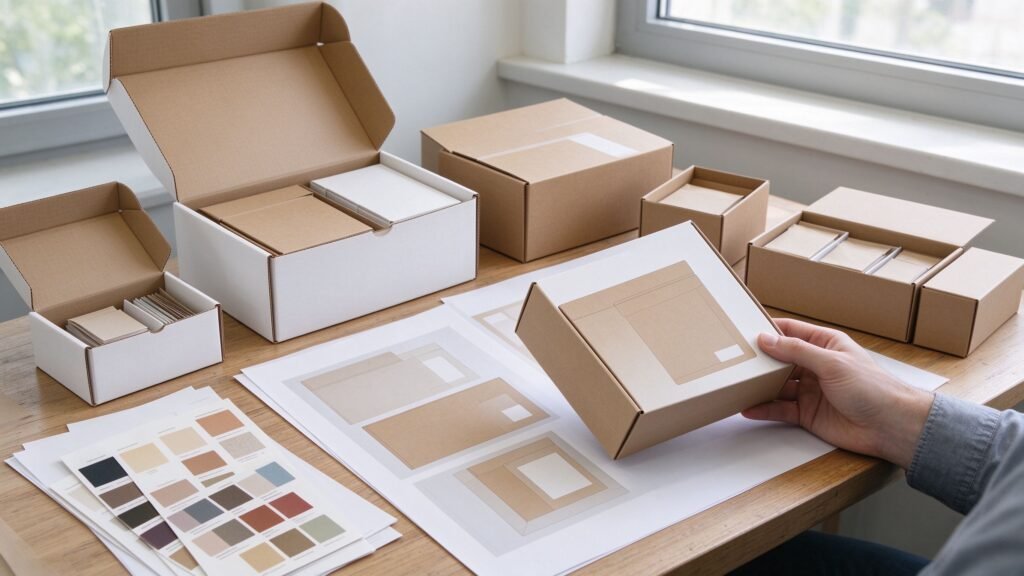
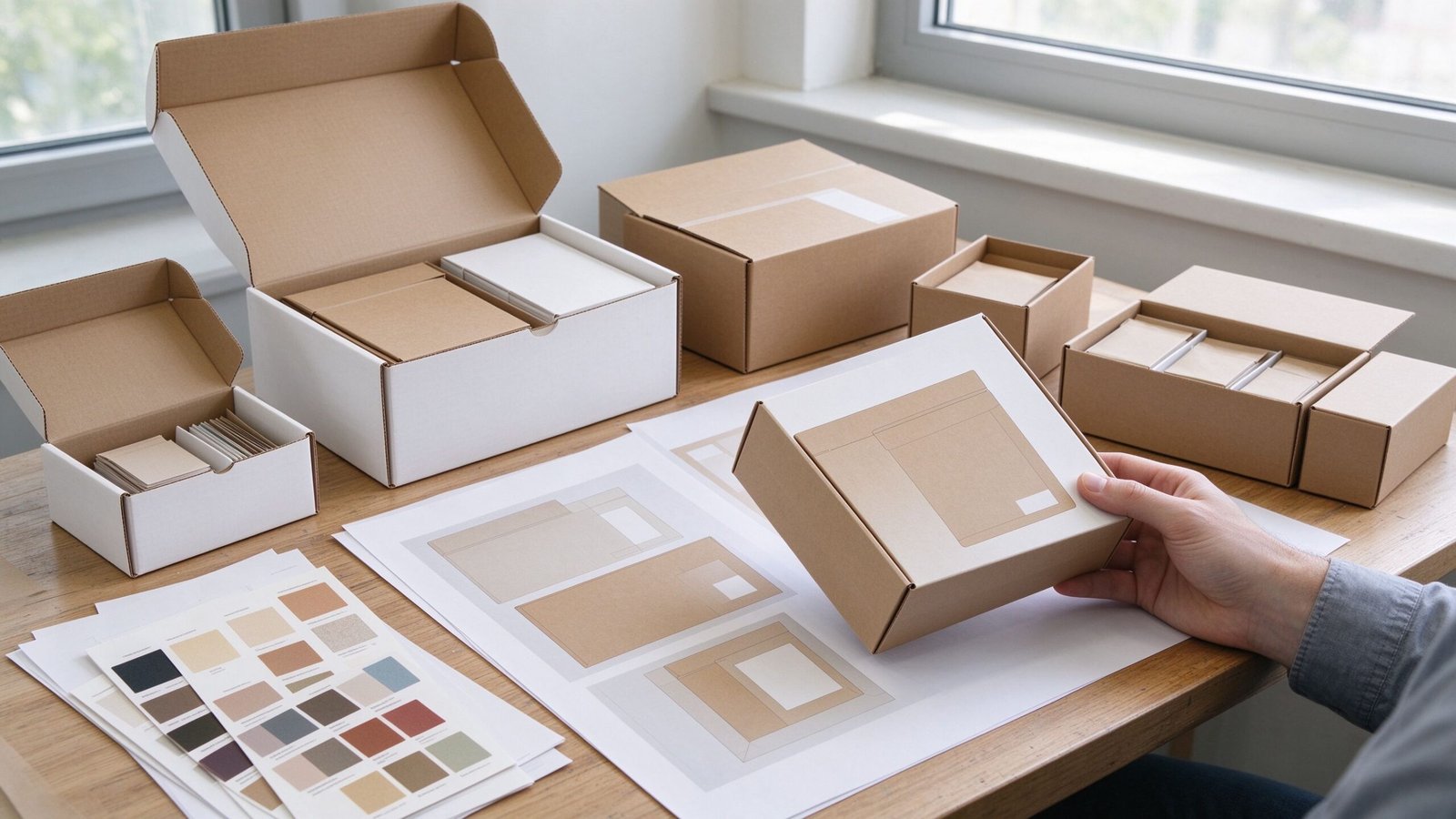
On a crowded ecommerce shelf, the product wins the click only after the box wins the first glance. Custom packaging is where private-label brands look like premium brands, and where generic dropshipped listings look like everyone else. This step-by-step guide covers the packaging types buyers actually order from China, how to hand files to a factory, what sampling and printing really cost, and where most color and compliance mistakes happen.
Types of Custom Packaging
Not every project needs a full custom box. Most buyers start with one of four levels.
- Label only: a printed sticker applied to a blank jar or box. Lowest cost, fastest, good for test listings.
- Custom retail box: a folded cardboard box printed with your artwork. The most common upgrade for Amazon and DTC brands.
- rigid gift box or mailer box: a thicker box with foil stamping, embossing or a branded insert, used for premium and subscription products.
- Custom inner tray and literature: EVA foam, cardboard inserts, thank-you cards and warranty booklets that raise perceived value without changing the product.
Design Files and Hand-off to the Factory
Factories reject files that look fine on your screen. To avoid a wasted round, deliver the artwork in the format the printer actually uses.
- Ask the factory for a dieline (the flat net of the box) in AI or PDF format — do not design from a guess.
- Provide vector artwork (AI, PDF or EPS) for logos, not low-resolution JPGs.
- Leave a 3 mm bleed and a 3–5 mm safe zone around text.
- Spell out every fixed element in writing: barcode, country-of-origin mark, warning text, regulatory symbols.
- Confirm which color profile the printer uses (usually CMYK offset), and ask for a physical color proof before mass printing.
Materials and Sampling
Paperboard weight and surface finish change how the box feels in hand. Common choices are 250–350 gsm coated art paper for retail boxes, corrugated E-flute for mailers, and rigid 1,200–1,500 gsm board for gift boxes. Lamination options — matte, gloss, soft-touch — add cost but dramatically change the premium feel.
Always order a physical packaging sample before bulk printing. A sample tells you three things the on-screen proof cannot: whether the color matches, whether the product fits, and whether the glue and corners survive shipping. Budget around $50–$150 per packaging sample plus courier, and plan for two rounds.
Printing Techniques and Color Accuracy
The digital proof on the factory’s WeChat message is not the same color as the offset press run. Expect a small delta E, and manage it deliberately.
- Offset printing is cheapest for runs above roughly 1,000 boxes and gives the best color consistency.
- Digital printing is better for short runs (100–500) but colors shift slightly run to run.
- Pantone spot colors guarantee a specific brand color, at a premium, on simpler designs.
- Special finishes — foil stamping, embossing, spot UV — require separate plates and add days to the lead time.
- Approve a press proof (or a printed dummy) before the run, and photograph the first production box for future reorders.
Regulatory Labels and Compliance
Pretty packaging that misses a mandatory label gets stuck at customs. Depending on your destination, check for:
- FNSI / EAN-13 barcodes that scan cleanly on real scanners.
- Country of origin (“Made in China”) in the correct size and position.
- Warning labels, age grades and choking-hazard icons for children’s products.
- Ingredient lists, net weight and importer address for cosmetics, food and supplements.
- Recycling marks, WEEE/REACH symbols and battery labels for electronics sold in the EU.
Cost and Lead Time
Custom packaging is cheap compared with the product inside, but the lead time surprises new buyers. Typical ranges for a standard printed retail box:
- Unit cost: $0.30–$1.50 per box depending on size, paper and finish.
- Sample lead time: 7–15 days including courier.
- Bulk production lead time: 15–30 days after artwork approval.
- One-time setup / plate fee: $50–$200, usually waived on larger reorders.
Book packaging development at the same time as product sampling, not after, or you will wait 30 extra days between “sample approved” and “ready to ship.”
Custom packaging works best when the product itself is already right. Before you invest in a printed box, make sure the manufacturing step behind it is under control — read our breakdown of OEM vs ODM vs OBM manufacturing to pick the production model that matches your brand plan.