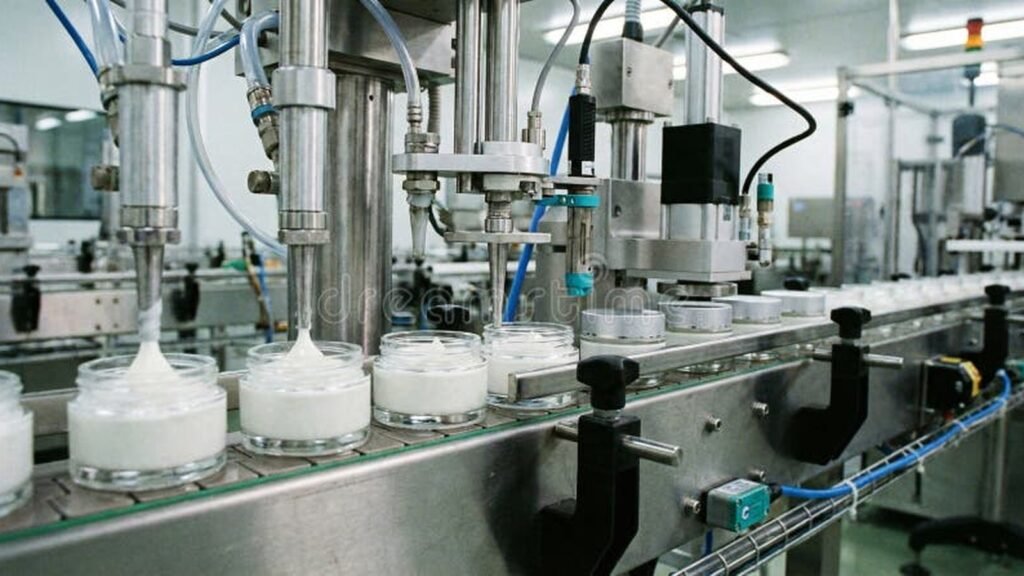

China is now one of the world’s largest private-label (white-label and contract) cosmetics manufacturing hubs. Zhejiang, Guangdong, and Jiangsu host GMPC-certified factories that can take your brand from a one-page brief to a shelf-ready serum in 4–8 weeks, at 40–60% less than a US or EU contract manufacturer. But cosmetics is a heavily regulated category—get the formula, label, or notification wrong and your product can be detained at the border or forced off the market. This guide walks you through the end-to-end process.
1. Choosing the Right Type of Cosmetics Factory
Chinese factories generally fall into three buckets:
- Private-label houses (oem/oem stock formulas). They sell from a catalog of 100–500 existing formulas (serums, moisturizers, cleansers, lipsticks). You pick a base, they add your fragrance, color, and logo. MOQ is typically 500–2,000 units per SKU. Best for first-time brands and small budgets.
- Contract manufacturers for custom formulation. They develop a new formula to your brief. MOQ is usually 3,000–10,000 units and development time is 6–12 weeks. Best when you want a unique texture, active, or claim.
- Full-service ODM. They design packaging, formula, label, and even your whole brand range. MOQ varies widely; ideal for DTC brands that want one partner.
Verify the factory holds GMPC (ISO 22716) certification—it is the baseline the EU and FDA both expect—and ask whether they have already exported to your target market. A factory that has filed CPNP notifications for US/EU clients before will move much faster.
2. Formula Development: Stock vs Custom
For most first orders, start with a stock formula. You can still differentiate by:
- Choosing active ingredients (e.g. adding niacinamide, hyaluronic acid, or retinol at a defined %)
- Customizing fragrance and essential oil blends
- Matching a color shade for lipsticks, foundations, or tinted moisturizers
- Adding a private-label preservative system compliant with EU Cosmetic Regulation 1223/2009
A custom formula is worth it only if you have a strong claimed differentiator—for example a patented active, a clean-beauty positioning that excludes a long list of ingredients, or a texture no stock SKU matches. Expect to pay a development fee of USD 2,000–8,000 and a longer timeline.
3. MOQ, Sampling, and Pilot Production
Typical MOQs from Chinese cosmetics OEMs:
- Serums/lotions in glass or PET bottles: 1,000–3,000 pcs
- Creams in jars: 1,000–2,000 pcs
- Lipstick / foundation (mold cost): 3,000–5,000 pcs plus mold fee
- Sachets / sample sizes: 10,000–50,000 pcs
Sampling usually costs USD 30–150 per formula and takes 7–15 days. Build two rounds of samples into your timeline: first lab sample (texture/color), then pilot sample (actual mass-production line with your packaging). Approve the pilot sample in writing before mass production starts—this is the single most effective way to prevent sample-to-bulk mismatch.
4. Packaging, Labels, and INCI
Every cosmetic sold in the EU or US must carry an INCI (International Nomenclature of Cosmetic Ingredients) list on the outer packaging, listing ingredients in descending order of concentration. Your factory can provide the INCI list, but you must verify it against:
- EU Cosmetic Regulation (EC) No 1223/2009—check for banned/restricted substances (e.g. certain parabens, formaldehyde releasers, microplastics).
- US FDA cosmetic labeling rules under 21 CFR Parts 701–740.
Also confirm packaging compatibility: a serum that interacts with a bottle material can discolor, separate, or degrade. Ask the factory for a stability and compatibility test (typically 3 months accelerated at 40°C) before you lock the packaging.
5. Regulatory Notifications You Cannot Skip
United States — MoCRA. The Modernization of Cosmetics Regulation Act, enacted in 2022, now requires every cosmetic facility (including overseas factories that ship to the US) to register with the FDA and every product to be listed before US distribution. As the US brand owner, you are responsible for product listing; the Chinese factory handles facility registration. Confirm your factory already has a valid FDA facility registration number before signing.
European Union — CPNP. Under Regulation (EC) 1223/2009, every cosmetic placed on the EU market must be notified through the Cosmetic Products Notification Portal (CPNP). The notification must include the product formula, label image, responsible person (an EU-based entity), and a Product Information File (PIF) with a safety assessment. Your factory can prepare most of the technical file, but you need an EU Responsible Person—budget around EUR 300–800 per year per brand.
Claims compliance. Avoid absolute claims (“miracle cure”, “100% anti-aging”). The EU Common Criteria on cosmetic claims require every claim to be truthful, evidence-based, and not cause ambiguity. Save the clinical or in-vivo data behind any efficacy claim.
6. A Practical First-Order Workflow
- Shortlist 3–5 GMPC-certified factories; ask for their top 10 stock formulas and pricing.
- Order paid samples from your top 2; evaluate texture, fragrance, absorption, and packaging fit.
- Confirm FDA facility registration and EU CPNP filing capability in writing.
- Lock INCI, packaging artwork, and pilot sample approval before the PO.
- Run a pre-shipment inspection (AQL 2.5) covering leak test, label accuracy, and carton quantity.