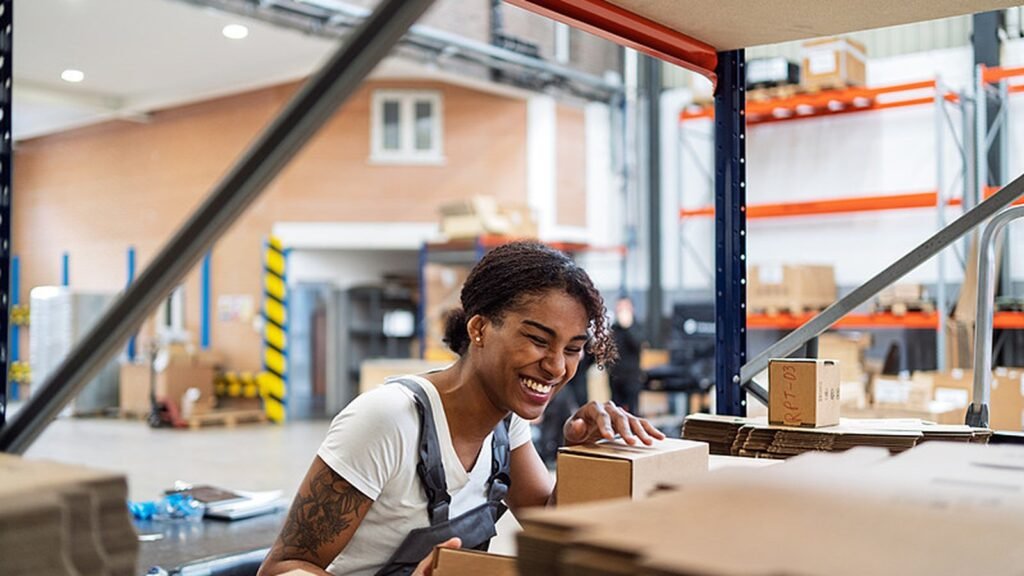

For cross-border e-commerce sellers, dropshippers, and Amazon FBA prep sellers, a China-based 3PL (third-party logistics) warehouse can cut handling costs by 60–80% compared with a US or EU fulfillment center. Instead of shipping bulk inventory overseas and storing it abroad, you keep stock in a Chinese warehouse near your supplier and let the 3PL pack and ship each order directly to your end customer. This guide explains what these warehouses actually do, how they price, and how to choose one without getting burned.
1. What a China 3PL Warehouse Actually Does
A typical cross-border 3PL near Yiwu, Shenzhen, or Guangzhou offers:
- Receiving and storage of your supplier’s bulk shipment on arrival at the warehouse
- Picking, packing, and labeling of individual orders (poly mailers, cartons, insert cards, custom branding)
- International shipping integration: China Post e-packet, Yanwen, YunExpress, DHL Packet, USPS-bound lines, and dedicated Amazon FBA prep services
- Returns handling (for local returns if the warehouse supports it)
- Value-added services: kitting, relabeling, poly-bagging, FBA carton labeling, photo shoots
2. How Pricing Works: The Real Cost Structure
Quote structures vary, but almost every 3PL charges four components. Ask for all four:
- Storage fee. Often free for the first 30–60 days, then USD 5–15 per pallet per month, or per CBM per month. Long-term slow-movers get charged heavily.
- Inbound handling (receiving). USD 20–50 per pallet, or USD 0.5–2 per carton.
- Order processing (picking & packing). USD 1–3 per order for standard picking, plus USD 0.5–1.5 for custom packaging materials.
- International shipping. The line-haul cost per parcel, which the 3PL passes through (often with a small commission). This is usually 70–85% of the total order cost.
Avoid warehouses that quote only a low “per order” fee but hide storage or customs brokerage charges. Always ask for a full landed-cost estimate per order, broken down by destination country.
Also confirm which international lines the warehouse actually uses for each destination—some warehouses quote cheap rates but route parcels through slow local post that takes 25 days. Ask for average and worst-case delivery time to your main customer ZIP codes, in writing.
3. System Integration: API and ERP Connections
A 3PL is only useful if orders flow automatically. Check:
- Native integrations with Shopify, WooCommerce, eBay, Etsy, and Amazon (for non-FBA orders)
- Open API for custom workflows
- Integration with Chinese ERP systems such as aftership, Shipstation, or local WMS platforms
- Real-time inventory sync—you should see stock levels update within 15 minutes of an order
- Tracking number auto-upload to the marketplace
If the warehouse still expects you to email Excel orders twice a day, walk away—that is not 3PL, it is a hobby operation.
4. Who Should Use a China 3PL (and Who Shouldn’t)
Good fit:
- Dropshippers selling light, non-fragile items (apparel, accessories, phone cases) where 7–15 day delivery is acceptable
- Sellers testing a new product before committing to overseas FBA storage
- Brands doing small-batch restocks from multiple Chinese suppliers into one consolidated shipment
Poor fit:
- Customers who expect 2–3 day US delivery (China-to-US e-packet takes 7–15 days)
- Fragile, high-value, or temperature-sensitive goods
- Very large, heavy items where international shipping cost erodes margin
5. How to Evaluate a Warehouse and Run a Trial
Before signing a 6-month contract:
- Visit the warehouse via live video call; check racking, packing stations, and order volume.
- Ask for references from 2–3 current clients of similar size.
- Run a 10–20 order pilot: send real inventory, place real test orders, and measure packing accuracy, shipping cost, tracking updates, and delivery time.
- Check their refund policy for lost or damaged inventory.
A reliable 3PL will happily do a small pilot; one that demands a long-term commitment before proving itself should be avoided.