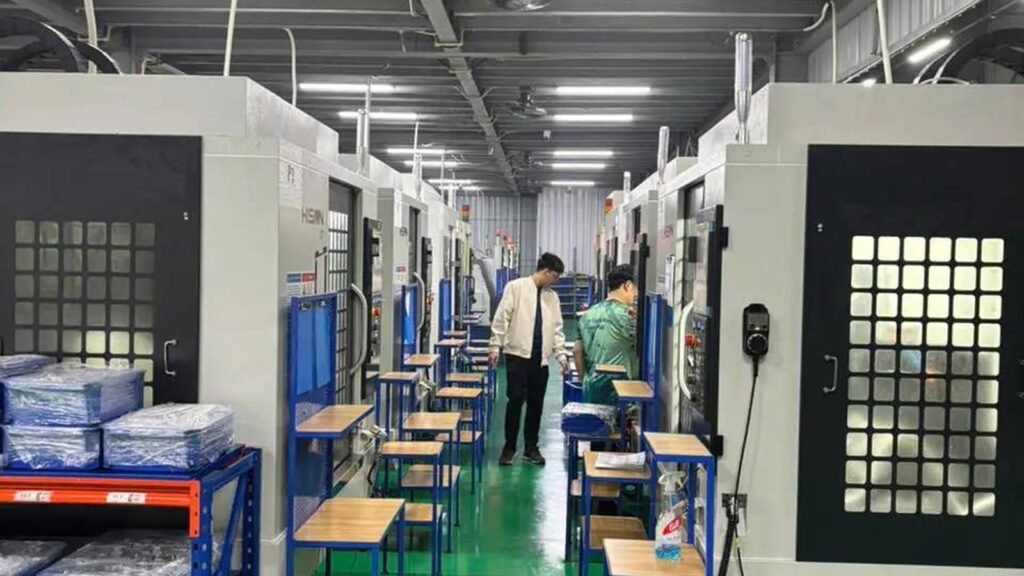

When your product needs precision metal parts — brackets, housings, shafts, panels — you are choosing between CNC machining and metal stamping, or often both. Getting the process, the material and the tolerance right is the difference between parts that assemble and parts that do not. Here is how to source both from China.
CNC vs stamping: how to choose
The decision usually comes down to volume and geometry. If you need a few hundred complex parts and no tooling exists yet, CNC is the only practical route. If you need tens of thousands of a relatively simple flat or formed part, a progressive stamping die pays for itself fast on unit cost. Many real products use both — a stamped bracket with a CNC-machined hole, for example. Ask the factory which process they recommend for your part, and be wary of a shop that only ever quotes its one process.
Prototyping and low-volume
For product development, CNC shines: send a CAD drawing, get machined prototypes in days, iterate the design, then move to stamping once the design freezes and volume justifies the die. This staged approach avoids spending tooling money on a design that still changes. Keep the drawings dimensioned with tolerances and material called out, because an ambiguous drawing is the number-one cause of prototype mismatch.
CNC machining: milling, turning and tolerances
CNC milling shapes parts from solid blocks; CNC turning makes round parts on a lathe. Typical machinable tolerances in Chinese shops hold around the hundredth-of-a-millimeter (±0.01 mm) range for standard work, with tighter precision possible on demand. Tighter tolerance raises cost and lead time, so only specify precision where the part actually needs it.
- Materials — aluminum (light, easy to machine, anodizes well), steel, stainless steel (tougher, harder on tools) and copper/brass (electrical parts).
- Best for — prototypes, low-to-mid volumes, complex geometries, parts where no dedicated tooling exists yet.
Reading a CNC quote
A complete CNC quote breaks into: material cost, machine time (setup + cycle), surface treatment, and any secondary operations. Ask for the quote on your drawing and compare whether shops price the same features consistently. A quote that is suspiciously low often hides a looser tolerance or a cheaper material grade.
Metal stamping: progressive vs single stamping
For high-volume flat or formed parts, stamping beats machining on unit cost. A progressive die forms the part in one automated stroke at high speed — ideal for thousands of identical brackets or terminals. A simpler single (single-station) die suits lower volumes. The trade-off is upfront tooling cost and lead time, which amortize down to almost nothing per part at volume.
Tooling, trial runs and lead time
Both routes need tooling: CNC needs fixturing/programs, stamping needs the die. Expect a trial run (first articles) before full production, especially for stamped parts where the die must be tweaked. Confirm who owns the tooling in writing.
QC: dimension reports and surface finish
- Dimensional inspection — require a first-article inspection (FAI) and a dimension report with caliper/CMM results on critical features.
- Surface finish / roughness — check Ra where specified and inspect burrs, especially on safety-critical parts.
- Material verification — ask for material certificates, because alloy grade mismatches are common.
Industries this serves
Precision machined and stamped parts show up across nearly every hardware-driven product: 3D printers and robotics, automotive sub-components, lighting and fixtures, furniture hardware, and consumer electronics internals. If your product has a bracket, plate, shaft or enclosure that must be made of metal rather than plastic, this is the sourcing route. The shops that win repeat business are the ones that ask about tolerance and finish early, rather than quoting a bare shape.
Common pitfalls in precision parts
The recurring problems are avoidable: quoting without a tolerance, so the part arrives looser than you need; material grade downgraded to save cost; missing secondary operations that blow the lead time; and a surface finish left out of the quote. Insist on a dimensioned drawing with tolerances, material certs, and a quote that lists every operation including finishing. On first orders, keep the quantity modest so you can learn the factory’s real capability before committing to large runs.
The bottom line
Use CNC for prototypes and complex, lower-volume parts; use progressive stamping for high-volume simple parts. Specify tolerance only where needed, compare quotes feature by feature, and require a first-article dimension report before bulk. Done right, Chinese precision metal shops compete strongly on both quality and price. The secret is treating the drawing and the first-article report as the real product — everything else follows from getting those two right. Choose the process by volume and geometry, and you will never overpay for tooling or under-engineer a part. Start any new precision part with a machined prototype, then move to stamping once the design is locked and volume justifies the die.