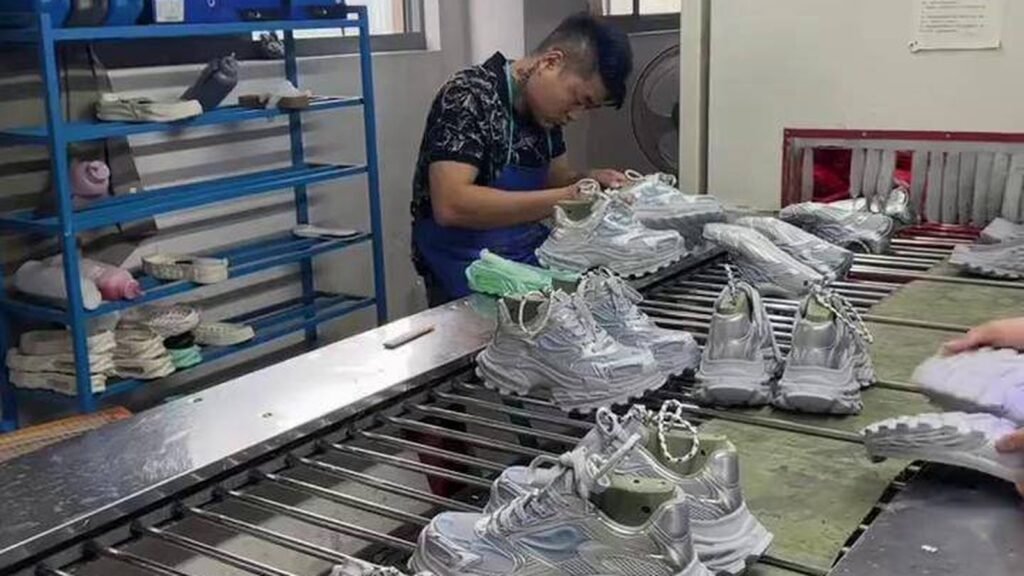

Footwear is one of China’s deepest manufacturing traditions, with clusters centered in Fujian and Guangdong. But shoes are deceptive: they look simple, yet construction, fit and adhesive quality decide whether your customers keep them or return them. This guide covers how shoes are built, what they are built from, and where defects hide.
Footwear clusters and sample shoes
China’s shoemaking is concentrated in clusters — Fujian (Putian, Quanzhou) and parts of the Guangdong delta are the core. Sourcing within a cluster means access not just to factories but to the whole supporting cast: sole makers, material suppliers, lace and hardware vendors. When starting out, build the relationship around sample shoes first. Expect to iterate the last and the upper a few times before the fit and look are right. A sample shoe you have actually worn and walked in beats a photo review every time — comfort is impossible to judge from a picture.
Pricing and reordering
Shoe cost is driven mainly by construction method, upper material and brand-name hardware. A cemented casual shoe in PU will cost far less than a full-grain leather boot with a leather sole. Once a style sells, reorder on the same last and material spec so fit stays consistent. Watch factories that switch to cheaper adhesive on reorders — the open-seam defect creeps in quietly, which is why a repeat QC on the bond matters even for proven designs.
Product types and construction methods
- Athletic and casual sneakers, boots, sandals — each demands a different construction.
- Injection molding — the sole is injected directly onto the upper at speed; common for casual and athletic shoes.
- Vulcanized — canvas-style shoes where the sole and upper are cured together.
- Cemented (adhesive) and handmade — glued construction for fashion and leather footwear; more labor, higher detail.
The construction method drives cost, durability and the QC risks — cemented shoes live or die on glue quality.
Materials: uppers and soles
Uppers use PU (synthetic leather), genuine leather, and knit/knit-fly fabrics. Soles use rubber (durable, grippy), PU foam (lightweight, cushioned), and EVA for midsoles. Material choice changes both feel and price, and leather sourcing has its own traceability requirements for some markets. Specify the upper material and sole compound on the tech pack.
Lasts and sizing
Fit starts with the last — the foot-shaped form the shoe is built on. Chinese lasts run narrow by default, so confirm the last matches EU/US fit expectations and approve a physical sample on your target size. Size grading across the run-up should follow a clear size chart. Sizing and fit — not stitching — are the top cause of footwear returns.
QC: the defects that matter
- Delamination / open seams (开胶) — the sole separating from the upper; the most serious defect and a glue/application problem.
- Excess glue (溢胶) — messy adhesive squeeze-out on the upper, an appearance flaw.
- Color mismatch — shade difference between pairs or batches.
- Size and pairing errors — mismatched left/right or wrong size in a box.
Inspect the adhesive bond, check pairs against the approved sample, and verify box labeling.
MOQ, sampling and compliance
Footwear runs on sample shoes: approve the sample shoe on the right last before bulk, and expect a development cycle. MOQs vary by construction and material. Children’s shoes sold in the US additionally fall under CPSIA safety requirements, and leather-sourced materials may need traceability documentation.
Footwear private labeling
Once a sample shoe works, private labeling is straightforward: your logo on the tongue, heel and insole, your own box. Footwear carries strong branding expectations, so details like the printed logo and the shoebox matter to the perceived quality. Start with one silhouette done well rather than a broad range, and use the sample-shoe iteration to lock both fit and finish before committing to a production order.
Footwear returns and how to avoid them
Most shoe returns come down to fit rather than workmanship. A shoe that looks right on the shelf but rubs the heel or runs narrow will come back. The defense is upfront: approve a last on real feet, size across the full range, and be conservative about sizing claims. For your own listing, state the fit honestly. The other big return driver is the sole separating — prevented by QC on the bond at inspection, not discovered after delivery. Treat adhesive quality as the make-or-break production control.
The bottom line
Footwear sourcing lives on the sample: approve the last and fit on your EU/US size chart, specify upper and sole materials, and QC the adhesive bond, glue cleanliness, color and pairing. Match the construction method to your price point, and treat a well-fitting sample shoe as the gate to production. Once that gate is passed, footwear becomes one of the most repeatable and brand-building categories you can source.