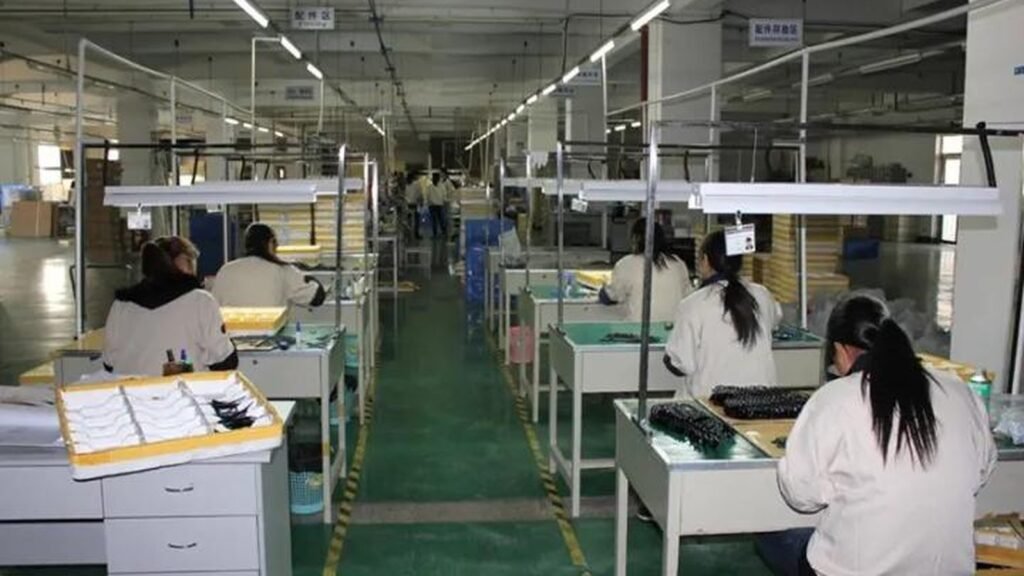

China supplies the vast majority of the world’s eyewear—Danyang alone produces an enormous share of the world’s eyeglass frames. For brands, the opportunity is strong: a pair of acetate frames that retails in Europe for €80 can be sourced FOB for €8–15. But eyewear is a regulated product—optical correctness, UV protection, and impact resistance are not optional. This guide covers materials, QC, compliance, and clusters.
1. Categories and Frame Materials
- Optical (prescription) frames. For regular glasses. Materials below.
- Sunglasses. Fashion and functional; lens UV rating matters.
- Reading glasses. Pre-made power lenses; price-sensitive.
- Kids’ eyewear. Flexible materials and stronger safety requirements.
Frame materials:
- TR90 (nylon). Flexible, lightweight, budget-friendly. The most common export material.
- Acetate (cellulose acetate). Premium, glossy, hand-finished. The material of choice for fashion frames.
- Metal. Stainless steel, alloy, and—premium—titanium (lightweight, hypoallergenic).
- Injection plastic. Budget mass-market.
2. QC: What to Inspect
- Lens power accuracy. For prescription glasses, verify the diopter matches the spec; off by more than the allowed tolerance makes the product unusable.
- UV protection. Sunglasses must block UV400 (99–100% UVA/UVB). Test with a UV meter.
- Coating quality. Anti-reflective and anti-scratch coatings should be even, with no streaks.
- Hinges and screws. Open/close 500 times; hinges should not loosen, screws should not fall out.
- Fit and symmetry. Frame should sit evenly; temples should match; no crooked front.
- Finish. No scratches, plating runs, or glue marks.
3. Compliance: The Standards You Must Meet
- US FDA. Eyewear sold in the US must meet impact-resistance requirements (21 CFR). Prescription lenses must be safety-certified.
- CE marking. Mandatory in the EU under the relevant directives.
- ANSI Z80.3. The US standard for non-prescription eyewear and sunglasses; many retailers require it.
- EN ISO 12312-1. The EU standard for sunglasses, covering UV protection and transmittance categories.
- Children’s eyewear. Additional impact and chemical-safety requirements.
Always ask the factory which test reports they already hold for your target market. A factory without any of these certifications should not be considered for a serious brand.
4. Manufacturing Clusters
- Danyang (Jiangsu). The world’s eyeglass frame capital. Strong for optical frames, reading glasses, and mid-market sunglasses.
- Wenzhou (Zhejiang). Budget frames and sunglasses.
- Shenzhen (Guangdong). Premium acetate and titanium frames; export-oriented.
- Xiamen (Fujian). Strong sunglasses and optical manufacturing.
5. Sampling and Small-Batch Workflow
For a new eyewear brand, the realistic path is:
- Select 2–3 frame styles from the factory’s existing catalog (lowest risk, MOQ 300–500 pcs).
- Order 5–10 samples to check fit, weight, and lens compatibility.
- Customize logo, color, and packaging; approve a production sample.
- For custom shapes, expect mold fees (USD 1,000–5,000) and MOQ 1,000+ pcs.
Eyewear is a category where fit matters more than price. Testing samples on real faces before bulk is non-negotiable.
6. Lens and Prescription Workflow
If you sell prescription glasses, the lens-side workflow is separate from frame sourcing. Lenses are usually cut and edged to order by a local lab, not in China. For finished sunglasses and reading glasses, the factory installs the lenses during frame assembly. Confirm whether your supplier can source prescription-ready frames (with correct lens curvature) or only finished sunglasses. Mixing imported frames with locally edged lenses is the standard model for most eyewear brands—it gives you frame design flexibility while keeping prescription service close to your customer.
Also confirm the factory’s UV testing capability. A UV400 claim without a lab report is unverifiable; ask for the actual transmittance test report for your lens style.
7. Margin and Pricing Structure
Eyewear has one of the highest retail markups of any consumer product—an FOB frame of USD 10–15 typically retails for USD 80–150. That margin allows room for compliance testing, custom packaging, and a brand story. The main cost drivers are frame material (acetate costs 3–5x TR90), lens quality, hinge hardware, and finishing. For a new brand, start with TR90 or budget acetate frames to keep landed cost under USD 20, then move to premium acetate and titanium once you have sales volume. Never compromise on UV certification—a sunglasses brand that fails UV testing will not survive its first recall. For a practical first order, pick two or three proven catalog frame styles, customize color and logo, and keep lenses simple (clear or standard UV400); this keeps MOQ low and avoids prescription compliance complexity. Once your brand has traction, add acetate, titanium, and prescription-ready SKUs. The eyewear market rewards brands that get fit and UV protection right the first time; cheap frames that fail on either front get returned immediately. Most successful eyewear brands start with two or three signature shapes rather than a wide catalog; depth of design beats breadth at launch.