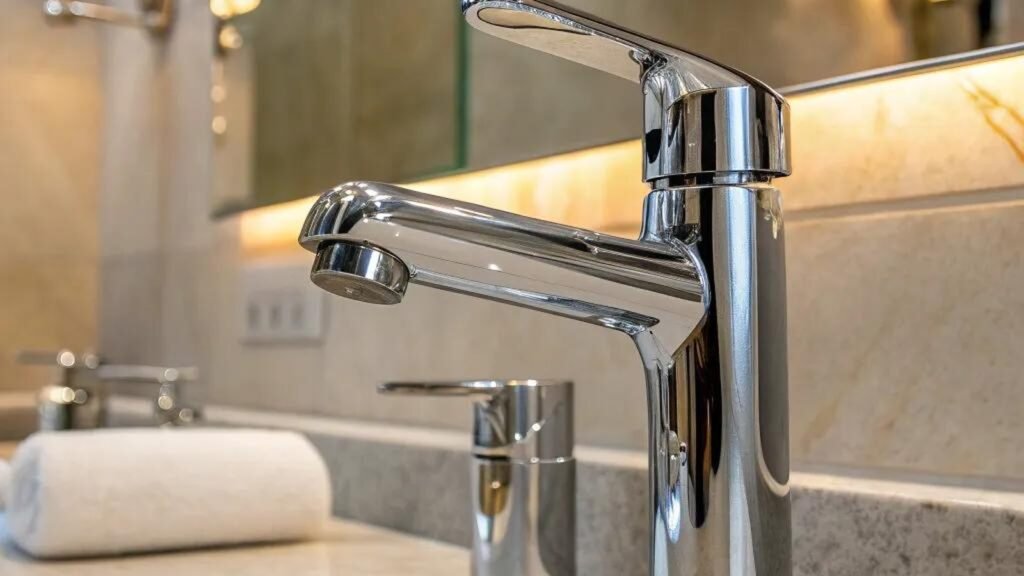

China supplies the world’s bathroom fixtures, from faucets and showers to toilets and vanities, with deep clusters in Chaozhou, Foshan and Xiamen. But bathroom hardware sits under strict water and lead rules, and a leaky or corroded faucet is a warranty nightmare. This guide covers materials, the certifications you need, and the QC that catches problems before the product ships.
The hidden cost of bathroom failures
Bathroom fixtures are installed once and expected to last years, which is why failures hurt so much. A leaking cartridge, a corroded chrome finish or a cracked ceramic does not just mean a refund — it means a warranty claim, possible water damage in a customer’s home, and returns that wipe out margin. This is why the cheapest faucet is rarely the cheapest over its life. Spend on brass bodies, a recognized cartridge and proper plating, and you buy years of no-warranty-claims peace of mind.
Sampling and testing before bulk
Always order physical samples and run them before bulk. Fit the faucet, check the handle feel, run water through it, and look closely at the plating. Ask the factory which models already hold the test reports you need for your market — a factory with established NSF/CEC reports for a faucet has already done the compliance legwork, saving you cost and time. Avoid models that need brand-new certification from scratch unless you have budget and schedule.
Categories and materials
- Faucets and showers — usually brass (premium, heavy), stainless steel (modern, lighter), or zinc/ABS (budget).
- Toilets and basins — ceramic, with the glaze quality critical.
- Bathroom vanities — cabinets combined with basins.
The internal ceramic cartridge is the part that determines how long a faucet lasts — specify a recognized cartridge brand where quality matters.
Compliance: low-lead and water standards
Because fixtures touch drinking water, material compliance is serious. For the US market, faucets must meet low-lead requirements such as NSF/ANSI 61 and California AB1953, and California also has CEC efficiency and WaterSense considerations. For Europe, relevant EN sanitary standards apply. Require test reports for the exact model — do not accept a generic “compliant” answer.
QC: pressure, plating and glaze
- Water pressure / flow testing — faucets and showers must pass pressure and leak tests.
- Plating / salt spray — chrome plating must resist corrosion; request a salt-spray test result.
- Ceramic glaze — inspect toilets and basins for an even, defect-free, non-porous glaze.
- Finish consistency — check plating brightness and that handles operate smoothly.
Clusters and private label
Sanitary ware clusters are specialized: Chaozhou for ceramics/toilets, Foshan for faucets and hardware, Xiamen for adjacent products. Sourcing within the right cluster means the factory already knows its product category and the relevant tests. Private labeling your brand on fixtures is standard, with MOQs that vary by product.
Product categories beyond faucets
Beyond faucets, the sanitary range includes shower sets (rainfall heads, hoses, mixers), complete toilets, vanity basins, and bathroom furniture. Each has its own QC — toilets need flush performance and crack-free glazing, shower sets need consistent pressure and anti-scald safety. Buying a coordinated range from one cluster lets you build a complete bathroom collection rather than mixing mismatched suppliers. For ceramic products in particular, Chaozhou factories already run the glazing and firing at scale.
Finishes and design
Chrome is the classic finish, but brushed nickel, matte black and other PVD finishes let you modernize a bathroom line. Finish choice affects plating cost and the salt-spray requirement — darker matte finishes often hide minor imperfections but cost more. For private label, design around a coordinated range: matching faucets, shower and accessories create a premium impression that a single faucet cannot. Confirm the finish samples under your own lighting, since chrome reflections look different in a showroom than on a customer’s wall.
The bottom line
Bathroom fixtures sourcing lives on compliance and durability. Specify brass bodies and quality ceramic cartridges, demand low-lead NSF/AB1953 and EN test reports, and QC with pressure, salt-spray and glaze checks. Match the product to its cluster — ceramics to Chaozhou, faucets to Foshan — for the most reliable supply. In a category where a bad faucet means a flooded customer bathroom, paying up for brass, a good cartridge and valid certification is the cheapest insurance you will buy. Build a coordinated range, demand the right test reports, and you will sell fixtures that hold up for years instead of returning for replacements. Order samples, run them, and only then place the bulk order. A faucet that arrives already holding the right market reports saves you the cost and delay of new certification. That alone makes choosing an export-ready supplier worth more than the lowest unit price. For bathroom goods, durability is the real product. A long-lasting fixture builds repeat buyers; a leaky one does not.