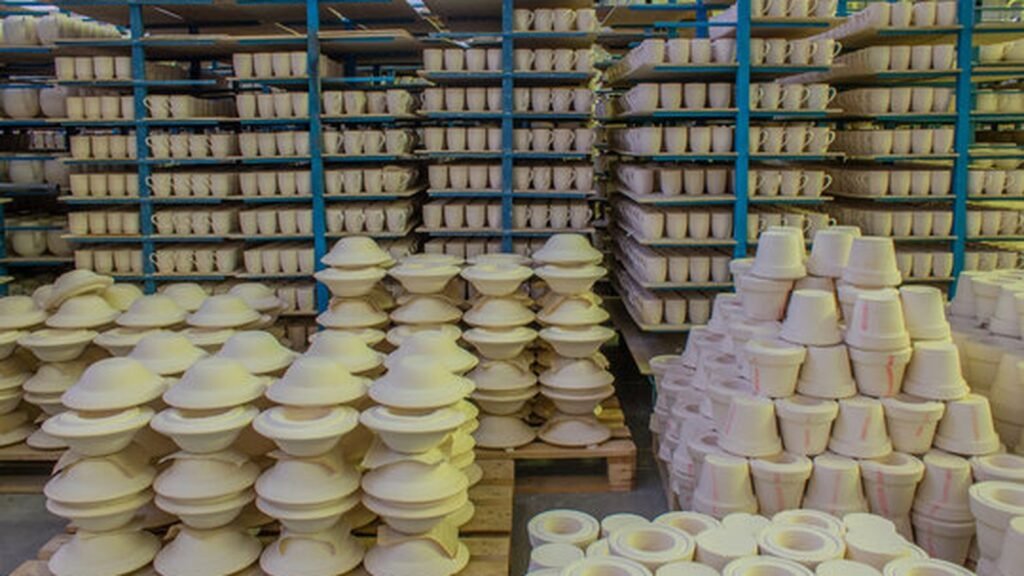

Chinese ceramic and glassware factories supply a huge share of the world’s dinnerware—from budget stoneware plates to premium bone-china sets. Unit prices are attractive, and custom shapes, glazes, and printing are mature. But these products are fragile, food-contact-regulated, and prone to specific defects (warping, pinholes, uneven rims). This guide covers materials, QC, compliance, and packaging.
1. Ceramic Categories and Glazes
- Bone china. Premium, lightweight, translucent. The highest tier.
- Fine porcelain / new bone. Mid-premium; glossy and durable.
- Strengthened porcelain (强化瓷). Chip-resistant; the workhorse for restaurants and retailers.
- Stoneware (炻器). Matte, rustic, heavy; on-trend for modern tableware.
- Earthenware. Budget, less durable; mainly for decor.
Glazes matter: a good glaze is even, food-safe, and chip-resistant. Reject products with visible pinholes, orange-peel texture, or uneven color.
2. Glass Categories
- Soda-lime glass. The standard for everyday cups, plates, and jars. Cheaper but heavier.
- Borosilicate glass. Heat-resistant (like Pyrex); used for coffee cups, teapots, and ovenware.
- Tempered glass. Safety glass that shatters into small pieces; used for dinnerware and cookware.
- Crystal / lead-free crystal. Premium, light-refractive; usually soda-lime with mineral additives.
3. QC: The Defects That Matter
- Warpage. Plates should sit flat without rocking; cups should not wobble.
- Pinholes and bubbles. Especially on the food-contact surface; visible in glazes.
- Color consistency. Between pieces and between batches; glaze color shifts are common.
- Rim smoothness. Cup rims should be smooth to the lip—rough rims are a real complaint.
- Glaze coverage. No unglazed patches inside; no dripping glaze on the bottom.
- Print alignment. Logos and patterns should be centered and even.
4. Food-Contact Compliance: Lead and Cadmium
Because ceramics and glass touch food, lead and cadmium migration is the key regulatory issue:
- US FDA. Sets limits for lead and cadmium leaching from ceramicware; items must pass migration testing.
- EU Council Directive 84/500/EEC. The European framework for lead and cadmium release from ceramic articles.
- Test reports. Require an FDA/EU migration test from an accredited lab (SGS, Intertek, TÜV). This is not optional for dinnerware.
Cheap colored glazes—especially red, orange, and yellow—are historically high in cadmium. Always test colored interiors.
5. Clusters, MOQ, and Packaging
- Chaozhou (Guangdong). China’s largest ceramic dinnerware hub; strong for glazed and printed tableware.
- Zibo (Shandong). Stoneware and hotel tableware.
- Tangshan (Hebei). Bone china and premium porcelain.
- Glassware clusters: Shanxi (daily glass), Jiangsu (high-end).
MOQ is typically 1,000–3,000 pcs per shape for custom glaze; existing catalog items start at 300–500 pcs. For custom shapes, mold fees apply.
Packaging is critical for fragile goods. Require:
- Individual bubble or foam wrapping for each piece
- Double-wall export cartons
- A drop-test of master cartons before bulk shipping
- Moisture protection for long sea voyages
Breakage in transit can exceed 10% if packaging is weak—never skip the packaging QC step.
6. Decoration: Printing, Decal, and Hand-Painting
The decoration method drives both cost and compliance. Silk-screen printing is cheapest for simple logos; decal (heated-on transfers) gives multi-color patterns; hand-painting is premium but expensive and inconsistent. For food-contact items, confirm that the decoration ink itself is food-safe—a beautiful printed mug that leaches lead from the decal is a recall waiting to happen. Always require a migration test that includes the decorated surface, not just the plain glaze.
For glassware, decoration options include sandblasting, color coating, and electroplating (metallic finishes). Metallic coatings are the most common source of nickel migration complaints, so test them specifically if your glassware has metallic rims.
7. Lead Time and the Firing Constraint
Ceramic production has a hard constraint: firing. Each piece must be bisque-fired, glazed, and glaze-fired, which takes days and cannot be rushed without risking defects. Typical lead time for custom ceramicware is 45–60 days; glassware is faster (25–40 days). Plan accordingly and never ask a ceramic factory to speed up firing—you will receive cracked or warped pieces. For a new product line, start with existing molds (which Chaozhou factories stock by the thousand) and invest in custom shapes only after the design proves itself. Finally, price landed cost carefully—breakage and packaging add 15–25% on top of FOB, so bundle dinnerware into sets and budget for replacement claims from day one—even with perfect packaging, 1–3% breakage in transit is normal. Offer buyers a replacement or partial refund rather than a return; shipping a broken plate back costs more than the plate itself. This policy protects customer satisfaction while keeping reverse logistics costs near zero. Always require the lead-and-cadmium migration test report before bulk shipment—food-contact compliance is non-negotiable for dinnerware sold in the US or EU.