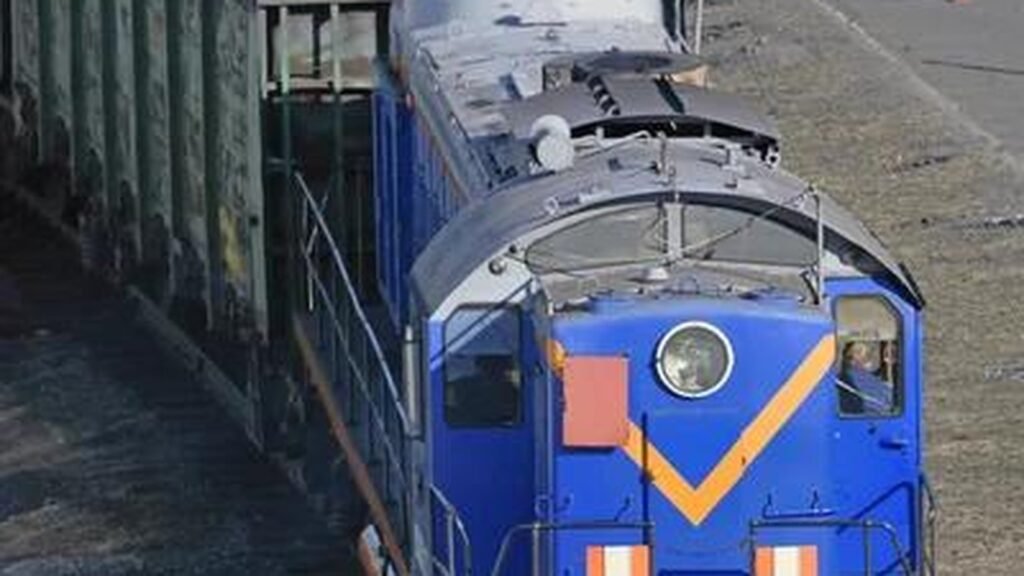

When ocean freight is too slow and air freight is too expensive, China-Europe rail has become the default middle path for importers in Germany, Poland, the UK, and beyond. A block train carrying 40-foot containers takes roughly 16–20 days from central China to Duisburg — about half the ocean transit time, and typically a third to half the cost of air freight. After Red Sea disruptions diverted hundreds of container ships around the Cape of Good Hope, rail volumes surged. Here is how the service works, which routes exist, and what to book.
How Fast, and How Much
Terminal-to-terminal transit is roughly 14–20 days to Central Europe. Published operator schedules give a useful benchmark: Xi’an to Duisburg about 16 days, and Yiwu to Duisburg about 16–18 days. Adding domestic China pickup, export customs, European import clearance, and last-mile delivery brings the typical door-to-door total to about 22–26 days.
On cost, rail is typically about 1.5–2.5 times ocean freight per container, but 50–70% cheaper than air. For comparison, ocean from China to North Europe usually takes 30–40 days, while door-to-door air takes 5–8 days but can cost 5–10 times rail. For time-sensitive, non-perishable cargo that is too heavy or volumetric for air, rail is the sweet spot.
The Named Routes You Will Hear About
- Yuxinou (Chongqing → Duisburg): the pioneering China-Europe block-train service, launched in 2011; it serves Chongqing and western Sichuan electronics and auto-parts cargo.
- Rong’ou (Chengdu → Europe): Chengdu’s extensive network with services to Poland, Germany, and the Netherlands.
- Xin’ou (Yiwu → Madrid): one of the longest scheduled rail routes in the world, carrying small-commodities and consumer goods from Zhejiang; transit to Madrid runs about 20 days or more.
Xi’an, Wuhan, Zhengzhou, and Suzhou also operate regular services. Geographically, trains exit China through the Alashankou or Khorgos border crossings into Kazakhstan, then cross Russia, Belarus, and Poland before reaching Germany and beyond. A gauge change from Russian broad gauge to European standard gauge occurs at the Belarus–Poland border, which adds a transshipment step.
What Rail Is Best (and Not Best) For
Rail fits medium-weight consumer goods, electronics, auto parts, industrial components, e-commerce replenishment, and furniture — cargo that is too heavy for air but too time-sensitive for sea. It is also strategically resilient to ocean-port congestion and Red Sea diversions, making it a valuable diversification for any Europe-bound supply chain.
It is less suitable for very low-value bulk cargo, where ocean still wins on cost; urgent express parcels, where air or courier wins on speed; hazardous goods with cross-border rail restrictions; and temperature-sensitive cargo without reefer containers.
Limits and Practical Notes
- Frequency: most lanes run 3–7 trains per week; book 2–4 weeks ahead in peak season, especially September–November.
- Minimum: LCL is available but at a higher rate per CBM than ocean; a full 40-foot container is most cost-efficient.
- Packaging: rail vibration and gauge-change transshipment are harder on cargo than ocean stowage, so packaging must be robust.
- Dimensions: per-wagon height and weight limits apply; over-height or over-width cargo needs special handling and pre-approval.
- Insurance: rail cross-border is generally reliable, but purchase full cargo insurance and clarify liability under the rail waybill.
Booking Process at a Glance
- Confirm cargo details: HS code, weight, volume, value, and dangerous-goods status.
- Request terminal-to-door quotes from two or three rail forwarders and compare total all-in pricing.
- Book 7–21 days before departure; provide commercial invoice, packing list, and export license.
- Truck cargo to the departure consolidation station for loading and container sealing.
- Track the train by waybill number across the border crossings.
- Complete destination customs clearance and arrange last-mile delivery.
When Rail Beats Ocean (and When It Does Not)
Rail wins on two fronts: speed and reliability. For a replenishment cycle that would take six weeks by sea, rail cuts it to about three, which means you can hold roughly half the safety stock in your European warehouse and reduce working capital. It is also unaffected by Suez Canal or Red Sea reroutes, port labor disputes on the US West Coast, and typhoon season closures in southern China — all events that have disrupted ocean schedules repeatedly since 2021.
Rail does not win on pure cost for heavy, low-value cargo such as furniture, building materials, or bulk packaging, where ocean rates remain far cheaper. It also does not match air for a critical last-minute top-up of 100 kg, where express courier arrives in days. The decision matrix is simple: if your cargo is above roughly 200 kg and above two cubic meters, and you want it in Europe in under four weeks rather than six, rail is usually the best economic balance. Many importers now run a dual strategy — ocean for the bulk of seasonal volume, rail for mid-cycle top-ups and new-product launches where speed to market matters.