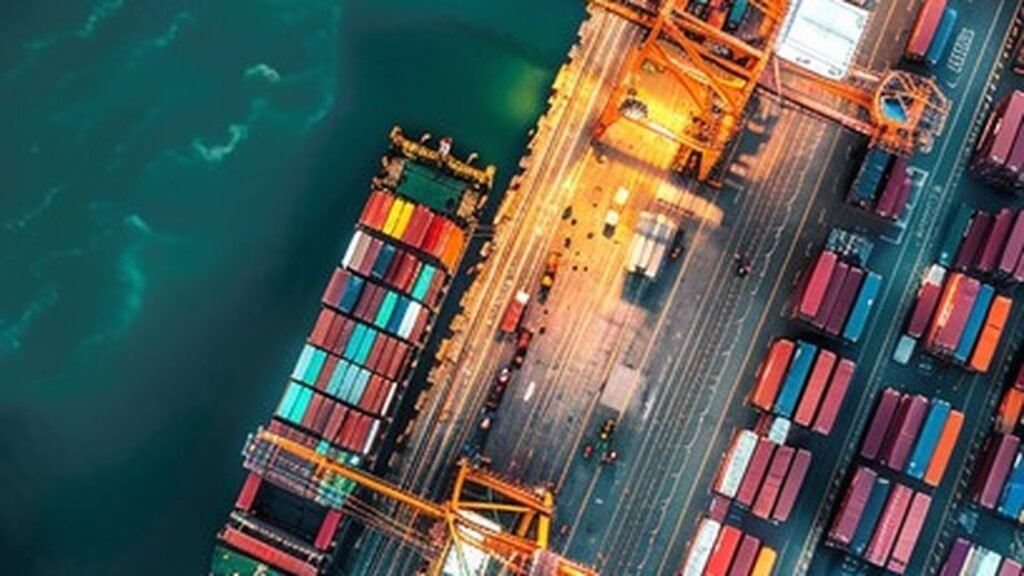

“FOB Shanghai” sounds like a neutral term on a quote, but your choice of export port in China changes inland trucking cost, ocean freight rate, customs speed, and even which vessels you can catch. China’s top container ports — Shanghai, Ningbo-Zhoushan, Shenzhen, and Qingdao — each serve a different manufacturing belt, carry different route networks, and price FOB terms differently. Here is how they compare and how to choose.
The Numbers: 2024 Container Throughput
According to published 2024 port statistics:
- Shanghai: about 51.5 million TEU — the busiest container port in the world.
- Ningbo-Zhoushan: about 39.3 million TEU — third globally.
- Shenzhen: about 33.4 million TEU, spread across Yantian, Shekou, and Chiwan terminals.
- Qingdao: about 30.9 million TEU.
These four ports alone handle more container volume than many entire continents. For a buyer, that means frequent sailings, competitive rates, and mature customs procedures — but also congestion and hidden inland-trucking differences.
Shanghai (Yangshan and Waigaoqiao)
Shanghai’s hinterland is the Yangtze River Delta: Jiangsu, Zhejiang, and Anhui. It is the natural exit for electronics, textiles, automobiles, and machinery clustered around Suzhou, Kunshan, and Hangzhou. Its route network is unmatched globally, with the widest choice of direct services to the US East and West Coasts and to Northern Europe, and frequent weekly sailings.
Customs is highly digitalized and fast. The tradeoff is that the deep-water Yangshan phase is on an artificial island roughly 30 km from the mainland, adding trucking time and cost for deliveries from inland Jiangsu. Shanghai is the default for high-volume, globally routed cargo.
Ningbo-Zhoushan
About 200 km south of Shanghai, Ningbo-Zhoushan is a natural deep-water harbor serving southern Zhejiang and inland Jiangxi. It is especially strong for Asia-Europe and trans-Pacific services, often with slightly lower base rates than Shanghai while still offering frequent weekly sailings. Customs is efficient and congestion is materially lighter.
For Yiwu commodity goods, plastic products, and auto parts, Ningbo is often a cost-effective alternative to Shanghai when your factory sits closer to Zhejiang. Many shippers deliberately split volume between Shanghai and Ningbo to avoid single-port congestion risk.
Shenzhen (Yantian, Shekou, Chiwan)
Shenzhen’s hinterland is the Pearl River Delta — Guangdong manufacturing: consumer electronics, toys, furniture, garments, and LED products. Its route network is dominant on the Asia-to-US West Coast lane, and a large share of Amazon FBA cargo from South China moves through Yantian. Cross-border e-commerce customs procedures are among the most mature in China.
Practically, Yantian handles large containers on deep-water services, while Shekou and Chiwan are convenient for smaller lots and LCL consolidation. Any factory in Dongguan, Guangzhou, or Foshan should compare FOB Shenzhen first, because inland trucking is shortest.
Qingdao
Qingdao is northern China’s main export gateway, serving Shandong, Henan, and the north. Its cargo mix is heavier on chemicals, rubber, industrial machinery, automotive parts, and seafood. Routes to Korea and Japan are short and frequent, with solid services to the US West Coast and Europe.
For a Shandong or northern-China factory, trucking to Shanghai can cost more per container than the ocean leg itself. Qingdao saves that inland cost and offers experienced inspection resources for industrial and chemical goods.
How FOB Price and Port Choice Interact
The hidden variable is inland trucking. A Dongguan factory quoted FOB Shanghai may quietly add 1,500–3,000 RMB per 40-foot container of trucking versus FOB Shenzhen. Ask for both an ex-factory price and an FOB price at the nearest main port, then compare total landed cost rather than the unit FOB number.
- Check direct sailings: a port with weekly direct cut-sailings saves 3–7 days versus a transshipment.
- For LCL e-commerce cargo, consolidation warehouses in Shenzhen and Shanghai are the most developed.
- Build redundancy: if your key supplier sits near Shenzhen, keep a secondary routing via Guangzhou to hedge Yantian strikes or typhoon closures.
- Match port to cargo type: dangerous goods, reefer cargo, and oversized pieces have terminal restrictions that differ across ports.
Which Port to Choose by Industry
As a practical shortcut, match your factory location and cargo type to the natural port rather than defaulting to Shanghai. If your factory is in Guangdong — Shenzhen, Dongguan, Guangzhou, Foshan — FOB Shenzhen is almost always the cheapest and fastest choice, with the densest US West Coast service. If your factory is in Zhejiang or southern Jiangsu, choose between Shanghai for maximum routing flexibility and Ningbo for lower rates and less congestion. If your factory sits in Shandong or northern China, Qingdao saves you 1,000+ km of inland trucking.
For LCL and e-commerce consolidation, Shenzhen and Shanghai have the most developed forwarder networks, daily LCL cut-offs, and Amazon FBA trucking programs. For dangerous goods and reefer cargo, confirm terminal acceptance before you book — not every terminal in every port handles every DG class, and a refusal at the gate can cost a week of delay. When in doubt, ask your forwarder to quote ex-factory door-to-door through two different ports and compare the landed total.