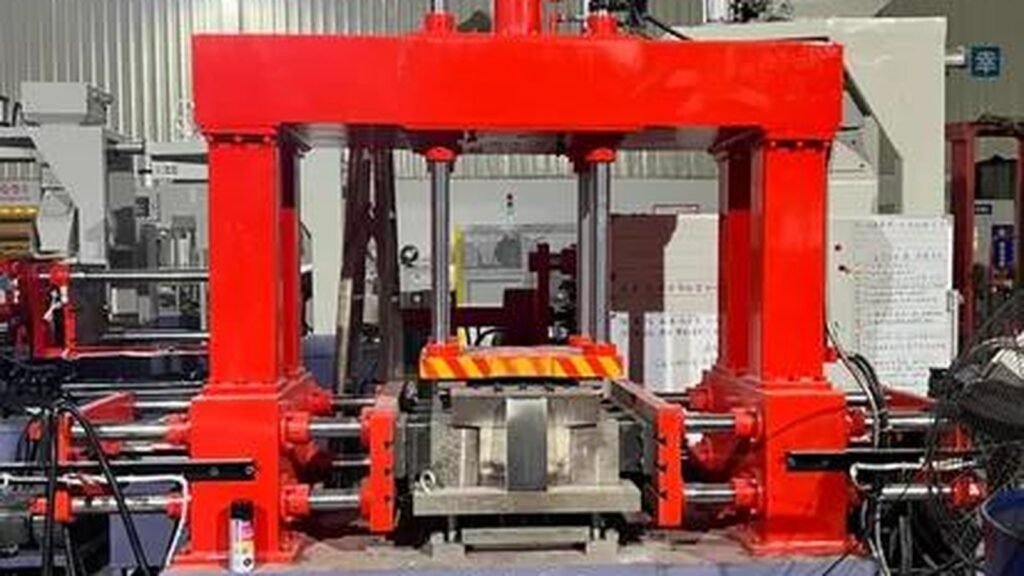

When a metal part needs to be strong, complex-shaped and produced in volume — automotive housings, tool bodies, hardware, valves — casting and forging are usually the answer, not machining a solid block. China has deep, mature foundry clusters. The challenge is controlling porosity, strength and surface quality. This guide covers the two main processes and how to QC them.
Casting vs forging: how to choose
Pick based on what the part must do. If it needs a complex, light, near-net shape — a housing or cover — die casting is efficient. If it carries load or sees repeated stress — a gear, a tool component, a suspension part — forging’s grain flow gives the strength machining a cast or billet part cannot match. Cost also points the way: die casting wins on complex geometry at volume; forging on strength-critical simpler shapes. When unsure, ask the foundry to cast a trial and discuss where porosity or strength could be a problem.
Working with a foundry: communication and samples
Foundries are less like standard product factories and more like custom job shops. Send drawings with material grade and any heat treatment called out, and expect them to advise on gating and draft angles that make the part castable. Budget for a trial shot and sample approval before full production, because the die and process are tuned on the first run. Confirm die ownership and maintenance in writing, since the tool is a real asset you have paid for.
Die casting: aluminum and zinc alloy
Die casting injects molten metal — most commonly aluminum alloy, and zinc alloy for smaller, higher-detail parts — into a steel die under pressure. It produces complex, near-net shapes with good dimensional consistency at high volume. The main risk is porosity: trapped gas that leaves bubbles, weak spots or leaks. Good gating design and vacuum-assisted casting reduce it.
- Best for — housings, covers, brackets, automotive and hardware parts in the thousands to millions.
- Mold cost — the die is the up-front investment; expect it to run to thousands of dollars for complex parts, amortized over volume.
Forging: hot and cold
Forging hammers or presses metal into shape, refining its grain structure and making it stronger than cast or machined stock. Hot forging handles larger, more complex parts; cold forging is precise for smaller high-strength components. Where strength and fatigue resistance matter — tools, gears, suspension parts — forging beats casting.
Post-processing: machining and surface treatment
As-cast and as-forged parts rarely go straight to the customer. They usually need CNC machining of critical holes and faces, plus surface treatment (anodizing, powder coating, plating) for corrosion and appearance. Budget these in — they are a real share of the final cost and lead time.
QC: crack testing, hardness and structure
- Porosity and leak testing — pressure-test or X-ray housings that must be sealed.
- Hardness testing — confirm the heat-treated hardness matches spec.
- Crack / flaw inspection — magnetic-particle or dye-penetrant testing on safety-critical parts.
- Dimensional check — first-article report on machined features.
Where casting and forging are used
These processes dominate automotive parts and components, hand tools and hardware, and the housings and bodies of industrial equipment. Aluminum die castings appear everywhere — from power-tool bodies to LED heatsinks. Forged parts show up where loads repeat, such as wrench and gear components. Because these are often safety- or function-critical, the buyers who source them successfully treat metallurgy as seriously as geometry: material grade, heat treatment and test reports are not optional extras.
Common defects to watch
In cast parts, expect porosity, flash along the parting line, and dimensional drift from die wear. In forgings, look for laps and folds on grain-flow paths. These are not always visible, which is exactly why the test methods matter. Ask the foundry which defects they typically see on a part like yours — an honest shop will tell you, and their answer reveals how well they understand their own process. Cheap castings that skip X-ray or hardness checks are the ones that fail in the field.
The bottom line
Choose die casting for complex, high-volume near-net shapes in aluminum or zinc, and forging where raw strength is critical. Budget for the die, post-machining and surface treatment, and QC with hardness, leak and crack tests rather than a visual check alone. Chinese foundries are competitive here — provided you specify the test plan up front. A foundry that volunteers its own crack and hardness checks before you ask is usually a foundry worth trusting with the next order. Match the process to the load the part must carry, and the casting or forging will outperform a cheaper machined alternative. Budget the die, the post-machining and the finishing as separate line items from the start, so there are no surprises on the final landed cost.