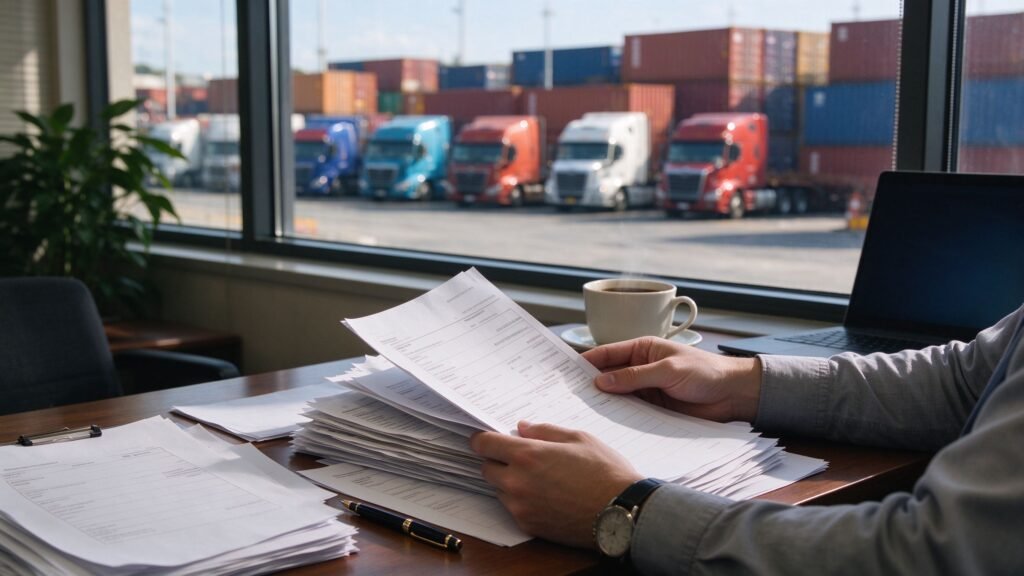
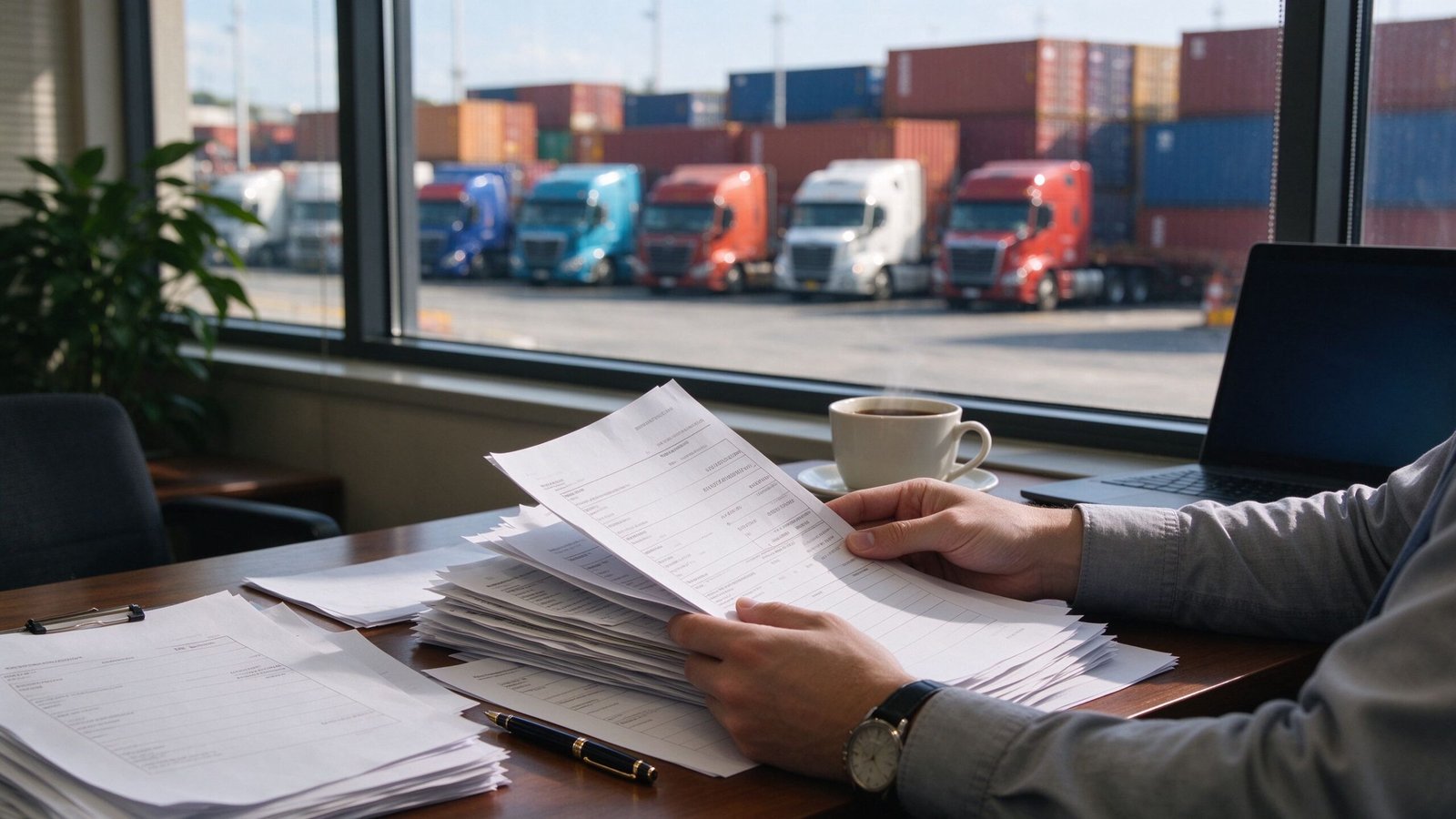
Your goods are manufactured, inspected, and loaded — and then a paperwork error adds ten days and hundreds of dollars to your import. Export documents look simple, which is exactly why they are dangerous: the bill of lading, packing list, and commercial invoice are three versions of the same truth, and when they disagree, customs stops the container. The buyers who clear cargo fastest are usually not the ones with the fastest forwarders — they are the ones whose paperwork matches on the first try. Here is what each document actually does.
The Bill of Lading: Types and What It Does
The bill of lading (B/L) is the most important document in the shipment. It does three things at once: it is a receipt from the carrier for the cargo, it is the contract of carriage, and — critically — it is the document of title. Whoever holds an original B/L can claim the cargo.
- Original (negotiable) B/L — paper documents you courier and endorse; slower but classic for L/C payments
- Sea waybill — non-negotiable; cargo released to the consignee named, no originals needed, fastest for open accounts
- Telex release / surrendered B/L — original surrendered at origin; destination releases cargo on identity alone, ideal for repeat buyers
Misspelled consignee names or wrong notify party are the most common B/L errors and routinely cause release delays at destination.
The Packing List: Exact Contents That Must Match
The packing list itemizes how the cargo is packed: number of cartons, dimensions and gross/net weight of each carton, inner quantities, and sometimes marks and numbers. It is what customs and your forwarder use to verify a shipment physically. Every number here must reconcile with the invoice: total cartons, total quantity, and total weight. A packing list saying 520 cartons while the invoice says 500 is an immediate inspection trigger.
The Commercial Invoice: The Core Value Document
The commercial invoice states the commercial reality of the sale: seller and buyer details, date, description and quantity of goods, unit price and total value, currency, Incoterm, and payment terms. Customs uses it — together with the packing list — to assess duties. Descriptions should be clear and consistent with the packing list and B/L. Under-declaring value to save duty is a widespread and genuinely dangerous practice that leads to audits, penalties, and cargo seizure.
How Document Discrepancies Cause Customs Delays
Customs runs a three-way comparison across your invoice, packing list, and B/L. When they do not line up — different product descriptions, mismatched totals, inconsistent weights, or a B/L that names the wrong consignee — the shipment is held pending correction. Reissuing documents means contacting the forwarder, the shipping line, and sometimes the origin agent, which adds days of storage and demurrage charges at the port. Fixing documents before the vessel sails is free; fixing them after it docks is expensive.
Who Prepares Which Document
Responsibilities are clearer than buyers usually assume: your supplier issues the commercial invoice and packing list; the freight forwarder or shipping line issues the bill of lading based on details both sides confirm; your customs broker at destination files the entry using all of them. Your job is to review the draft set of documents — long before sailing — and confirm names, values, quantities, and descriptions exactly match your sales records.
One more point worth internalizing: document consistency travels beyond your own files. Marketplaces, insurance claims, and payment disputes all pull the same document set. If your invoice says one value and your insurance another, a damage claim gets complicated on arrival; if your B/L consignee differs from your broker’s records, release is delayed even when everything else is perfect. Treat the document set as a single, consistent record that every downstream party will read — because that is exactly what it is. A few minutes of cross-checking before the vessel leaves port is the cheapest insurance in your entire import operation.
Pro Tips Before the Vessel Sails
Two habits prevent most document disasters. First, request a full draft document set — invoice, packing list, and B/L draft — at least 48 hours before container cut-off. Everything on that set is still changeable at the shipping line for free; once the vessel sails, corrections cost filing fees and time. Second, build a simple checklist you fill in for every shipment: spelling of the consignee, the correct Incoterm on the invoice, total carton count matching across all three documents, HS code, and country of origin. A ten-minute review by a second pair of eyes catches the typo that would otherwise sit in your cargo broker’s inbox.
- Match product descriptions across all three documents word for word
- Ensure declared value, currency, and Incoterm are internally consistent
- Confirm container numbers and seal numbers before loading is filmed
Paperwork errors are avoidable. Let our team handle document checking and logistics coordination for your next shipment.