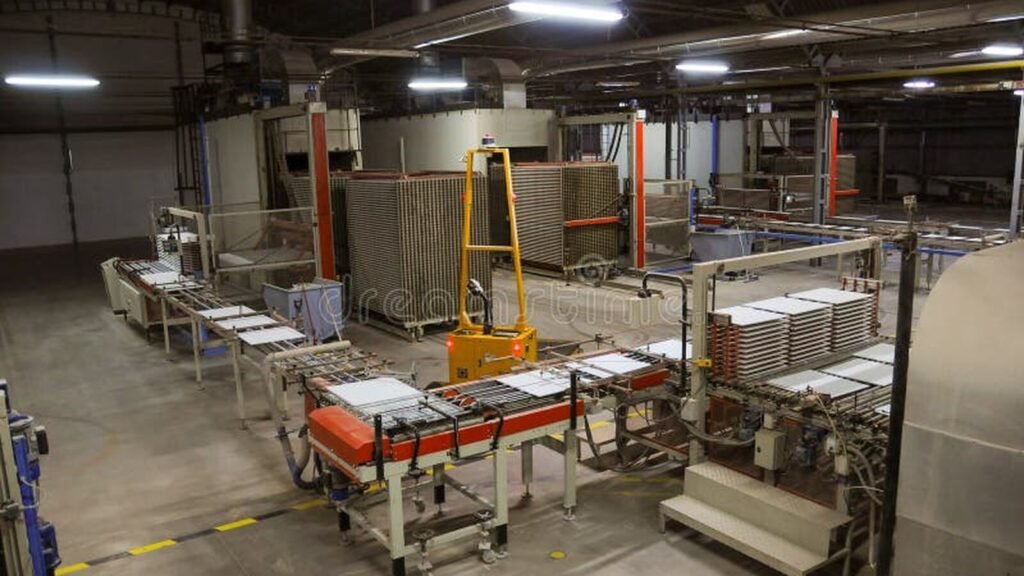

China makes roughly half the world’s ceramic tiles—Foshan alone is a global floor-tile hub. For importers and distributors, Chinese tiles undercut European production by 40–60% while matching quality. But floor coverings are heavy, fragile, and compliance-sensitive: a container of tiles that arrives chipped, mismatched in shade, or fails slip-resistance testing is a disaster. This guide covers categories, specs, QC, and clusters.
1. Product Categories
- Porcelain and ceramic tiles. Polished glazed tiles, rustic (anti-slip) tiles, marble-look tiles, wood-look tiles.
- SPC (stone plastic composite). Rigid vinyl flooring; waterproof, click-lock, fast-growing export category.
- LVT (luxury vinyl tile) and WPC. Softer vinyl flooring for residential use.
- Laminate and engineered wood. Imported mainly for the mid-market.
For most Western importers today, the fastest-growing category is SPC—it is lighter than tile, cheaper than hardwood, and fully waterproof.
2. Key Specs You Must Specify
- Size and thickness. Common tile sizes: 600x600mm, 600x1200mm, 750x1500mm. SPC thickness: 4mm, 5mm, 6mm plus an attached underlay pad.
- PEI rating (abrasion resistance). For tiles, PEI 3 is moderate foot traffic; PEI 4–5 is commercial. Specify by end use.
- Slip resistance (R value). R10/R11/R12 ratings. Wet areas require R11 or R12.
- Water absorption. Porcelain should be <0.5% (frost-proof); ceramic can be higher.
- Mohs hardness. Surface scratch resistance; aim for Mohs 6+ for floors.
3. QC: The Defects That Actually Happen
- Flatness. Tiles must not curl; a warped tile produces lippage when laid. Check with a straight edge.
- Shade variation. Between cartons from the same batch, shade should match. Mixing shade batches is the #1 customer complaint.
- Chips and cracks. Inspect edges and faces; even small chips are visible after grouting.
- Glaze consistency. Glazed tiles should have even coverage with no pinholes.
- Calibration. Sizes should be consistent to within +/-0.5mm; otherwise grout lines look uneven.
4. Compliance: ASTM, CE, and Formaldehyde
- US ASTM standards. Tile must meet ASTM C certifications for water absorption and break strength; SPC needs floor-slip resistance testing.
- CE marking. Mandatory for the EU under construction product regulation.
- Formaldehyde E1. Required for laminate and engineered wood flooring; E0 is premium low-emission.
- Slip resistance. Many US/EU projects now require tested R ratings or DCOF values.
5. Clusters and Packaging
- Foshan (Guangdong). China’s tile capital; every category, every design, huge choice.
- Shandong. Budget tiles and porcelain.
- SPC clusters. Guangdong, Jiangsu, Shanghai.
Because tile is heavy and fragile, packaging matters enormously. Require double-wall cartons, interlayer foam, and a drop test. Loading a container of tiles is a skilled job—poor loading causes breakage of 5–10% in transit. Choose a factory with export experience; they know how to load a 20’GP/40’HQ safely.
6. Pricing and Volume Considerations
Tile pricing depends heavily on size and design. A standard 600x600mm polished tile runs USD 4–8 per square meter FOB; large-format 750x1500mm marble-look tiles run USD 12–25; SPC flooring runs USD 8–15 per square meter depending on thickness and attached pad. Because tiles are sold by square meter, calculate your landed cost per square meter rather than per box—this is how retailers price. MOQ is usually one container (around 500–800 sqm per design). For a new brand, start with two or three best-selling designs rather than a wide catalog; shade consistency is easier to control with fewer SKUs. Always order 5–10% extra tiles in the same batch to cover future breakage and replacements. For SPC, pay attention to the wear-layer thickness (0.3mm vs 0.5mm vs 0.7mm)—this is the single biggest driver of price and durability. A 0.3mm wear layer is a budget product; 0.5mm is mid-market; 0.7mm is premium commercial-grade. For a practical start, choose one porcelain tile design (600×600, polished) and one SPC design (5mm with attached pad)—these two cover most residential projects.
6. Container Loading and Damage Claims
Tiles are heavy and fragile—loading a container badly causes 5–15% breakage in transit. Require the factory to use double-wall cartons, foam interlayers, and to stack cartons on pallets. Before shipment, ask for loading photos and a container weight check. When the container arrives at your warehouse, open it in the first 7 days and take photos of any damage. Filing a freight claim after this window is much harder. Because breakage is normal, budget a 3–5% replacement reserve in your landed cost.
7. MOQ and How to Start Small
A container of tiles is a lot of product for a new brand. For a first order, ask the factory to mix 2–3 designs in one container—this reduces SKU risk. SPC has lower MOQ (often 100–200 sqm) and much lighter freight, making it easier to start. Sample tiles cost USD 5–20 per box plus shipping. Always visit the factory in Foshan if you can—the tile market is huge and seeing the slabs in person beats any catalog.