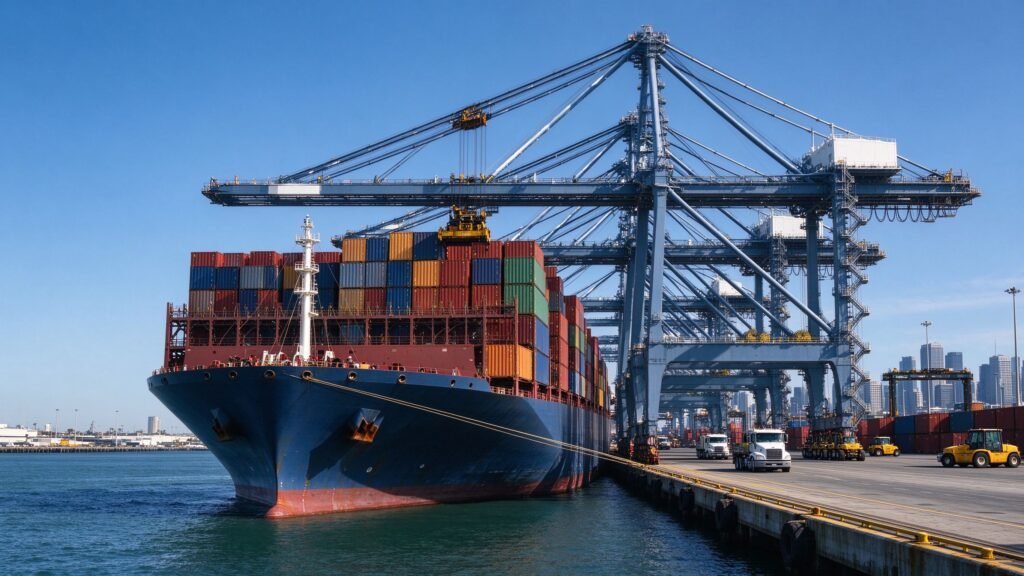
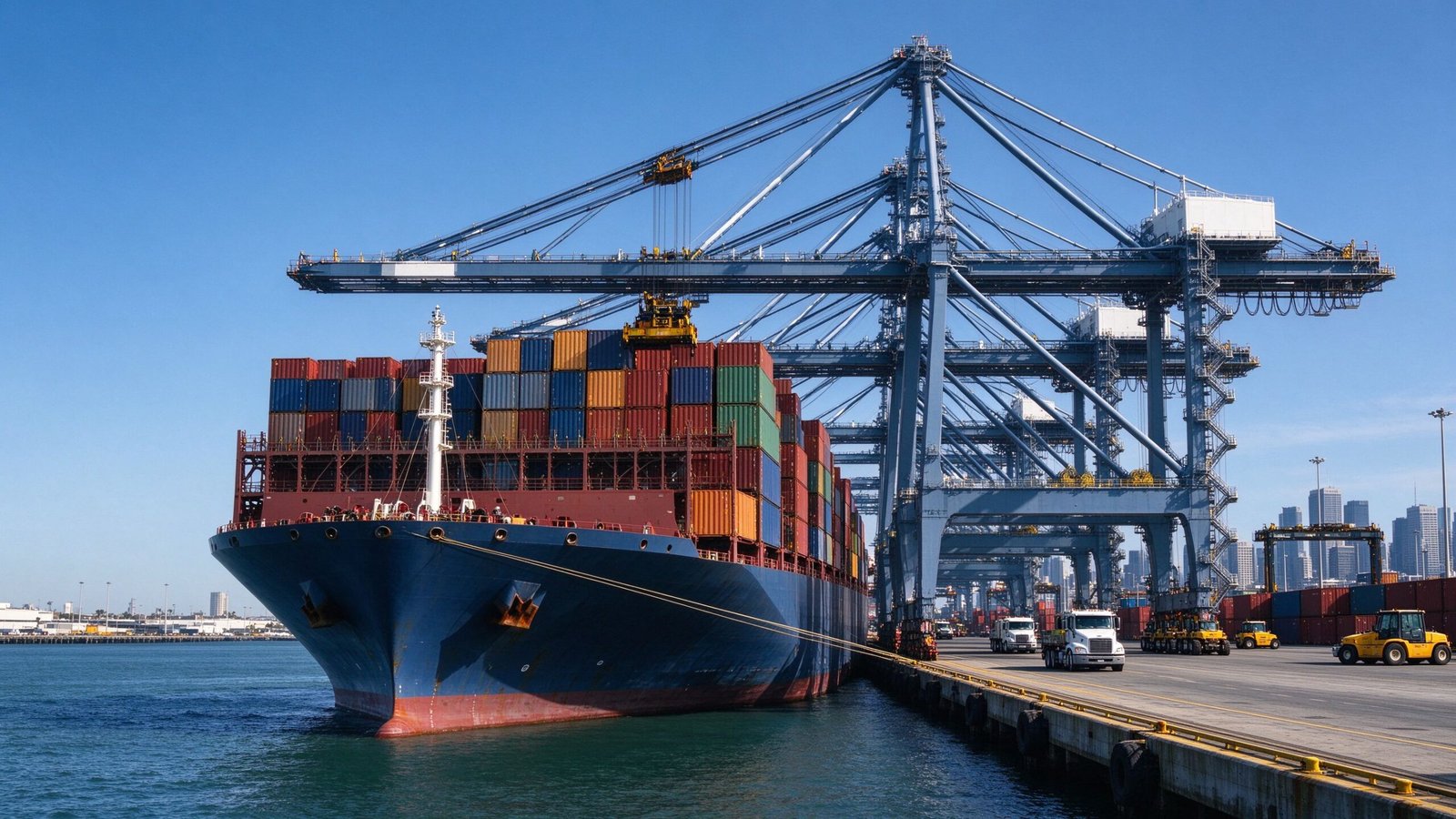
Thousands of US small-business owners, Amazon sellers and wholesale buyers successfully import from China to the USA every year. The process looks complex from the outside — suppliers, factories, forwarders, customs brokers, CBP filings — but it is actually a repeatable 9-step workflow. This guide walks you through the entire import process from first product idea to goods on your shelf, with the documents you need and the CBP rules that trip up new importers most often.
Step 1: Product Selection and Feasibility Check
Before contacting any supplier, confirm the product can legally enter the US and that the margin works. Spend half a day on this; it saves months later.
- Identify the HTS code (Harmonized Tariff Schedule) for your product on usitc.gov. The 10-digit code determines duty rate, any Section 301 tariff, and whether FDA / FCC / CPSC / FMC approval is required.
- Check whether the product is restricted or requires certification: electronics need FCC, children’s products need CPSC / CPC, food and cosmetics need FDA, medical devices need FDA 510(k), furniture with wood needs Lacey Act declaration.
- Calculate your target landed cost: product cost + sea/air freight + duty + MPF/HMF + customs broker + last-mile. Your retail price should be at least 3× landed cost for healthy margin.
- Confirm the product is not on the UFLPA (Uyghur Forced Labor Prevention Act) high-priority list — cotton, tomatoes, polysilicon and related goods from Xinjiang are detained at the border with almost no release path.
Step 2: Find and Vet Suppliers
Build a shortlist of 5–8 candidates on Alibaba, Made-in-China, Canton Fair directories or referrals. Then narrow down:
- Request the Chinese business license and verify the unified social credit code on Tianyancha or Qichacha.
- Conduct a 15-minute video call showing the production floor; ask them to hold up today’s date on paper.
- Order a paid sample yourself. Evaluate materials, workmanship, packaging and labeling against your spec.
- Check the supplier’s export history (number of years exporting to the US, typical customer size) — a factory that already serves US buyers will understand CPSC labeling and FBA carton requirements.
Step 3: Negotiate, Sign PI and Pay Deposit
Once a sample is approved, lock the deal with a signed Proforma Invoice that lists: product spec, quantity, unit price, Incoterms (commonly FOB Shenzhen or EXW), lead time, payment terms (typically T/T 30/70), packaging dimensions, and certifications required. Then wire the 30% deposit to the supplier’s corporate bank account — never a personal account.
Step 4: Production and Quality Control
Do not wait for the container to arrive to discover defects. Use a third-party QC inspector (SGS, Bureau Veritas, QIMA, or a local inspection firm) at two points:
- DUPRO (during production): at 20–30% completion, check raw materials and first-article samples.
- Pre-shipment inspection (PSI): when 100% is packed but before the balance payment. The inspector samples AQL 2.5, checks dimensions, packaging, barcodes and labeling. You release the 70% balance only after the inspection report passes.
Step 5: Book Shipping and Provide ISF
Hire a freight forwarder with a US customs brokerage arm. Give them:
- Commercial invoice and packing list from the supplier.
- The bill of lading details once the supplier books the vessel (sea FCL/LCL) or air waybill (air).
- Your ISF 10+2 filing — required by CBP for every sea shipment to the US, due 24 hours before the vessel leaves China. Your forwarder files it; fines for late filing can reach USD 5,000.
- AMS (Automatic Manifest System) filing, handled by the carrier.
Step 6: US Customs Clearance and Duty Payment
Your customs broker files the entry with CBP once the goods arrive at the port. Required documents:
- Commercial invoice (must show HTS code, country of origin, value, currency).
- Packing list, bill of lading / air waybill.
- Customs bond — either a single-entry bond or an annual continuous bond (minimum USD 500 for most importers; required once your annual entries exceed USD 10,000 in duty value).
- Any product-specific certificates (FCC, FDA, CPSC, FDA prior notice).
CBP charges Merchandise Processing Fee (MPF) (~0.3464% of entered value, minimum USD 31.67, maximum USD 612) and Harbor Maintenance Fee (HMF) (0.125% of value for sea shipments). On top, you pay the duty rate from your HTS code — remember that many China-origin goods also carry the Section 301 additional tariff (7.5% or 25% depending on the HTS list), so total duty can be much higher than the base rate.
Step 7: Drayage, Last-Mile and Stock On Shelf
After release, the container is trucked to your warehouse, an Amazon FBA station, or a 3PL. For FBA shipments, your carton labels, pallet labels and box content must be Amazon-compliant or the shipment will be rejected. Once goods are received, reconcile inventory, record landed cost per unit, and you are live.
Common Mistakes New Importers Make
- Skipping the HTS / Section 301 check and being shocked at duty rates at the border.
- Not getting a customs bond, causing the container to sit and rack up demurrage.
- Paying the 70% balance before the pre-shipment inspection.
- Forgetting ISF filing and receiving a CBP penalty.
- Under-declaring value to save duty — CBP audits and penalties for under-valuation are severe and can lead to seizure.
Get Started the Right Way
The first import always takes the longest — expect 8–12 weeks from sample to shelf. Your second and fifth shipments will run in 5–6 weeks because you already have the supplier, forwarder and broker relationships. To shorten the learning curve, work through our China procurement guides covering supplier vetting, payment terms, shipping modes and duty calculations before you place your first deposit.