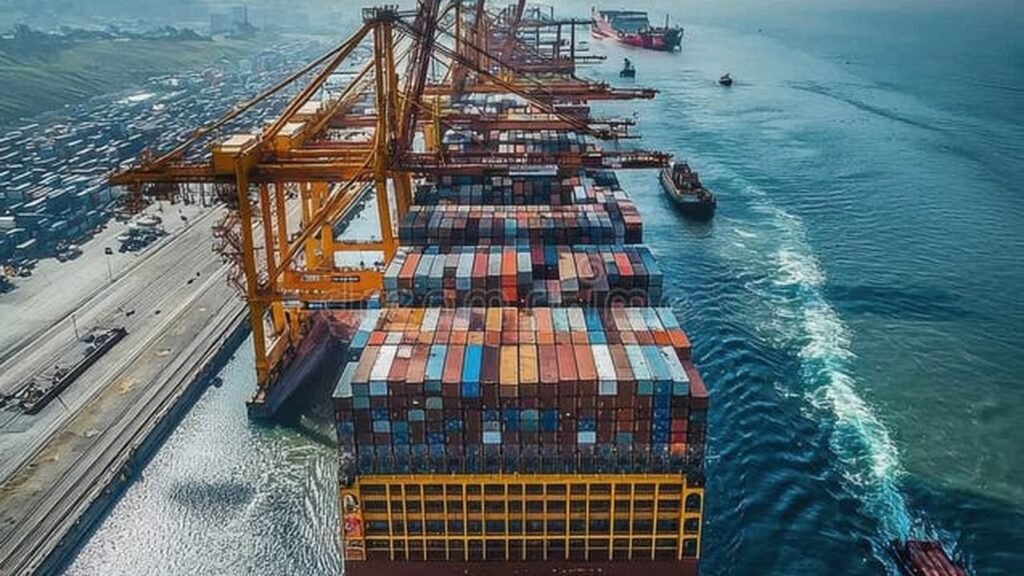

South Africa is one of Africa’s largest consumer markets, and China is its biggest source of imports. Yet many first-time importers underestimate the SARS process, the ITAC permit requirements, and the SABS conformity regime. A shipment that arrives in Durban without the right documents can sit in quarantine for weeks. This guide walks through registration, duties and VAT, permits, required documents, ports, and product opportunities.
Register With SARS and ITAC
Before you import, you must register as an importer with the South African Revenue Service (SARS). You need a company, a tax clearance, and an import-export customs registration. For controlled goods, used goods, or second-hand items, you also need an import permit from the International Trade Administration Commission (ITAC). Certain categories — certain electronics, vehicles, electrical equipment, and textiles — require ITAC permits regardless of who imports them.
Duties and VAT
- Import duty: varies by HS code; many consumer goods carry a range of rates under the South African tariff schedule. Some goods also attract anti-dumping duties.
- Value-added tax: South Africa’s import VAT is currently 15% (raised from 14% in April 2018). It is calculated on the Added Tax Value (ATV): customs value plus 10% plus any non-rebated duties, then multiplied by 15%.
- Surcharges: a small number of products attract additional customs or excise duties.
A licensed customs broker calculates these for you; their fee is trivial compared with a miscalculated entry.
SABS Conformity and Product Safety
The South African Bureau of Standards (SABS) regulates safety for a range of products — electrical appliances, automotive parts, building materials, and some child products. Imported goods must meet SABS standards, and a letter of authority or SABS certificate is required for regulated products before they clear customs. Non-regulated consumer goods still need to meet the relevant compulsory specifications.
Documents You Need
- Commercial invoice and packing list.
- Bill of lading or airway bill.
- Certificate of origin (COO) — a general CO; South Africa does not have a preferential FTA with China, but a COO is still required.
- ITAC import permit where applicable.
- SABS certificate or LOA for regulated products.
- Customs declaration (SDS or via a broker).
Ports and Logistics
- Durban: the busiest container port, serving Gauteng and the industrial heartland.
- Cape Town: for the Western Cape and as a relief port for Durban congestion.
- Ngqura (Coega): newer deep-water port in the Eastern Cape.
- Johannesburg: inland clearance hub via rail and road from Durban.
Freight from China to Durban is a common direct service; expect 25–30 days on the water, plus inland trucking to Johannesburg.
Product Opportunities and Pitfalls
Strong demand categories include consumer electronics, homeware, building materials, solar products (South Africa’s load-shedding drives a big solar market), and affordable furniture. Pitfalls: under-valuing invoices (SARS checks), missing ITAC permits for regulated goods, and neglecting SABS certification — the most common reasons containers are held.
How VAT and Duties Actually Hit Your Cost
A common first-time calculation mistake is to assume that VAT is paid on the FOB price. South African import VAT is actually calculated on the Added Tax Value (ATV), which is the customs value plus 10% (to account for transport and insurance) plus any non-rebated duties. VAT is then 15% of that ATV. On a typical CIF shipment, expect landed cost to be FOB + ocean freight + insurance + duty + 15% VAT on the combined figure + broker fees + clearing charges + inland trucking.
Import VAT paid by a VAT-registered trader is later recoverable on the bi-monthly VAT return, so it is a cash-flow item rather than a permanent cost. If your business is not VAT-registered (small traders, certain e-commerce sellers), the 15% is a real cost that must be priced into the retail margin. Plan for this when setting prices — a product sold for R500 ex-VAT that needs R75 of import VAT plus 10–20% duty is a different margin story than expected.
Under-valuation is the fastest way to attract SARS attention. Declaring $5 electronics on a commercial invoice when the retail price is $500 is a customs fraud risk that leads to fines, seizure, and trader registration being revoked. Use the factory’s commercial invoice as the basis; do not ask your supplier to write a lower value on it.
Finally, choose between FOB and DDP carefully. Most Chinese suppliers quote FOB Shanghai or Durban; if you are new, consider a DDP quote from a South Africa-focused forwarder who handles SARS clearance, ITAC, and SABS on your behalf. The markup is predictable, and you avoid the risk of a container stuck at Durban because a document is missing. For repeat shipments, building an in-house broker relationship becomes cheaper.
Engage a licensed customs broker before your first shipment; their registration and experience with SARS eFiling saves weeks of delay.
Many first-time importers in South Africa start with a DDP shipment through a Chinese-forwarder with local Durban/Johannesburg experience; this avoids most of the learning curve on SARS, ITAC, and SABS paperwork.