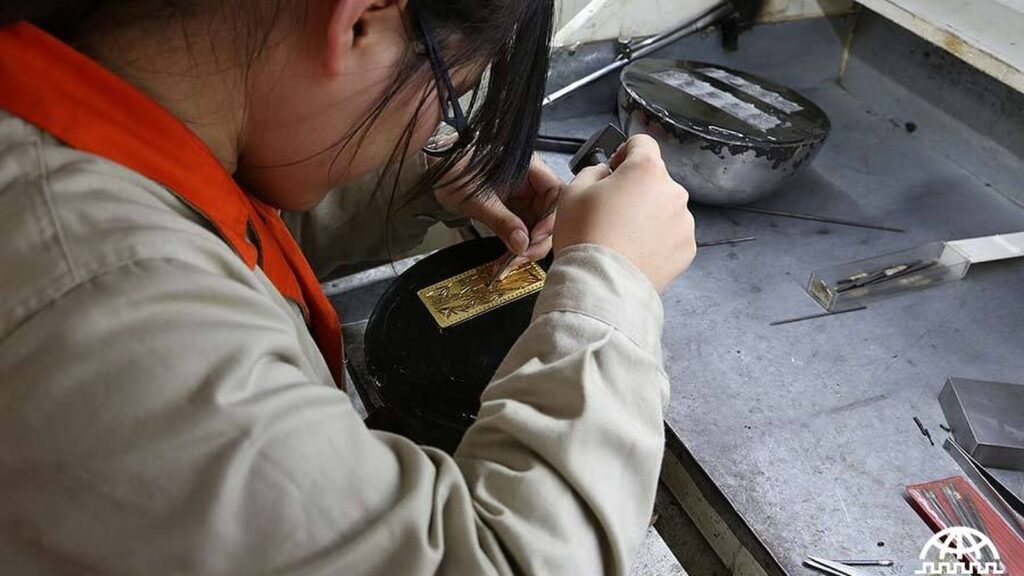

China is the world’s largest jewelry manufacturer—Shenzhen alone produces a huge share of the world’s silver and gold accessories. For DTC brands, the appeal is obvious: a 925 silver necklace that retails in the US for USD 40 can be sourced FOB for USD 4–8. But jewelry carries specific compliance risks (nickel allergy, lead content, plating wear) and counterfeit-quality issues. This guide covers categories, processes, QC, and export compliance.
1. Jewelry Categories and Their Clusters
- Sterling silver (925). The most common export material. Made mainly in Shenzhen Shuiwei (Luohu) and Panyu.
- K-gold and solid gold. High-value; Shenzhen and Guangzhou. Need assay certification.
- Alloy / fashion jewelry. Zinc alloy with plating. Yiwu dominates; very low unit cost.
- Pearls. Zhuji (Zhejiang) is the freshwater pearl capital.
- Stainless steel jewelry. Tarnish-free, hypoallergenic, popular for men’s and waterproof brands. Made in Guangdong.
- Jade and gemstone. Run of mines and carving hubs in Guangzhou and Suzhou.
2. Manufacturing Processes
Most fine jewelry is made by lost-wax casting: a wax model is investment-cast, then the piece is cleaned, polished, plated, and set with stones. Fashion alloy jewelry uses die-casting. Know which process your product uses—it affects detail quality and unit cost.
- Plating. Rhodium on silver prevents tarnish; gold plating thickness matters. Specify 0.5–1 micron plating for durability.
- Stone setting. Prong, bezel, pavé, or glue-in. Glued stones fall out; prong-set stones last.
3. QC: The Defects and Tests That Matter
- Metal purity. For sterling silver, require an XRF or assay certificate confirming 92.5% silver. “Silver-colored alloy” is not sterling silver.
- Plating thickness and adhesion. Rub the piece 50 times with a cloth; plating should not wear off.
- Stone security. Shake the piece; no stones should rattle or fall out.
- Allergy screen. Nickel and lead content testing is mandatory for skin-contact jewelry in Western markets.
- Finish. No scratches, no rough edges, no plating runs.
4. Export Compliance: Nickel, Lead, and Cadmium
This is the most common reason jewelry gets detained in the EU or US:
- EU REACH limits nickel release from skin-contact items to 0.5 µg per cm² per week (and 0.2 µg for posts). This is the single most-tested jewelry limit.
- Lead and cadmium. US CPSIA limits lead in children’s jewelry to 100 ppm; the EU has similar limits.
- Certification. Require an SGS/BV test report for nickel, lead, and cadmium before bulk shipment.
Cheap alloy jewelry from Yiwu frequently fails nickel testing. If your brand sells in the EU, budget for compliance testing.
5. MOQ, Pricing, and Design Protection
- Sterling silver pieces: MOQ 50–200 pcs per design.
- Fashion alloy: MOQ 300–1,000 pcs.
- Sample fees: USD 30–100 per design, plus metal weight cost.
To protect your designs, file a design patent or registered community design before tooling, share CAD files only under NDA, and avoid uploading your designs to public B2B platforms where competitors can copy them. Shenzhen’s Shuiwei jewelry market is so dense that a popular design is copied within weeks.
6. Working with a Jewelry Factory vs a Trading Company
Jewelry is a category where the factory/trading company distinction matters more than most. A real jewelry factory has its own casting, polishing, and plating benches; a trading company simply resells factory stock. For private-label brands, a factory that can do custom stone setting and plating in-house gives you far more control over finish quality. Ask for a video walkthrough of the workshop, and request to see the XRF purity testing equipment—factories that measure silver purity in-house are the ones that can meet Western compliance.
For small orders (under 200 pcs), a trading company may be the only practical option because factories have high minimums. But once you scale above 500 pcs per style, moving to a direct factory typically cuts your unit cost by 20–35% and improves QC.
7. Pricing Realities and Sample Strategy
Jewelry pricing is driven by metal weight, not just piece count. A sterling silver piece costs roughly the silver spot price plus a 30–60% making charge; as silver prices fluctuate, factory quotes change weekly. Always ask whether the quote is based on current metal weight or locked. For samples, budget USD 30–100 per piece plus metal cost, and expect 7–15 days for casting and finishing. Order 3–5 samples of a design to check consistency—handmade jewelry varies more than injection-molded goods, and the sample you approve should represent the average of the production run. Finally, remember jewelry is a repeat-purchase category—a supplier that nails plating and stone-setting on your first order is worth keeping for years; switch only for clear quality failures, not a 5% price difference. Jewelry customers notice finish quality immediately, and a single bad batch can damage a brand permanently.