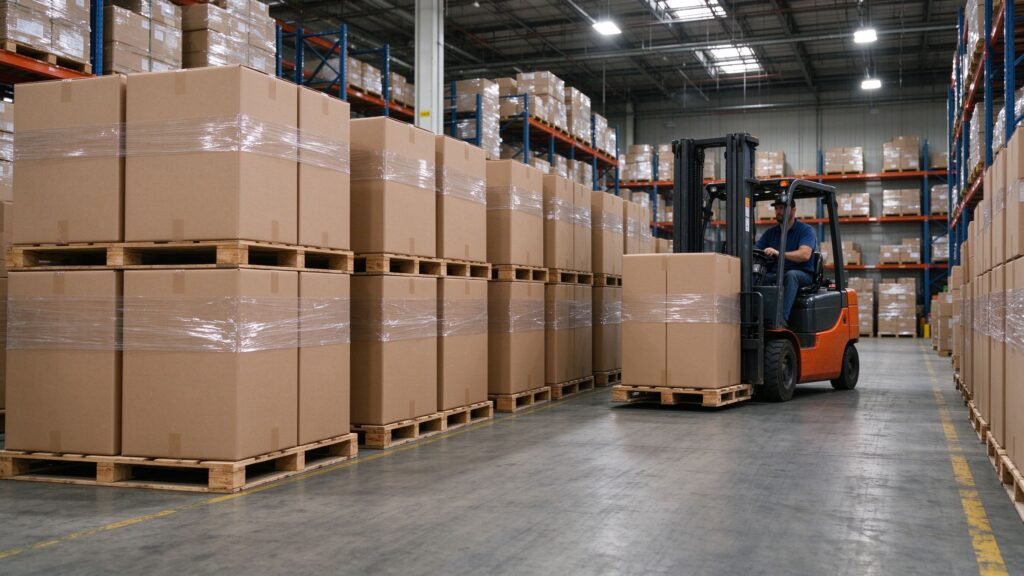
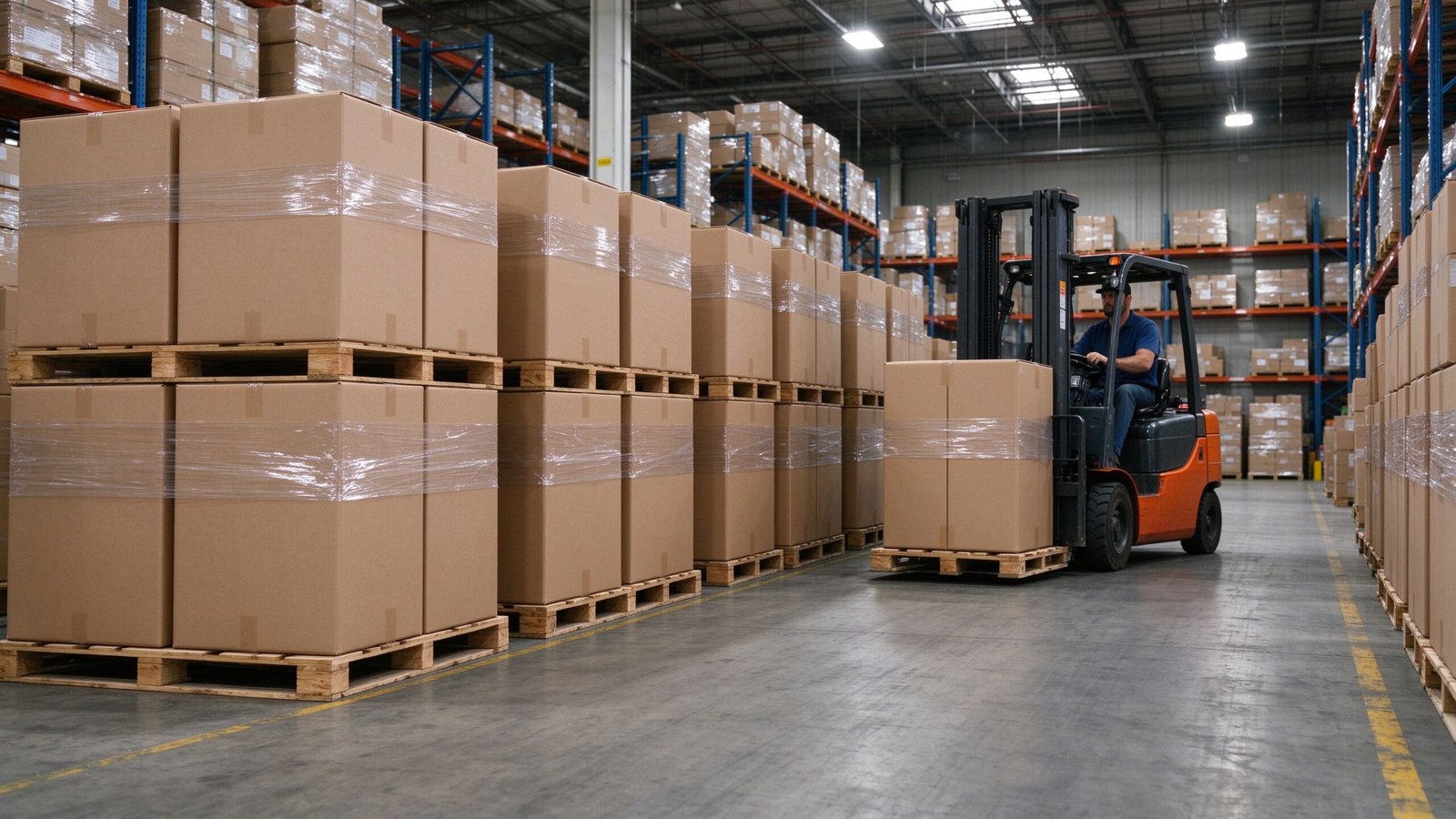
When you ask a Chinese factory for a price, the first number they almost always quote after the unit price is the MOQ — the Minimum Order Quantity. “MOQ 1,000 pieces,” “MOQ 500 sets,” “MOQ 5 cartons.” For first-time importers, an MOQ that feels too high is often the single biggest blocker to launching a product. The good news is that China MOQ is rarely a fixed wall — it is a starting point shaped by material costs, setup time, and negotiation. This guide explains what MOQ really means, why factories set it, typical values by industry, and the exact negotiation tactics experienced buyers use to land smaller, risk-tested first orders.
1. What Is MOQ and Why Do Chinese Factories Set It?
MOQ is the smallest batch a factory is willing to produce for a single order at the quoted unit price. It is not arbitrary — it reflects real economic constraints on the production floor.
- Material procurement: Factories buy raw materials (fabric, plastic resin, PCB boards, packaging film) in bulk from their own suppliers. A dye lot, a resin pallet, or a fabric roll often comes in fixed quantities below which their suppliers will not sell at a usable price.
- Machine setup / changeover time: Injection molding, screen printing, embroidery, heat stamping, and SMT line setup all cost time and money. A 2-hour setup run for 50 units makes each unit prohibitively expensive; running 1,000 units amortizes that setup across many pieces.
- Labor efficiency: Operators, QC staff, and packers are paid by the day, not by the piece. A 100-unit order that takes the same handling time as a 1,000-unit order is not profitable for the factory.
- Fixed tooling or mold investment: Custom molds, die cuts, and printing screens are one-time costs. Factories want a guaranteed volume before they commit to cutting a new tool.
- Administrative overhead: Purchase orders, customs documents, invoicing, and shipping coordination carry a floor cost regardless of batch size.
Understanding these drivers is the key to negotiation: you are not “arguing for a discount,” you are proposing an arrangement that still makes economic sense for the factory.
2. Typical MOQ Values by Industry
MOQ ranges vary wildly by product category. These are ballpark figures for established Chinese manufacturers at mid-sized factories; small workshops and trading companies may quote lower, while brand-name OEMs will quote higher.
- Apparel & textiles: 100–500 pieces per style/color; blank t-shirts can go as low as 50 pieces, custom-printed or embroidered garments often start at 200+.
- Hard goods & consumer electronics (existing tooling): 500–2,000 units; a simple Bluetooth speaker in an existing mold may accept 300, while a custom-PCB device starts around 1,000.
- Custom injection-molded parts: 1,000–5,000+ pieces once a new mold is cut; prototype samples are separate from production MOQ.
- Promotional items, packaging, printed materials: 500–2,000 units; custom boxes, bags, and labels often start at 1,000.
- Jewelry, accessories, small hardware: 100–500 pieces; many small factories will accept 50–100 with a small unit-price premium.
- Furniture, large appliances, industrial goods: 50–200 units, or even single units, because each unit carries high value and long production time.
If a factory quotes an MOQ far above these ranges for a standard product, they may be a trading company passing through a larger factory’s minimum, or they may simply be filtering out small buyers they don’t want to serve.
3. Proven Negotiation Strategies for Lower MOQs
Experienced importers do not accept the first MOQ number. These are the tactics that consistently produce results, ordered by how likely the factory is to agree.
- Ask for “trial order” pricing: Frame your first order as a trial run. Most factories will accept 30–50% of their standard MOQ for the first batch, often at 5–10% higher unit price, in exchange for a committed repeat order volume.
- Combine SKUs under one MOQ: If you want 3 styles × 100 pieces, ask whether the factory can apply the MOQ to the combined total (300 pieces) rather than per style. Many mid-sized factories accept this, especially for color/print variations.
- Use existing tooling or semi-custom designs: Skip custom molds, custom packaging, or unique colors initially. Using an existing factory mold with only logo printing cuts MOQ dramatically — often from 5,000 to 300 units.
- Pay a higher unit price in exchange for lower MOQ: The factory’s real constraint is margin per batch, not units per se. Offering 10–20% higher unit price for a 500-piece first order is often a win-win: you test the market, they recover setup cost.
- Propose staged / rolling orders: Offer a signed forecast (e.g., 2,000 pieces over 6 months) while taking delivery of 500 now. Factories love committed pipeline volume, and this is how many long-term buyer-supplier relationships start.
- Leverage sample-first validation: If the factory has already earned sample fees and you have approved production samples, they are more likely to be flexible on the first production run because they’ve already recouped early development cost.
4. MOQ Red Flags and When to Walk Away
Negotiation skills only work when the counterparty is a legitimate manufacturer. Watch for these signals.
- A supplier who agrees to any MOQ, including 1 piece, for a heavily custom product with new tooling. Real factories need mold amortization; a “yes” here usually means they are a reseller who will outsource your order elsewhere.
- An MOQ that jumps from “50” on Alibaba to “2,000” in direct email — a classic trading-company pattern where the Alibaba listing is bait and the real factory’s minimum is disclosed later.
- Refusal to quote any price for quantities below MOQ, even as a price list. A confident factory can always give you a higher unit price for a small run; complete refusal means they don’t want small orders at all.
- Pressure to pay the full amount up front for your first order, with no sample, no inspection, and no phased payment. This is not standard MOQ negotiation — it’s a credit-risk pattern.
Negotiate MOQ Like a Seasoned Importer
MOQ is one of the most controllable variables in China sourcing — once you understand the economics behind it, you can structure first orders that fit your cash flow and your market-testing goals, without sacrificing quality or factory commitment. Whether you are launching your first Amazon FBA product, testing a private-label line, or scaling an existing brand, the right MOQ strategy is what turns “too expensive to start” into “we can pilot this month.” To put these tactics into practice alongside supplier verification, sampling, and Incoterms planning, browse our full China procurement article series and build a sourcing process that protects both your margin and your momentum.