
Once your China-sourced products start selling, the next strategic decision is not what to buy, but how to get it to your customer. Direct shipping from China — small parcels sent order by order — is simple and requires almost no upfront inventory. An overseas warehouse, by contrast, means shipping bulk inventory to a local warehouse in your destination market and fulfilling each order locally. Get this wrong and you either bleed margin on parcel shipping or tie up cash in stock that never moves. This guide lays out the decision framework so you can choose deliberately, not by default.
The Two Models at a Glance
Direct shipping from China means every customer order is packed and dispatched from China, typically via ePacket, China Post, Yanwen, Yunexpress, or DHL eCommerce. Delivery to the US or Europe usually takes 7–20 days, sometimes longer. You hold no overseas inventory, but you pay a per-parcel rate that does not drop much as volume grows.
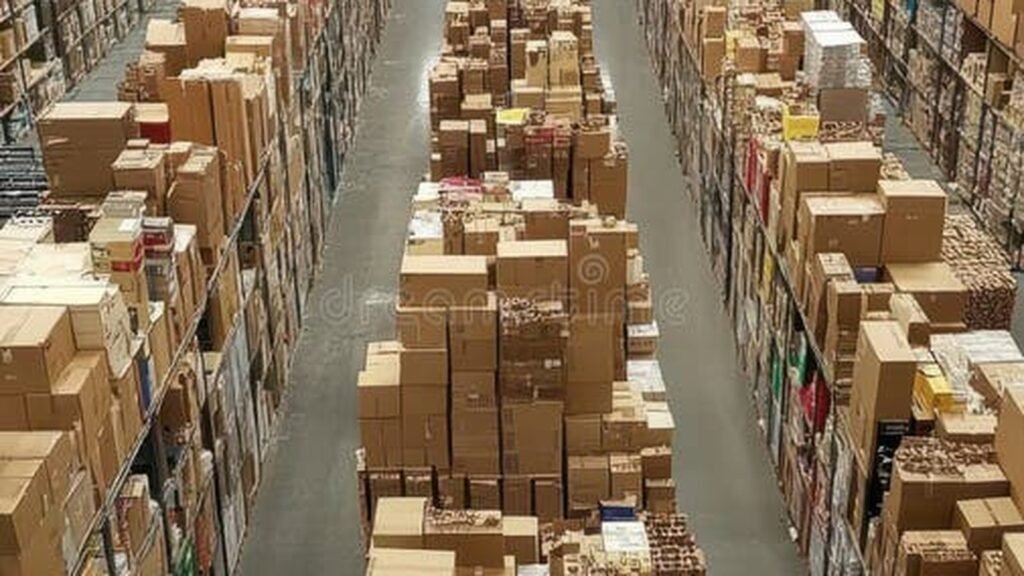
Overseas warehouse means you sea-freight or rail-freight a batch of product to a 3PL warehouse in your destination country, store it there, and ship each order locally. Local delivery takes 2–5 days, and per-unit shipping cost is much lower, but you commit to buying a batch upfront, paying storage fees, and accepting the risk of unsold stock.
Cost Structure: Where Each Model Wins
Compare total landed cost per order, not just the freight line item.
- Direct shipping: product cost + single-parcel freight + no storage + no returns handling locally. The parcel rate for a 200 g packet to the US is typically $3–6; at 500 g it can exceed $8. This is cheap at low volume but becomes expensive fast.
- Overseas warehouse: product cost + bulk head freight (sea or rail, amortized per unit often $0.5–3) + inbound handling + monthly storage rent + pick/pack per order ($1–3) + local last-mile courier ($3–6 for a small parcel). You also need capital to buy and ship the initial batch.
The break-even point is the monthly order volume at which the overseas-warehouse cost per order equals the direct-shipping cost per order. A typical small e-commerce product crosses this threshold somewhere between 200 and 500 orders per month per SKU. Below it, direct shipping wins; above it, the overseas warehouse wins.
Inventory Risk and Working Capital
This is the dimension most new sellers underweight. Direct shipping lets you test a product with almost no inventory: you list it, take orders, and buy from China to fulfill. If the product flops, you lose almost nothing. An overseas warehouse commits you to a batch — often 500 to 2,000 units — before you know the real demand curve.
Overseas warehouse stock also expires in two ways: it becomes unsellable through damage or obsolescence, and it ties up cash that could fund new product tests. A common rule of thumb is to move only proven SKUs with a stable monthly velocity into an overseas warehouse, and keep new or experimental products on direct shipping. This is exactly why Amazon FBA sellers often maintain a small direct-shipment pipeline for test items while FBA handles the winners.
Returns and Customer Experience
Returns are the quiet killer of direct shipping. A customer who needs to send a product back to China faces a $15–30 return label and a 4–6 week wait for a refund; many dispute the charge with their payment provider instead. With an overseas warehouse, returns come back to a local address, can be inspected, restocked, or liquidated locally, and refunds can be issued in days. For any product category with meaningful return rates — apparel, footwear, electronics, beauty devices — a local returns address is close to mandatory for brand reputation.
Delivery speed also drives conversion. On marketplaces and in DTC checkout, a 2-day delivery badge lifts conversion versus a 15-day estimate. If your competitors use local fulfillment and you ship from China, you are competing on delivery promise as much as on price.
Which Products Fit Which Model
- Direct shipping fits: low-order-volume test SKUs, lightweight small items under 200 g, highly seasonal one-off products, and sellers still validating product-market fit.
- Overseas warehouse fits: proven SKUs moving 300+ units per month, heavier items where parcel cost dominates, products with high return rates, and any brand competing on delivery speed.
- The hybrid model: most mature sellers run both. Top sellers live in the overseas warehouse; long-tail and new SKUs ship direct from China; a small safety stock sits in the overseas warehouse to cover spikes while the next sea container is in transit.
Calculate your break-even for each SKU, start direct, and migrate winners to the overseas warehouse as velocity becomes predictable. That discipline beats either extreme.
How to Calculate Your Break-Even Point
Rather than guessing, build a simple spreadsheet. On one row, list the direct-shipping cost per order: product cost plus the current parcel rate to your destination for your average parcel weight. On the other row, list the overseas-warehouse cost per order: product cost plus amortized head freight, plus inbound handling, plus pick-and-pack, plus last-mile delivery, plus monthly storage rent divided by monthly order volume. The two numbers cross over at some monthly order count.
For a typical 300 g product selling in the US, direct shipping often costs around $4–6 per order in freight, while an overseas-warehouse order can cost $2–3 once volume is high enough to amortize storage. That $2–3 difference per order, multiplied across thousands of monthly orders, is the cash that funds growth. But if you are doing fifty orders a month, the fixed warehouse rent eats that margin alive. Test the model at small scale: send one sea container to a 3PL, measure the true all-in cost per order for two months, and then decide whether to expand.