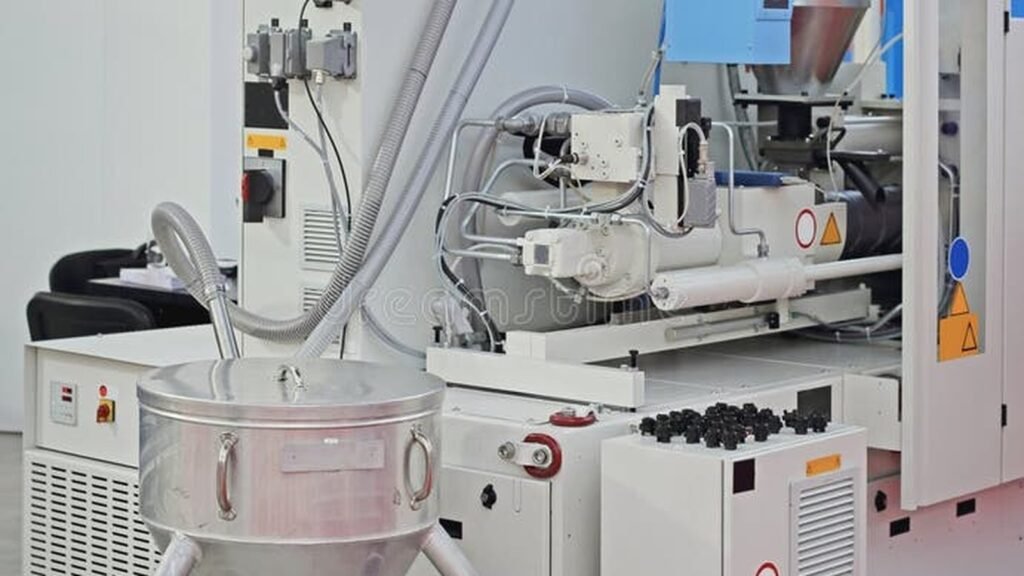

Injection molding is the default way to make tens of thousands of identical plastic parts — enclosures, knobs, housings, connectors, toys — and China is the world’s most competitive place to have it done. But buyers new to the process often get burned by vague quotes, surprise mold fees, and parts that warp or flash on arrival.
This guide explains what actually goes into a mold, how to read a quote, which material to choose, the defects to inspect for, and how the trial-sample process should run.
The mold: cavities, steel, cost and ownership
The mold (tool) is the one-time investment that dominates your up-front cost. Three things drive it:
- Number of cavities. A 1-cavity mold is cheap but slow; a 4- or 8-cavity mold costs more upfront but dramatically cuts the per-part price at high volume. Choose cavities based on your annual volume, not your ego.
- Tool steel. Prototypes and short runs use softer pre-hardened steels such as P20; high-volume or abrasive materials (glass-filled nylon) call for hardened steels such as H13 or 718, polished or textured as the part requires.
- Mold cost breakdown. A typical China mold quote covers steel, machining, the injection system (runner/gates), cooling, ejectors, and spares. Simple family molds may start around a few thousand US dollars; complex, multi-action, high-cavitation molds run to tens of thousands.
Critically, put mold ownership in writing. Because you paid for the tooling, the mold should legally belong to you — engraved with a serial number and named in the contract. Otherwise, switching suppliers later means paying for the mold all over again.
Choosing the right plastic
Most commodity parts use one of these:
- ABS — tough, easily painted and plated, the go-to for enclosures and consumer housings.
- PP (polypropylene) — flexible, chemical-resistant, low cost; ideal for caps, living hinges and packaging.
- PC (polycarbonate) — transparent and impact-resistant for clear parts and lenses.
- POM (acetal/Delrin) — stiff, low-friction, precise gears and moving parts.
- PA / nylon + glass fiber — strong, heat-resistant engineering parts; note glass fiber can leave visible “glass bead” texture and wear molds faster.
Tell the factory your end use, required certifications (food contact, UL flammability), and color masterbatch up front — these change both material grade and price.
How to read an injection-molding quote
A complete quote should itemize: (1) mold/tooling cost and cavity count; (2) unit price at specific volumes; (3) expected mold life (shots); (4) lead time for the mold and for samples; (5) secondary operations (assembly, printing, ultrasonic welding, packaging); and (6) the material grade and color. A quote that only says “$0.50 per piece” without separating mold cost is hiding something.
Common defects — and what to inspect
When samples arrive, check for the three most common problems:
- Sink marks / shrinkage — small dips where thick sections cool unevenly. They signal poor wall-thickness design or packing pressure.
- Flash (飞边) — excess plastic squeezing out along the parting line, usually from over-injection or a worn mold seal. It must be trimmed and can indicate process instability.
- Warpage — the part twisting out of flat after cooling, common in uneven ribs or glass-filled materials. It often requires mold cooling adjustments, not just re-trimming.
Also watch short shots (incomplete fills), flow lines, discoloration, and ejector-pin marks. Photograph each defect against the approved sample before mass production.
Tolerances, surface finish and why China is competitive
Agree dimensional tolerances and surface treatment up front: polished, textured, matte, glossy, painted or pad-printed all change the mold and the per-part price. For tight engineering parts, ask whether the factory can hold the tolerance you need on its press tonnage — a tiny shop with a 90-ton machine cannot accurately mold a large housing. Chinese injection shops are competitive because tooling is machined locally at a fraction of Western rates, and because clustered industrial hubs (the Pearl River and Yangtze River Deltas) offer fast turnaround on secondary operations. But that speed only helps you if the drawing — dimensions, gates, ejector pin positions and material — is locked before steel is cut.
The trial-sample (T1) process
Expect an iterative sampling loop: the first trial (T1) produces short-run samples that almost always need fixes. You review T1, list adjustments, and the factory reworks the mold before T2. Allow two or three rounds. Always approve a physical sample in writing before mass production — a signed “gold sample” is your quality reference for the whole order.
The bottom line
Great injection-molded parts come from a well-specced mold, the right resin, and a disciplined sample loop. Lock cavity count and steel grade to your volume, separate mold cost from unit price, secure mold ownership in the contract, and inspect for sink, flash and warpage on every trial. Get these right and Chinese injection molding is among the most cost-effective manufacturing choices you can make.