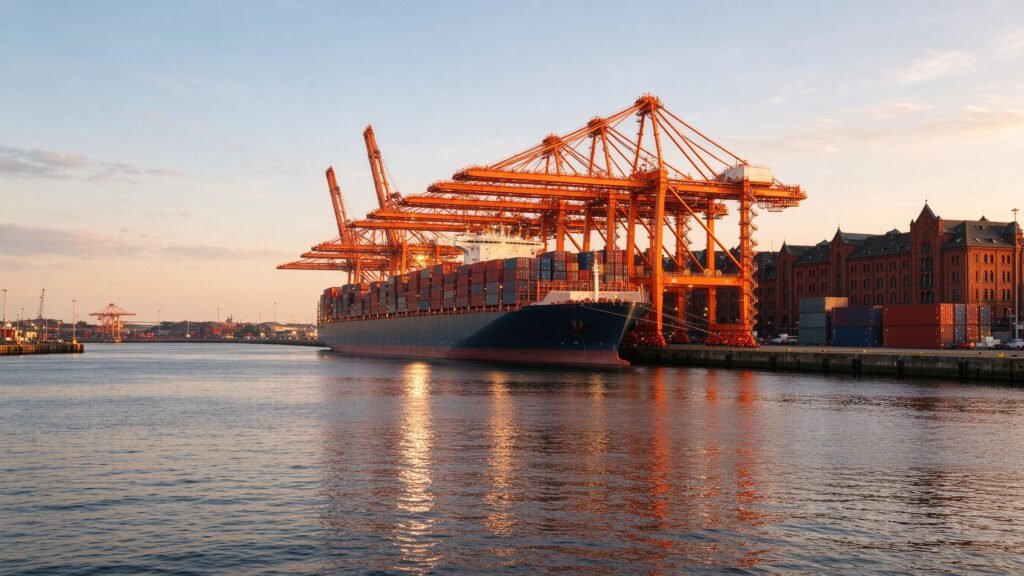
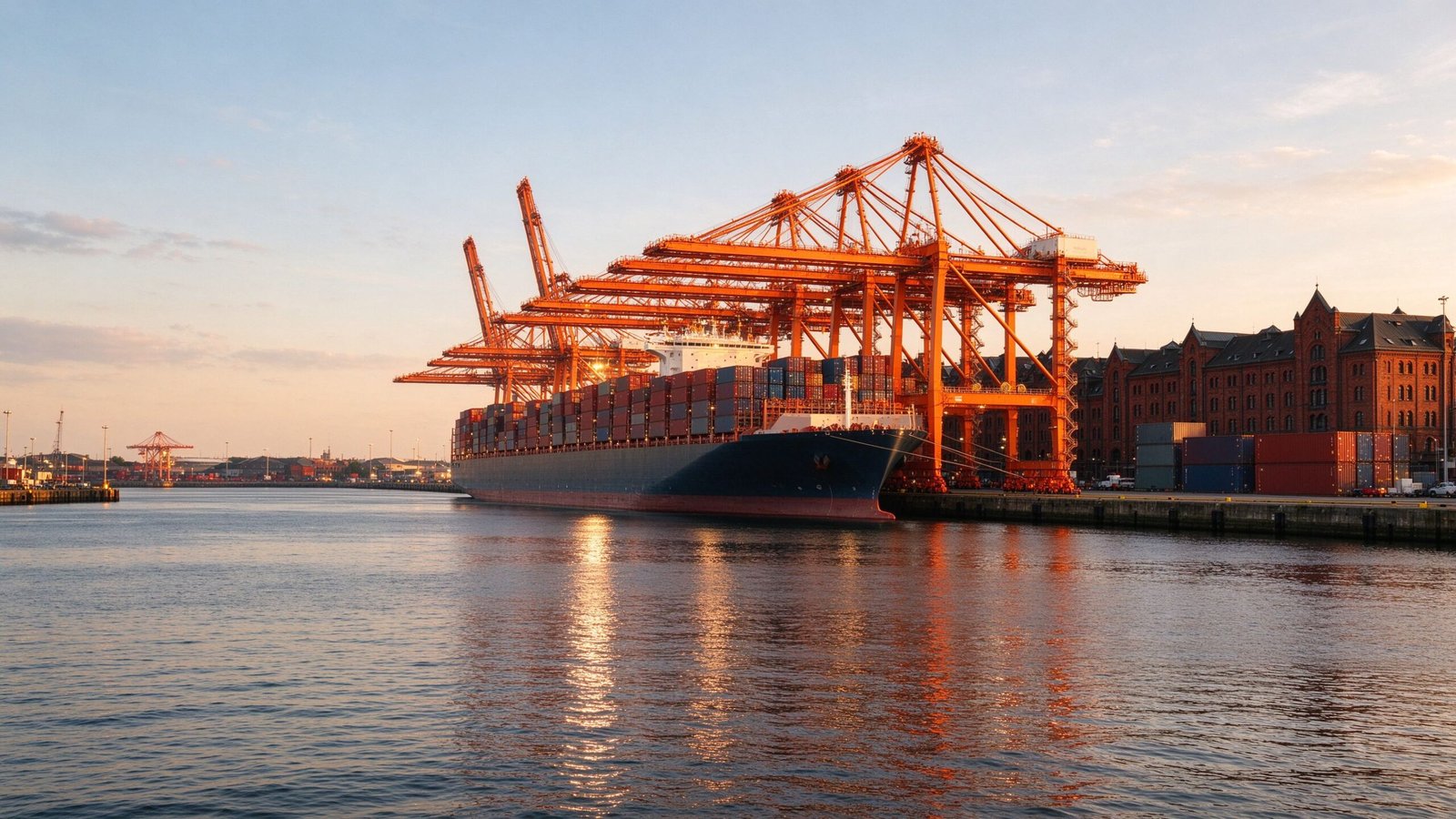
Getting a great price from a factory in Shenzhen is only half the battle. The other half is moving those goods from a Guangzhou warehouse to Amazon’s Düsseldorf fulfillment center, your Hamburg distribution hub, or a customer’s door — without surprise duties, rejected FBA inbound shipments, or a VAT bill you didn’t plan for. Shipping from China to Europe has its own rules: EU customs, VAT, IOSS, CE marking, and a choice of FBA head-haul, LCL consolidation, FCL containers, or DDP delivery. This guide walks through the main options, how DDP and clearance work, and the compliance checklist every importer into the EU needs.
Your Main Freight Options from China to Europe
The right mode depends on order size, urgency, and where the goods ultimately need to go.
- FCL (Full Container Load): A 20′ or 40′ container booked exclusively for your cargo. Best for high-volume, repeat orders — lowest cost per unit, roughly 28–35 days sail time to major North European ports (Hamburg, Rotterdam, Antwerp, Felixstowe).
- LCL (Less than Container Load): Your pallet shares a container with other shippers through a consolidator. Good for small importers and trial orders. Cheaper than air freight, slower than FCL, with extra handling at both ends, typically 30–40 days door-to-door.
- FBA head-haul (Amazon Europe inbound): Dedicated freight-forwarder services that collect from your Chinese supplier, handle export and import clearance, and deliver directly into an Amazon EU fulfillment center with the correct FNSKU and box prep. Often sold as a combined “China-to-Amazon-EU” rate.
- Express / air freight: DHL, FedEx, UPS, or dedicated air cargo for urgent, small, or high-value shipments. Fast (5–10 days) but expensive — usually reserved for samples, replacements, or top-up inventory during peak season.
- Rail freight (China-Europe rail): A middle path between sea and air, ~18–22 days to Western Europe via Yiwu/Chongqing to Duisburg. Worth considering for time-sensitive mid-volume cargo.
DDP Shipping, EU Clearance, and VAT
DDP (Delivered Duty Paid) means the freight forwarder handles export declaration, EU import customs clearance, pays the import duty and import VAT on your behalf, and delivers to your door. It is the most popular model for Amazon sellers and small importers because it removes the complexity of becoming your own importer of record.
- How DDP works: The forwarder uses their own or a nominated EU broker to clear the goods, settling duty and VAT, then bills you as an all-in landed cost per kilogram or per cubic meter.
- VAT registration is still your responsibility. Even under DDP, if you sell B2C within the EU or stock across multiple countries, you need an EU VAT number (commonly in Germany, the UK separately, and via the OSS scheme for pan-EU B2C sales). The forwarder’s DDP clearance does not exempt you from ongoing VAT filings.
- IOSS (Import One-Stop Shop): For B2C shipments under €150 sent directly to consumers, IOSS lets you declare and pay VAT at the point of sale instead of at the border — avoiding customer-facing duty surprises and delays.
- UK is separate post-Brexit: Great Britain requires its own GB/EORI, UK VAT, and UK-compliant marking. Don’t assume an EU route covers the UK.
- Beware under-declaration. Some cheap DDP quotes clear goods at abnormally low declared values to reduce duty. This exposes you (the importer) to back-tax, penalties, and seized stock. Verify the declared value matches your commercial invoice.
EU Compliance You Must Handle Before Shipment
Freight choices get most of the attention, but compliance failures are what actually block shipments at the border or inside Amazon.
- CE marking: Applies to a wide range of products sold in the EU — electronics, toys, machinery, PPE, medical devices, and more. Without CE and the corresponding Declaration of Conformity, customs or market surveillance can stop your goods.
- Product safety and documentation: The EU General Product Safety Regulation (GPSR) now requires a responsible person within the EU, labelled contact information on the product or packaging, and traceability documentation. Expect this to be checked at FBA inbound and by customs.
- REACH / RoHS / chemicals: Relevant for materials, textiles, electronics, and cosmetics. Confirm with your factory that the materials comply before production, not after.
- Labelling and language: Many product categories require warnings and instructions in the local language(s) of destination member states. Amazon will reject mixed-language packaging that fails category requirements.
- Amazon FBA prep: FNSKU labels, polybag suffocation warnings, bubble wrap, and box weight limits differ across EU fulfillment centers. If you use FBA, have the prep done either in China before dispatch or by a qualified EU prep center — doing it badly leads to rejected inbound shipments.
Choosing the Right Combination for Your Business
- First-time / small sellers (pilot orders): Start with LCL or an express/air option plus DDP. Lower risk, lower cash outlay, and the forwarder absorbs clearance complexity while you learn.
- Scaling Amazon EU sellers: Use a China-to-FBA-EU head-haul service with DDP, but get your VAT registration, EORI, and CE/GPSR paperwork in order before the first container.
- Wholesale / B2B distributors: FCL on FOB/CIF terms with your own EU customs broker and VAT registration gives the lowest landed cost and full control over clearance.
- Seasonal peak (Q4): Book early, add rail or air buffer stock, and remember that EU VAT and customs delays worsen in November — plan lead times backward from Black Friday.
Shipping from China to Europe is a system, not a transaction: factory handover, export declaration, ocean/rail/air carriage, EU import clearance, VAT and IOSS handling, FBA or final-mile delivery, and post-import compliance filings. Cutting one corner — a cheap DDP quote, missing CE, an undeclared shipment — usually surfaces as a much larger problem weeks later. For a step-by-step look at how buyers combine sourcing, inspection, and freight into a single China-to-EU workflow, explore our China procurement guides, where we cover supplier vetting, QC checklists, and landed-cost planning.