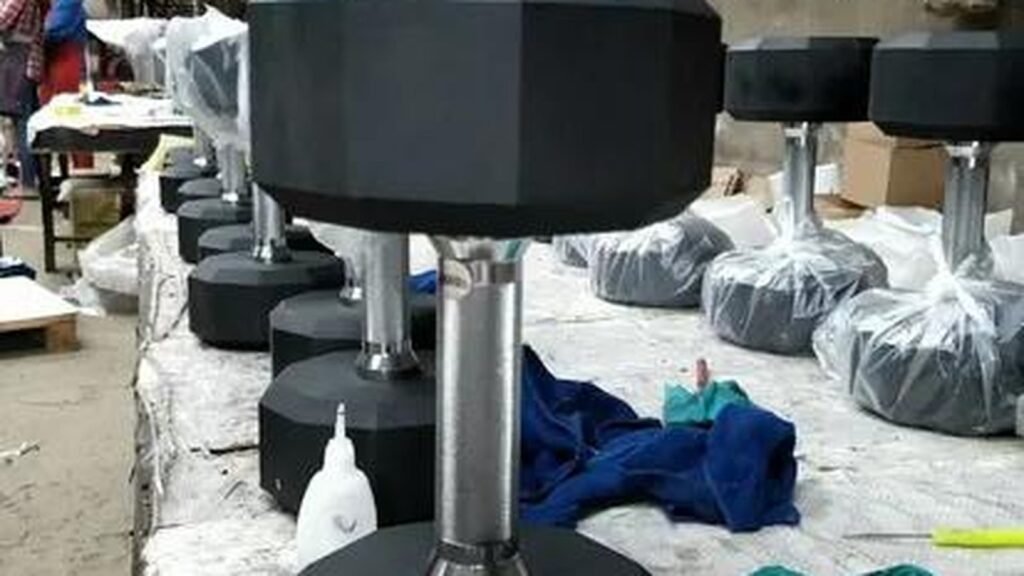

China is the world’s workshop for fitness equipment, from adjustable dumbbells and yoga mats to full cardio machines. But it is also a category where weak welds, thin tubing and cheap plating turn into injuries, returns and liability. Sourcing fitness gear profitably means knowing what materials to specify, which certifications actually matter, and exactly where the quality typically fails.
Deciding between home and commercial grade
A first sourcing decision is whether you are buying home-consumer or light-commercial equipment. Home-grade gear uses thinner tubing, simpler padding and lower price points; commercial-grade gear for gyms uses heavier frames, higher load ratings and warranties that can run years. The price gap is large, but so is the failure rate — selling home-built frames as gym-grade is a classic way to generate returns and liability. Be explicit about the intended use on the purchase order, and ask the factory which line they build your SKU on. For massage guns, yoga mats and other small goods, focus on battery life and noise (for guns) and material density (for mats), where cheap copies cut corners.
Warranty, spare parts and after-sales
Fitness equipment moves and wears, so plan after-sales before you order. Ask whether the factory supplies spare parts (cables, belts, padding, motor boards) and whether the design is serviceable. Document the warranty period in the contract and keep a few replacement units or parts on hand for warranty claims. Electrical cardio machines fail more than steel strength gear, so a spare-parts agreement matters most for treadmills and bikes.
The product landscape
- Strength equipment — dumbbells, kettlebells, barbells, racks and benches. Steel and cast iron dominate; load ratings and welds are everything.
- Cardio machines — treadmills, exercise bikes and rowers, combining electronics with steel frames — more complex QC and a higher failure rate.
- Small accessories — yoga mats, resistance bands, foam rollers and massage guns; lower price point, higher volume, brand-driven.
Each segment is made in different clusters — strength gear around Shandong and Hebei, mats and small accessories across the Pearl River Delta.
Materials and load ratings
For strength gear, the key decisions are frame tube gauge, weld quality, and the coating: rubber-coated vs neoprene vs chrome vs PU. Never buy on price alone — a thinner tube or a weaker weld fails under load. Always require a stated maximum user weight or load rating, and ask the factory to back it with a test. For yoga mats and bands, specify material (TPE vs PVC), thickness and density, which drive feel and durability.
Certification: CE and EN 957
Fitness equipment sold into the EU needs CE marking, and mechanical strength machines commonly fall under the EN 957 family of safety standards (covering fixed training equipment, load limits and structural safety). Electrical cardio machines also need EMC/LVD compliance. Require the supplier to show test reports from a recognized lab for the exact model — not a generic “we are certified” line. For the US market, relevant electrical and safety standards apply where electronics are involved.
QC points: welds, plating and hardware
- Welds — inspect for cracks, uneven beads and missing welds at stress points. This is the number-one failure in strength gear.
- Plating and coating — check for rust spots, flaking chrome, and even coverage; cheap plating corrodes fast.
- Hardware and assembly — confirm bolts, locking collars and adjustment mechanisms work smoothly and to spec.
Pre-shipment inspection should include a random load or function test on a few units, not just a visual check.
Where the factories cluster
Fitness equipment clusters by type. Heavy strength gear — dumbbells, bars, racks and plates — is concentrated in Shandong (notably Dezhou) and parts of Hebei, where cast iron and steel processing is cheap. Cardio machines with electronics cluster in the Pearl River Delta near Shenzhen and Dongguan, where motor and electronics supply chains sit. Small accessories like yoga mats and massage guns come from a wider set of Guangdong factories. Knowing the cluster tells you which factories will be strongest at your product, and makes a sourcing trip efficient.
Shipping and OEM
Fitness equipment is heavy and bulky — factor in ocean freight, palletization, knocked-down (flat-pack) packaging to save space, and assembly instructions for the end user. Private label is straightforward: your logo on the frame or grip, with MOQs that vary by item from a few hundred dumbbells to several machines.
Common QC pitfalls in fitness gear
The defects that generate returns are predictable: a dumbbell handle that slips, a bench that wobbles because the frame is not square, a treadmill belt that drifts, or plating that rusts on the first ocean shipment. Build checks for each into your inspection — not just a count and a visual, but a functional test on a sample of units. Document the test result on the QC report, so you have evidence if a claim arises later. Spending a little on inspection saves a lot on reverse logistics and bad reviews.
The bottom line
Fitness equipment sourcing rewards detail: specify tube gauge and load ratings, demand CE/EN 957 test reports for the real model, and inspect welds and plating before shipment. Plan heavy-goods logistics and flat-pack packaging up front, and private-label once you have a repeatable product. Start with one proven SKU rather than a full catalog, and let sell-through guide what you expand next.