When you message a “manufacturer” on Alibaba or Made-in-China, you are often not talking to the factory at all. A surprising share of B2B supplier profiles are actually trading companies — professional sourcing intermediaries that present themselves as direct factories. This is not inherently bad: good trading companies can be useful partners for buyers who need multi-category sourcing or small-batch flexibility. But if you are paying factory prices for a trading company’s service, you are overpaying. This guide explains the real difference between a China trading company vs factory, how to tell which one you are dealing with, and when each type actually makes sense for your sourcing strategy.
1. The Core Difference: What Each One Actually Is
At the most basic level, a factory makes things; a trading company buys things from factories and resells them to you. Understanding how each earns money clarifies why their behavior, pricing, and capabilities differ so much.
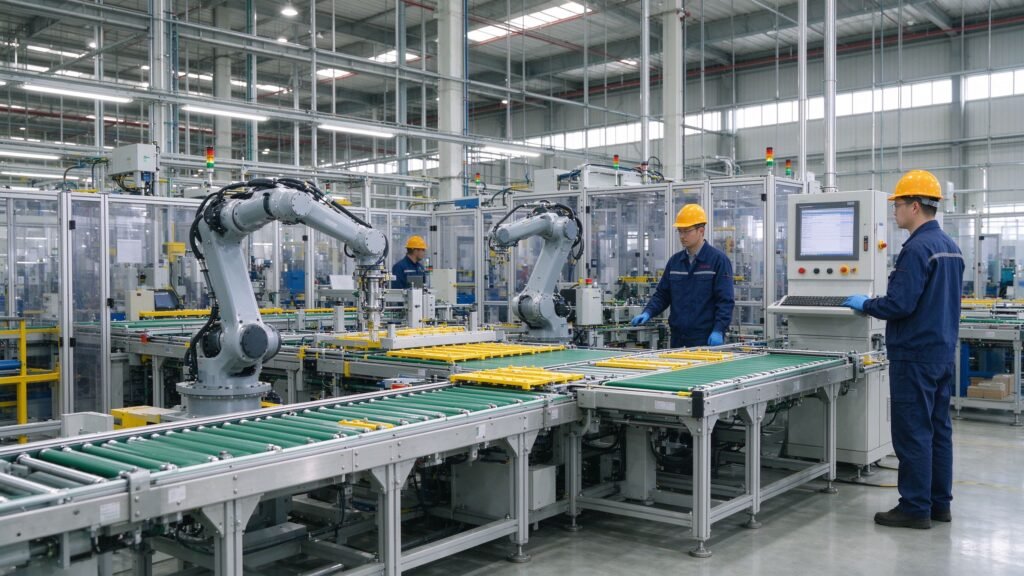
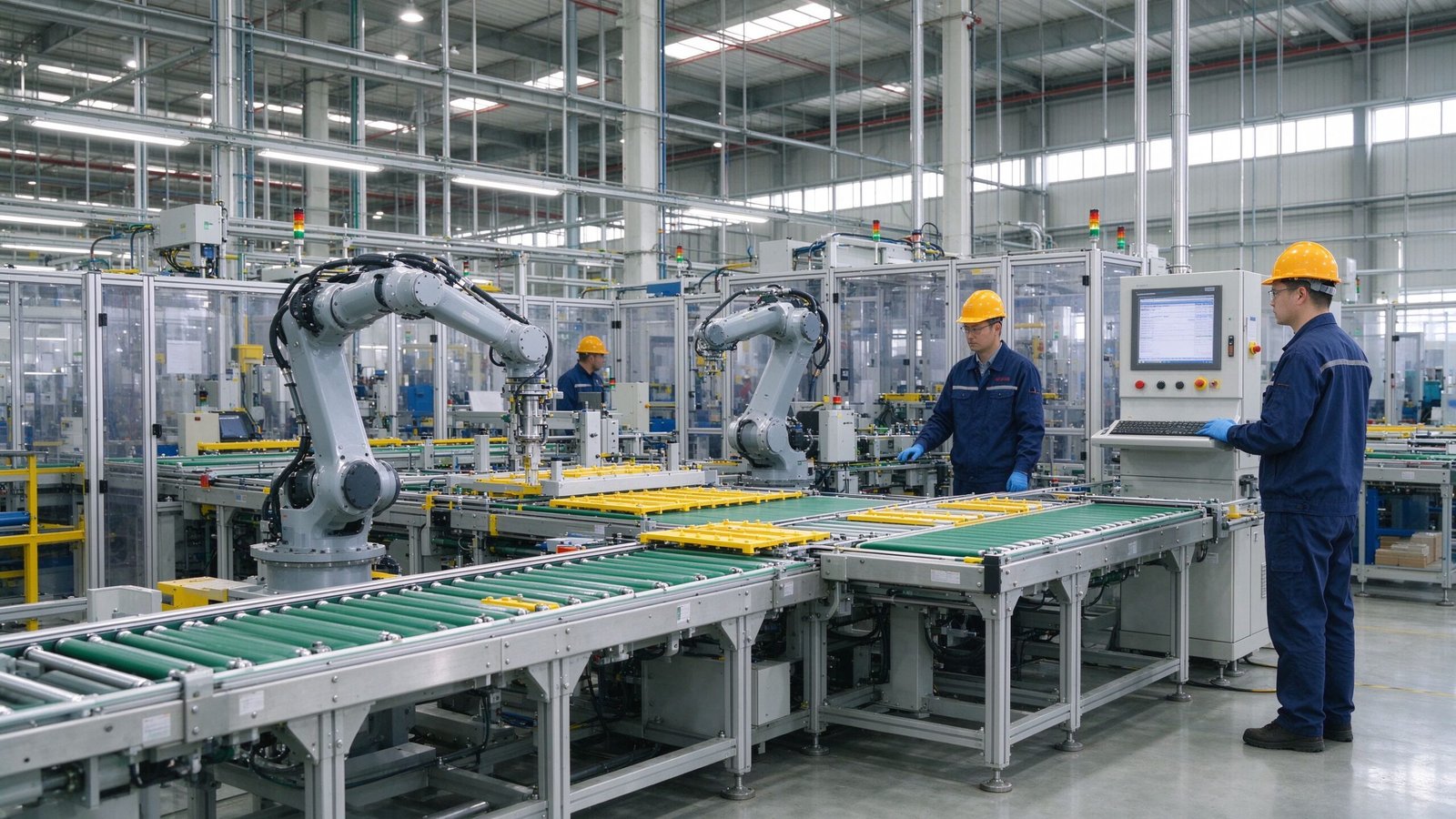
- Manufacturing factory (工厂, gōngchǎng): Owns production equipment, hires line workers, buys raw materials, and physically produces your product. Their profit margin comes from the gap between production cost and selling price — typically 10–30% depending on the category.
- Trading company (贸易公司, màoyì gōngsī): Does not own production lines. They act as intermediaries: they collect your order, outsource it to one or more factories, handle export documentation, and take a margin (often 10–25%) on top of the factory price. Their strength is service, communication, and multi-supplier coordination — not production.
- Hybrid / “factory + trading” companies: Many real factories have a separate trading arm to handle exports. These can be excellent partners, but you need to confirm you are contracting with the factory entity, not the trading shell.
- Neither is “good” or “bad” — the problem is when a trading company claims to be a factory and charges factory-direct pricing without giving you factory-direct transparency.
2. How to Identify Which One You Are Talking To
There is no single bulletproof test — but a combination of document, behavior, and price checks will reveal the truth in 95% of cases.
- Business license business scope (经营范围): Ask for the license and cross-check on gsxt.gov.cn. A factory’s scope includes “生产/制造/加工” (production/manufacturing/processing). A trading company’s scope lists “货物进出口、技术进出口、销售” (import/export, sales) but no production. This is the single most objective test.
- Product range: A real factory usually makes a narrow product line — 5–20 related SKUs. A trading company often offers hundreds of unrelated items (e.g., kitchenware + pet toys + phone accessories) that no single factory could physically produce.
- Pricing transparency: Factories are usually firm on MOQ and unit price because their costs are fixed. Trading companies are more flexible on MOQ and faster to adjust quotes — because they are shopping between factories behind the scenes.
- Video factory tour: Ask for a live video walkthrough. A real factory can show you production lines, equipment, workers, and QC stations immediately. A trading company will offer excuses: “boss is away,” “we can send photos,” “the factory is in another city.”
- Response to customization requests: Ask a specific engineering question — tooling change, material substitution, packaging spec. A real factory engineer will discuss production constraints; a trading company will say “let me check” and come back with a yes/no, showing no deep manufacturing knowledge.
- Price gap: If their quote is significantly higher than comparable Alibaba listings for the same product, and they refuse to explain why, you may be paying a trading markup on top of the factory’s own export price.
3. Pros and Cons: When to Use a Factory vs a Trading Company
The right partner depends on your order profile, not on prejudice. Here is when each type earns its keep.
- Go direct to a factory when: You have a single product category, your order volume is at or above typical MOQ (often 500+ units), you want the lowest unit price, you need custom tooling or heavy customization, and you are comfortable managing QC and communication directly. Direct factory sourcing gives you the best price, the most control over production, and the clearest channel for engineering changes.
- Use a trading company when: You are sourcing multiple product categories from different factories and want one point of contact; your order is small (below most factories’ MOQ); you need help with export documentation, translation, or consolidation; or you are a first-time importer who wants guided support. A good trading company effectively becomes your low-cost China-based sourcing agent.
- The hidden cost of trading companies: Margin markup, less control over production timing, reduced visibility into factory QC, and slower resolution of defects (because the trading company must mediate between you and the real factory).
- The hidden cost of direct factories: Higher MOQ, slower communication for non-English speakers, less flexibility on small orders, and you must handle all logistics, export docs, and compliance yourself.
4. Red Flags That You Are Being Misled
The most common problem is not dealing with a trading company — it is dealing with one that pretends to be a factory. These signs should trigger deeper due diligence.
- Their Alibaba profile says “Manufacturer” but their license scope contains no production keywords.
- They refuse a live video tour or offer to send a pre-recorded video instead of a real-time walkthrough.
- They cannot name the specific factory city where production happens, or keep changing the answer.
- Their quote includes “we” but their emails are vague about production processes, equipment, or factory size questions.
- They pressure you to pay to a personal account or a third-party account with a name that does not match their company license.
Source Smarter, Not Just Cheaper
The goal of supplier verification is not to eliminate trading companies — it is to know exactly who you are paying. Direct factory sourcing delivers the best unit economics for scaled, single-category brands; trading companies deliver valuable service for early-stage, multi-category, or low-volume buyers. Once you can distinguish the two from the license, the product range, and the video tour, you can negotiate with clarity instead of guessing. To build the rest of your China sourcing stack — supplier verification, sampling, Incoterms, and MOQ negotiation — browse our China procurement article series and import with the confidence that you know exactly who is making your product.