Project Background
This client is a mid‑sized home textiles trading company based in Poland. It supplies filling materials to local small‑and‑medium home‑goods factories, mainly for cost‑effective pillows and cushion inserts.
Previously, the client contacted Chinese suppliers directly via B2B platforms. While pre‑shipment samples met all specifications, mass‑produced goods often deviated significantly from sample standards. They suffered several costly setbacks. One consignment arrived with excessive moisture, leading to partial mould growth during warehouse storage. Another batch contained an unacceptably high share of hard quills, ruining the hand‑feel of end‑products. Europe enforces strict standards for micro‑biological safety and odour for feather goods. On one occasion incomplete quarantine documentation caused port detention and substantial terminal charges.
Without on‑the‑ground staff in China, the client could not audit factory operations and had no reliable way to verify whether test reports matched actual cargo. After repeated sourcing frustrations, the client turned to our foreign‑trade procurement service, outsourcing supplier evaluation, inspection and full export‑related procedures.
Client Procurement Requirements
1. Product Scope: Washed white goose feather for pillow and cushion filling. High down content was not required, yet firm limits were set on quill fragments and dust contaminants. Two grades were specified: premium‑grade and standard‑grade filling goose feathers.
2. Quality Expectations: Goods must go through complete washing and high‑temperature sterilisation with no unpleasant odour. Moisture content had to stay within acceptable ranges to avoid mould risks during long‑ocean transit. Products needed to comply with EU home‑textile safety requirements, with third‑party test reports provided for every batch.
3. Order Conditions: Recurring replenishment orders of one or two containers each. Consolidated shipments from two qualified factories were allowed, but strict separation between different grades was mandatory to avoid mixing. Lead times had to align with production schedules of the client’s downstream manufacturers to prevent unplanned delays.
4. Service Scope: The client wanted to avoid managing multiple factories for production follow‑up, packaging and quarantine clearance. Our team was expected to handle supplier assessment, production monitoring, sample testing, customs declaration and sea‑freight booking. The client would only confirm product specifications and budget before receiving final shipment documents.
Our Sourcing & Procurement Solutions
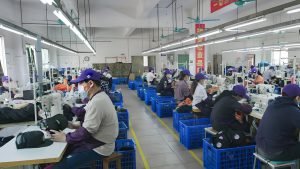
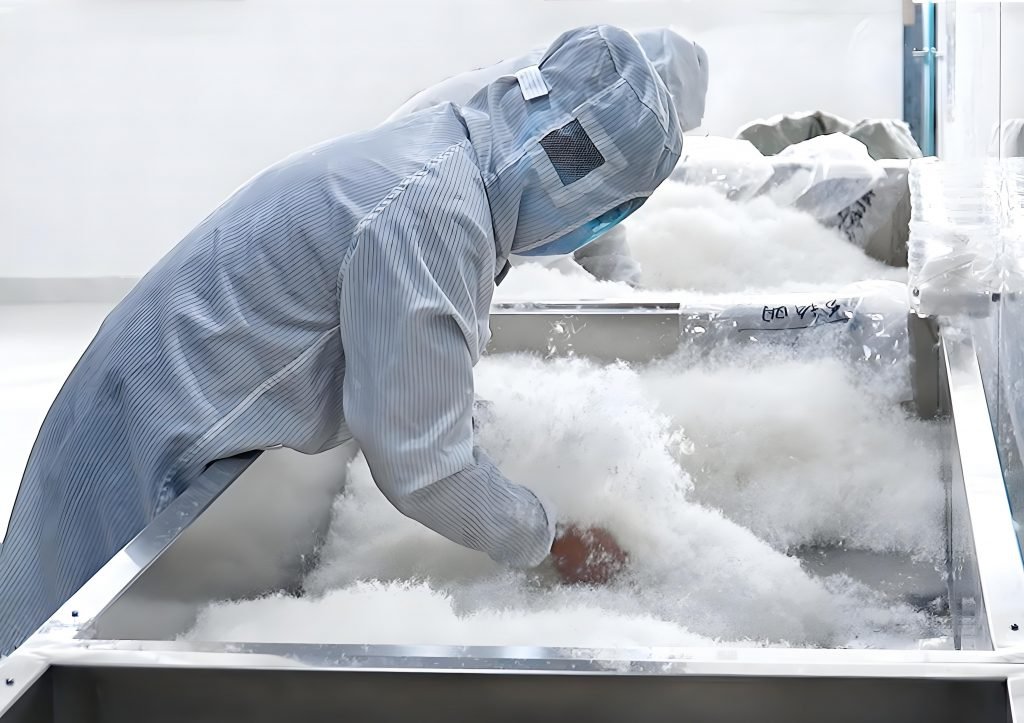
Instead of simply selecting suppliers offering the lowest online quotes, we carried out site visits and short‑listed two factories with solid export track‑record in feather processing. We paid special attention to their washing lines, drying capacity and sterilisation workshops, filtering out small workshops lacking complete washing and drying infrastructure.
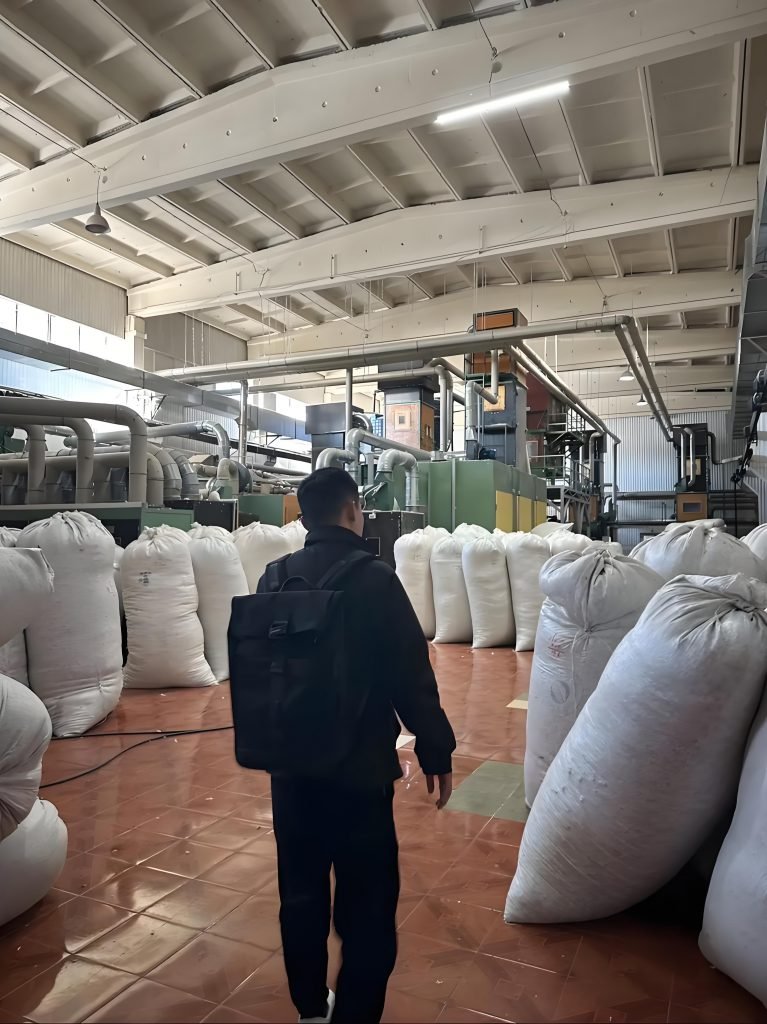
1. Confirm physical reference samples rather than relying solely on written parameters
Many cross‑border disputes stem from relying purely on technical sheets. We sent physical samples from the short‑listed factories to the client. Only after the client verified hand‑feel and cleanliness on real‑world samples did we finalise the suppliers. These physical samples served as benchmark references for subsequent mass‑production checks, instead of depending only on numerical data.
2. Mid‑production sampling and pre‑shipment testing
Once mass production started, our team collected random samples during the packing phase, instead of accepting pre‑prepared samples provided by factories. Samples were sent to independent third‑party laboratories to test moisture level, impurities, microbiological indicators and odour. Container loading was authorised only after receiving satisfactory test results. If parameters fell outside agreed limits, goods would be re‑processed rather than shipped as‑is. We supervised container loading on‑site. Different grades were stacked separately and clearly marked to eliminate mixing risks.
3. Packaging optimised for long‑distance sea transportation
Goose feather is a lightweight filling material prone to moisture re‑absorption under variable container temperatures during ocean voyages. We enforced double‑layer packaging: thick moisture‑proof inner bags plus woven outer sacks. Each sack was printed with grade description, batch ID and net weight for straightforward receiving and inventory management upon arrival. When consolidating goods from multiple factories, physical dividers were placed inside containers to prevent grade mixing during unloading.
4. Strict control over quarantine and export documentation
As an animal‑derived commodity, feathers require more complex quarantine procedures than general‑trade goods. We double‑checked factory filing records and prepared complete sets of quarantine and customs documents. We ensured full consistency among paperwork, laboratory reports and physical cargo so as to reduce risks of inspection and detention at destination ports. Key photos and test files were shared throughout the whole process, relieving the client from cumbersome domestic formalities.
Project Outcomes
1. Improved quality stability
Issues such as mould formation and excessive broken quills discovered post‑arrival were effectively eliminated. The client’s downstream manufacturers could arrange production confidently without unexpected downtime losses.
2. Higher sourcing efficiency and reasonable cost optimisation
The client no longer wasted resources trial‑testing numerous vendors. By connecting directly with processing factories, we cut heavy communication overheads and achieved sensible cost control under unchanged quality standards.
3. Smooth export with zero detention incidents
Multiple consecutive shipments were completed with complete quarantine and customs documentation. No port detention or extra terminal charges occurred.
4. Expanded long‑term cooperation
Building on reliable delivery of goose‑feather orders, the client also entrusted us with sourcing washed duck feathers. Quarterly replenishment orders have become regular practice.
Key Benefits for New Clients
1. On‑site audits for export‑oriented feather processors. We evaluate actual washing, drying and sterilisation hardware instead of merely comparing online quotations, lowering risks of mismatch between samples and bulk goods.
2. Physical samples act as benchmark standards instead of purely written specifications. In‑process sampling plus pre‑shipment testing help mitigate common cross‑border risks including excess moisture, bad odour and microbiological non‑compliance.
3. Support for large‑volume orders and multi‑factory consolidation. Moisture‑resistant packaging tailored for ocean shipping, suitable for home‑textile importers and filling‑material traders.
4. In‑depth familiarity with quarantine and customs procedures for animal‑origin feather products. Complete English documentation and end‑to‑end order tracking ease compliance pressure for overseas buyers.