分类: China Procurement

  • OEM vs ODM vs OBM: Which Manufacturing Model Fits Your Brand?

    OEM vs ODM vs OBM: Which Manufacturing Model Fits Your Brand?

    OEM vs ODM vs OBM manufacturing models in China

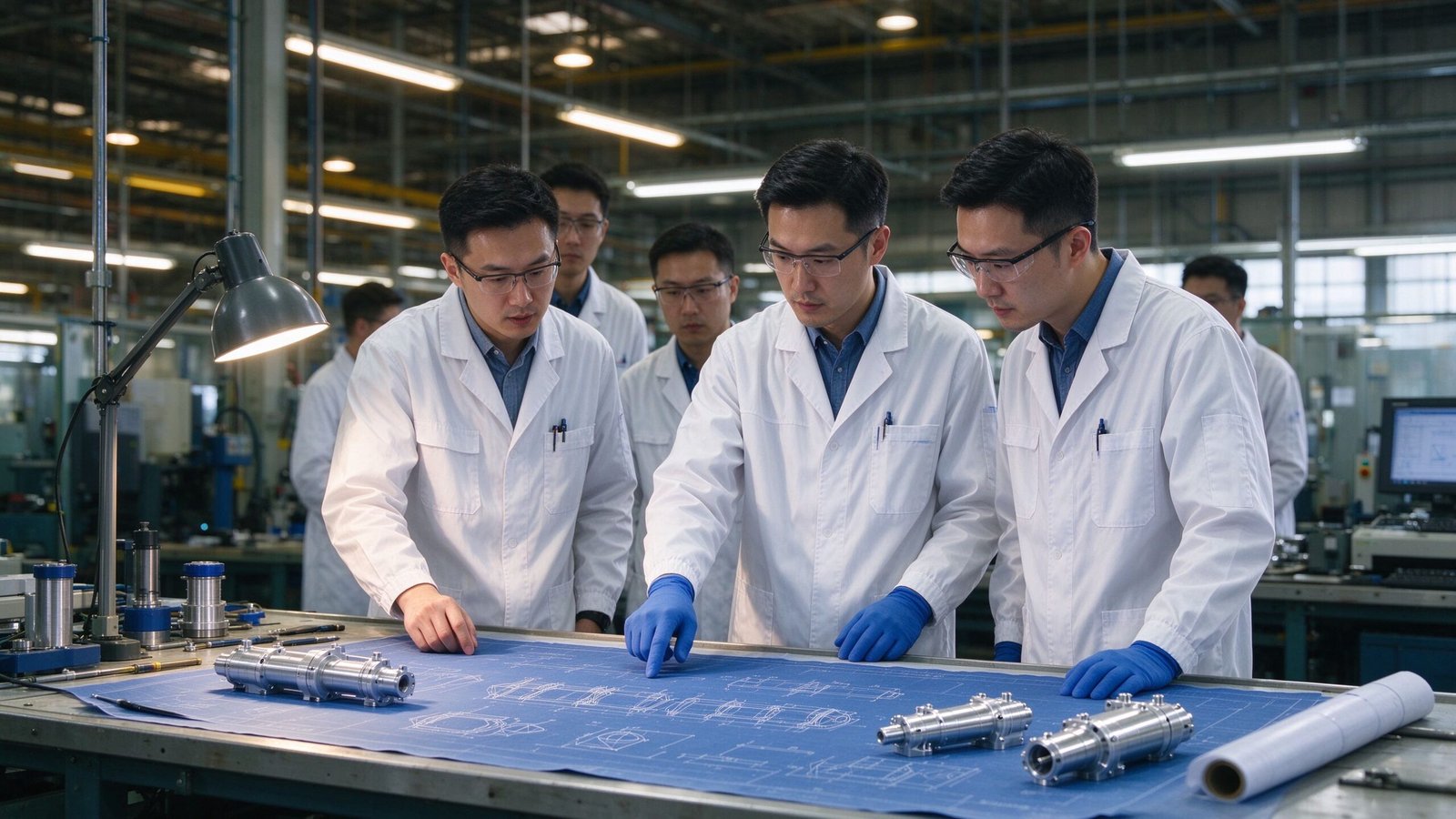
    When buyers first contact a factory in China, one of the earliest decisions they have to make is also one of the most misunderstood: do you want OEM, ODM, or OBM production? The choice affects your unit cost, your minimum order quantity (MOQ), how much control you have over the product, how easy it is to differentiate on Amazon or your own store, and even who legally owns the design. Picking the wrong model early is one of the most common reasons private label projects stall or fail. This guide explains each model in plain terms, compares the real trade-offs, and shows how to choose based on where your business actually is right now.

    What OEM, ODM and OBM Actually Mean

    The three acronyms describe how much design and brand work the factory does versus how much you bring yourself. Knowing the definitions prevents awkward conversations on the factory floor.

    • OEM (Original Equipment Manufacturer): You provide the full design, drawings, specs, and often branding. The factory simply manufactures to your files. This is what most buyers mean by “private label manufacturing” when they have their own product idea.
    • ODM (Original Design Manufacturer): The factory already has existing designs or semi-finished products. You pick one from their catalogue, put your logo on it, and request minor modifications (color, packaging, maybe a small cosmetic change).
    • OBM (Original Brand Manufacturer): The factory sells under its own brand. You are essentially a distributor or reseller of someone else’s branded product, often with little or no customization.

    A simple way to remember it: OEM is “build what I design,” ODM is “sell what you already built, under my label,” and OBM is “sell what you built, under your label.”

    Trade-Offs: Cost, Control, and Differentiation

    There is no universally best model. The right answer depends on whether you are optimizing for speed, margin, or brand uniqueness.

    • Upfront cost: ODM is cheapest to start. Tooling is often shared or minimal, MOQs are lower (sometimes 100–500 pieces), and samples arrive in days. OEM requires your own tooling, mold fees, engineering time, and usually a higher MOQ (often 500–2,000+ units). OBM requires almost no setup but leaves you competing with every other reseller.
    • Control over the product: OEM gives you maximum control. You own the BOM, the tolerances, the materials, and the design files. ODM gives you limited control — you can tweak but not redesign. OBM gives you no design control at all.
    • Differentiation: OEM lets you build something no one else sells, which is the only durable advantage in crowded categories. ODM products are sold to multiple buyers, so your “unique” item is often listed by 20 other sellers on Amazon within months. OBM means you are reselling a brand the factory also sells directly.
    • Time to market: ODM wins here, typically 2–4 weeks from sample to shipment. OEM takes 8–16 weeks once you factor in design refinement, tooling, first articles, and pilot runs.
    • Margin structure: OEM usually commands higher selling prices and stronger margins because the product cannot be compared head-to-head with cheap clones. ODM margins erode quickly as competition copies the same factory item.

    How to Choose Based on Your Stage

    Rather than asking “which model is best,” ask “which model fits my current stage of the business.”

    • First-time importers / validation phase: Start with ODM. Use a factory catalogue product, add your logo and custom packaging, and test demand with low risk. Do not pour $10,000 into a custom mold for your very first product.
    • Scaling sellers with proven demand: Move to OEM. Once a product sells reliably, invest in tooling, engineering, and small custom changes (better materials, improved ergonomics, a unique color) to build a moat against copycats.
    • Established brands with category ambition: Consider fully custom OEM (or even joint development with the factory’s engineering team) and protect the design with patents, trademarks, and registered designs in your target markets. OBM is usually only appropriate if you are deliberately building a distribution business rather than a brand.

    Also watch the hidden trap: many factories advertise “OEM/ODM” on Alibaba but are really ODM-only shops that resent real engineering requests. Ask directly, “If I send you a 3D file and a full spec sheet, can you manufacture it exactly, including material substitutions we approve?” Their answer tells you which model they can actually deliver.

    Working Effectively with Chinese Suppliers Across All Three Models

    Regardless of which model you pick, a few collaboration rules separate smooth orders from painful ones.

    • Document everything. For OEM, sign a design confidentiality agreement (NDA) before sending files. For ODM, confirm in writing that you have exclusive rights to your logo/packaging on that base model, and for how long.
    • Clarify IP ownership. Get a clause stating that custom tooling and custom designs you paid for belong to you. Factories sometimes assume they retain the right to sell “your” design to competitors unless this is explicit.
    • Agree on who controls the BOM. Especially in OEM, specify approved materials and suppliers. Factories may substitute cheaper components to protect margin if the spec is vague.
    • Plan inspections and pilot runs. OEM products fail in different ways than ODM products. Budget for a pre-production sample approval and at least one in-process or pre-shipment inspection.
    • Negotiate the MOQ honestly. Factories quote high MOQs as a starting point. If you are building a long-term relationship, ask for a staged ramp (small pilot, then volume) rather than committing to a full container on day one.

    Choosing between OEM, ODM, and OBM is really a choice about how much of your brand you want to own. ODM gets you started fast; OEM builds a business you can defend; OBM builds a distribution channel, not a brand. For most growing importers, the realistic path is ODM first, then a deliberate transition into OEM once a product has proven itself — and a sourcing partner who understands that transition can save you months of trial and error. To compare options for your own category, explore our China procurement guides for a breakdown of factory types, MOQ strategies, and private label manufacturing best practices.

  • Wireless Lavalier Microphone: Amazon Price vs China Factory Cost (2026)

    If you’re sourcing wireless lavalier microphones for Amazon or your creator gear store, you probably want to know: what’s the real margin on this product? In this breakdown, we take a close look at the 2-in-1 wireless lapel mic for iPhone and Android — one of the fastest-growing content creation accessories on Amazon. We compare materials, Amazon pricing, and real factory quotes from verified Chinese manufacturers, so you know exactly what to expect before placing your order.

    Wireless lavalier lapel microphone for iPhone

    What Is a Wireless Lavalier Microphone?

    A wireless lavalier microphone (also called a lapel mic) is a tiny clip-on microphone that connects to your phone via Bluetooth or a receiver plug. The 2-in-1 version comes with two mics + one receiver, perfect for two-person interviews or podcasting. They’re used by TikTok creators, YouTubers, and vloggers for clear audio on their videos.

    This is one of the hottest products for content creators. Every TikTok and YouTube creator needs good audio, and this tiny mic is the easiest upgrade. Demand has exploded since TikTok became mainstream, and it’s still growing fast.

    Wireless microphone close up

    Material Breakdown: What’s Inside a $30 Wireless Mic?

    Before comparing prices, it helps to know what you’re paying for. Here’s the typical bill of materials for a mid-range 2-in-1 wireless lavalier mic:

    • Microphone capsules: Omnidirectional condenser mic, 20Hz-20kHz
    • Shell: ABS plastic with foam windscreen
    • Receiver: Lightning or USB-C plug (for iPhone / Android)
    • Battery: 60mAh Li-polymer per mic, 6-8 hours playtime
    • Range: 20m stable connection
    • Extra features: Noise reduction, echo cancellation, charging case

    The biggest quality difference is in the audio chip and noise cancellation. Cheap mics pick up all background noise, while good ones have built-in DSP noise reduction. Always ask for an audio sample before bulk ordering.

    Amazon Price Analysis: What Are People Actually Paying?

    We tracked the top 20 wireless lavalier mic listings on Amazon US. Here’s the price range you’ll see:

    Product Type Amazon Price Example
    1-pack, basic $14.99 – $19.99 Single mic, basic noise reduction
    2-pack, mid-range $24.99 – $34.99 Most popular, 2 mics + receiver, noise reduction
    Premium, with charging case $39.99 – $59.99 Pro features, long battery life

    The sweet spot for a new seller is $27.99 for a 2-pack. It’s low enough to beat the premium brands, but high enough to leave room for PPC ads and still make good profit.

    China Factory Price Breakdown

    Now for the number everyone cares about: what does it actually cost to get this product made in China? We collected quotes from 10 verified factories in Shenzhen.

    Price Point Cost (USD per set) MOQ What’s Included
    Factory Price (Bulk Order) $3.00 – $5.00 1000–3000 sets 2 mics + receiver, no noise reduction, no box
    Factory Price (Custom Logo) $5.00 – $8.00 500–1000 sets DSP noise reduction, charging case, retail box
    Electronics factory production line in China

    Why Don’t Most Sellers Buy Directly From Factories?

    Because audio quality and connection stability vary wildly between factories. Some cheap mics cut out randomly, or the audio sounds tinny. A good sourcing agent tests every sample, checks audio quality and connection stability, and verifies noise reduction performance before bulk production — saving you from 1-star reviews about “cuts out” or “bad audio quality.”

    Profit Margin Calculation: Is It Worth It?

    Let’s do the math for a realistic first order. You buy 500 sets directly from the factory at $6.00 each, sell on Amazon for $27.99.

    Cost Item Per Set 500 Sets Total
    Factory Price (with retail box) $6.00 $3,000
    Shipping to Amazon (sea + fulfillment) $1.00 $500
    Amazon FBA Fee $3.80 $1,900
    PPC Ads (average 10% of revenue) $2.80 $1,400
    Total Cost $13.60 $6,800
    Revenue (selling price × 500) $27.99 $13,995
    Net Profit $14.39 $7,195
    Net Margin ~51% (after all fees and ads)

    That’s after all Amazon fees, shipping, and PPC ads. This is a high-growth product with consistent demand from content creators. Once you build reviews to 2,000+, you can raise the price to $32.99 and margins improve significantly.

    Wireless microphone retail packaging box

    Sourcing Tips for Wireless Lavalier Mics

    Based on working with 15+ microphone factories, here are the biggest mistakes new sellers make:

    • Audio quality test. Record a voice sample. If it sounds tinny or picks up background noise, walk away.
    • Connection stability. Walk 20m away. If it cuts out, the connection chip is cheap.
    • iPhone vs Android version. Make sure you list both versions. Lightning and USB-C are different receivers.
    • Charging case included. Mics with charging case sell for $10 more and have fewer returns.
    • Battery life. Ask for actual playtime. Advertised “8 hours” is often 4 hours.

    Is This Product Worth Selling in 2026?

    Yes, but it’s getting competitive. The low-hanging fruit is gone for basic mics. To stand out, you need one of these differentiators:

    • DSP noise reduction (clear audio in noisy environments)
    • Charging case (convenient, premium feel)
    • 3-in-1 version (Lightning + USB-C + 3.5mm, all platforms)
    • Long range (50m+ for outdoor shooting)

    Want a Custom Quote for Your Wireless Mic Order?

    We help Amazon sellers and brand owners source wireless lavalier microphones directly from Chinese factories. We handle factory vetting, audio quality testing, connection stability checks, and shipping to Amazon FBA. Tell us your target price, version, and quantity — we’ll send you 3 factory quotes within 24 hours.

    👉 Get a Free Wireless Mic Sourcing Quote →


    Disclaimer: Pricing data is based on October 2026 Amazon US listings and verified Chinese factory quotes. Actual costs vary by order quantity, customization level, and shipping method. This article is for informational purposes only.

  • Escrow & Payment Protection for China Orders

    Escrow & Payment Protection for China Orders

    Escrow and payment protection for China orders

    Payment is where import deals get risky. Knowing your protection options keeps your money safe while keeping suppliers happy.

    Why Payment Safety Matters

    Scammers and bad suppliers exist. Sending 100% advance payment on a new relationship is the most common way buyers lose money.

    Payment Options Compared

    • T/T wire transfer — standard, but risky with 100% advance
    • Trade Assurance (Alibaba) — platform escrow, releases payment after inspection
    • Letter of Credit — bank-guaranteed, safer for large orders
    • Escrow services — third-party holds funds until conditions are met

    Best Practices

    • Never pay 100% upfront on a first order
    • Typical split: 30% deposit, 70% balance after inspection
    • Use platforms with payment protection where possible
    • Verify the receiving account matches the supplier’s business license

    Structure Payments to Protect Yourself

    Link each payment stage to a milestone — deposit after contract, balance after inspection. This keeps leverage in your hands until goods meet spec. Our team can structure safe payment terms for your deal.

  • Customs Documentation for China Imports: A Complete Checklist

    Customs Documentation for China Imports: A Complete Checklist

    Customs documentation for China imports

    Import clearance lives and dies on paperwork. Missing or incorrect documents cause delays, storage fees, and even cargo seizure.

    The Core Documents

    • Commercial invoice — value, quantity, and description of goods
    • Packing list — carton contents, weights, and dimensions
    • Bill of lading (sea) or air waybill (air) — transport document
    • Import license or permits — for regulated products

    Getting HS Codes Right

    The HS code determines your duty rate and may trigger licensing requirements. A wrong code means wrong duties — and potential penalties. Verify codes before shipping.

    Common Documentation Mistakes

    • Mismatched descriptions between invoice and packing list
    • Under-declared values that trigger audits
    • Missing country of origin certificates
    • Incorrect buyer/seller details

    Who Prepares What

    Your supplier issues commercial documents; your freight forwarder handles transport and customs entry; you or a customs broker manages duty payment and compliance.

    Check Before You Ship

    Ask your supplier for a document checklist 48 hours before departure, and have a customs broker review your shipment. Our logistics partners can handle documentation for you.

  • Top Products to Source from China in 2026

    Top Products to Source from China in 2026

    Top products to source from China

    China manufactures almost everything. But some categories offer exceptional quality-to-price ratios — and strong global demand.

    Electronics & Accessories

    Consumer electronics, phone accessories, earbuds, and smart devices remain China’s crown jewels. Shenzhen and Dongguan lead with mature supply chains and rapid iteration.

    Outdoor & Sports Equipment

    Tents, camping gear, fitness equipment, and cycling accessories — China’s outdoor manufacturing has grown with the global outdoor boom. Great margins for private label brands.

    Home & Living Products

    Kitchenware, storage, lighting, and smart home devices offer steady demand and wide supplier choice across Zhejiang and Guangdong.

    Apparel & Textiles

    From fast fashion to performance wear, China’s textile clusters deliver quality and speed. Add certifications and QC for consistent results.

    How to Pick Your Category

    Choose categories where you understand the customer, then validate demand, margins, and supplier density. Get a sourcing market brief for your target category.

  • How to Build Long-Term Supplier Relationships in China

    How to Build Long-Term Supplier Relationships in China

    Building long-term China supplier relationships

    In China’s manufacturing culture, relationships are currency. Suppliers give their best prices, priority production slots, and honest communication to long-term partners.

    Why Relationships Matter

    A supplier who trusts you will hold your quality standards, protect your interests during shortages, and flag problems early instead of hiding them. Repeat business earns priority.

    Communicate Like a Partner

    Respond quickly, share your sales forecasts, and visit when possible. Regular video calls build familiarity. Avoid switching suppliers over small price differences — the long-term cost is higher.

    Be Fair and Reliable

    Pay on time, honor your commitments, and don’t squeeze suppliers to the bone. Fair buyers get treated first when capacity is tight.

    Practical Relationship Builders

    • Order consistently, not just once
    • Share your growth plans and targets
    • Give constructive feedback after QC
    • Visit the factory at least once a year

    Invest in the Partnership

    Long-term supplier relationships lower your costs, improve quality, and reduce risk — the foundation of sustainable importing. We help buyers manage and grow supplier relationships.

  • LCL vs FCL Sea Freight: Which Container Option Is Right?

    LCL vs FCL Sea Freight: Which Container Option Is Right?

    LCL vs FCL sea freight comparison

    Sea freight comes in two flavors: LCL (less than container load) and FCL (full container load). Choosing the right one saves money and avoids delays.

    What Is FCL?

    FCL means your goods fill an entire container — 20ft or 40ft. You get exclusive use, faster transit, and simpler handling. Ideal for large, regular shipments.

    What Is LCL?

    LCL means your cargo shares a container with other shippers, and you pay for the space you use. Ideal for small first orders, samples, or low volumes.

    Cost Comparison

    • FCL — flat container rate; cheapest per cubic meter for big volumes
    • LCL — per-cbm rate plus handling fees; can cost more per unit at high volumes
    • Break-even — usually around 10–15 cbm, FCL becomes cheaper

    Other Differences

    FCL containers travel door-to-door without repacking; LCL cargo is consolidated and deconsolidated at ports, adding 2–5 days. LCL also carries a small risk of cargo mixing or damage.

    How to Choose

    Under ~10 cbm, ship LCL. Above that, quote both — then let cost and lead time decide. Get a freight quote comparison for your shipment size.

  • What to Do When Your Goods Arrive Defective: A Buyer’s Guide

    What to Do When Your Goods Arrive Defective: A Buyer’s Guide

    Handling defective goods from China

    Defective goods happen — even with careful sourcing. How you handle them decides whether you recover your money or eat the loss.

    Prevention Starts Before Shipping

    A pre-shipment inspection catches most defects while the factory can still fix them. Insurance on the shipment covers transit damage. Both are cheap compared to a defective container.

    Document Everything Immediately

    When defects are found, photograph and video the goods, keep the original packing, and note the quantity affected. Detailed evidence strengthens your claim with the supplier.

    Your Options with the Supplier

    • Return and replacement of defective units
    • Partial refund for the defective portion
    • Repair or rework at the factory
    • Discount for keeping damaged goods

    Use the Right Payment Leverage

    If you used Trade Assurance, escrow, or held back a final payment percentage, you have leverage. Never pay the full balance before confirming quality on large orders.

    When to Escalate

    If the supplier won’t cooperate, file a dispute on the platform, involve an inspection report as evidence, or consult a sourcing agent to mediate. Our team helps buyers recover from supplier disputes.

  • Packaging & Labeling Requirements for China Imports

    Packaging & Labeling Requirements for China Imports

    Packaging and labeling requirements for China imports

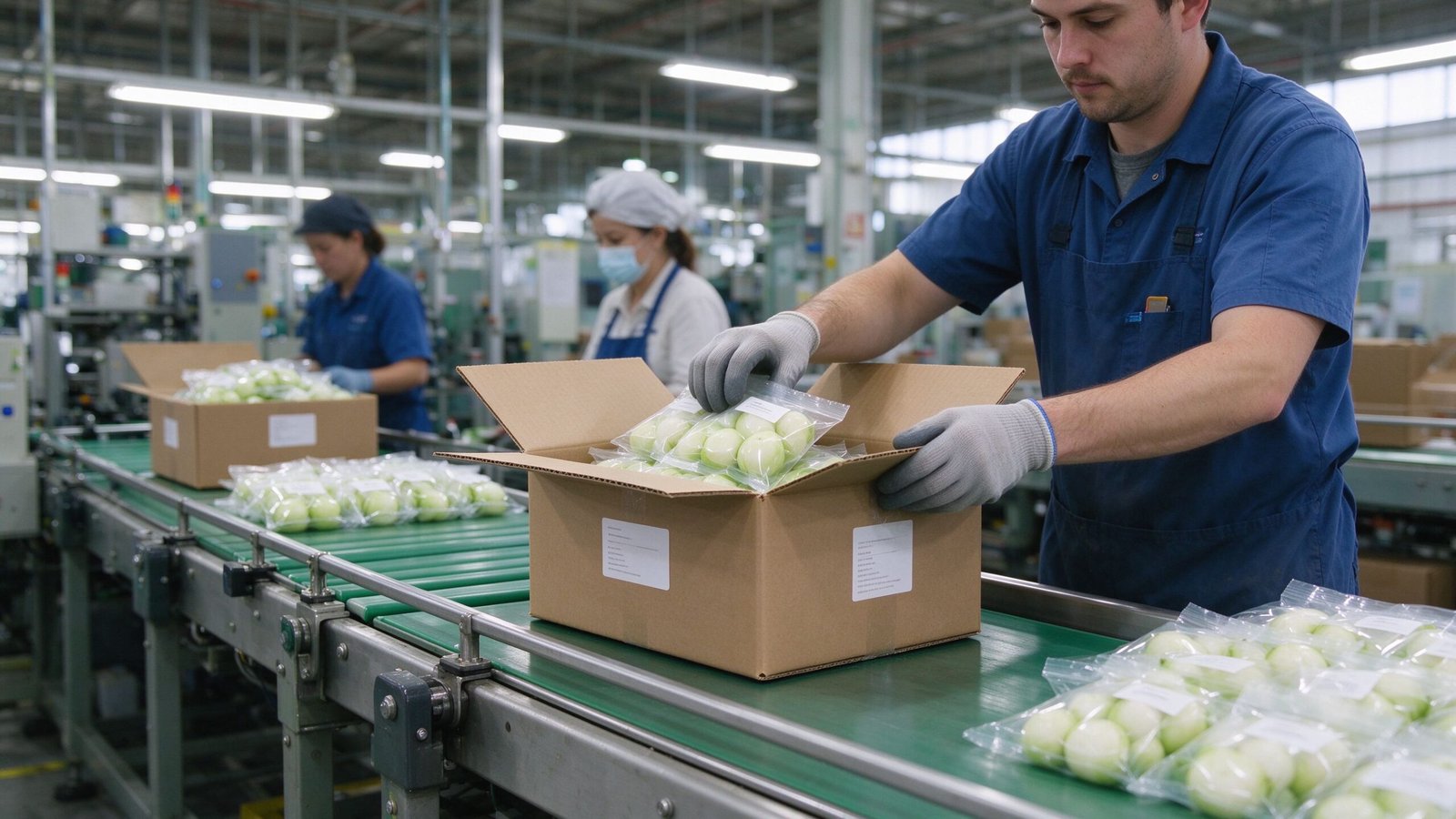
    Packaging and labeling are easy to overlook — and easy to get wrong. Incorrect labels cause customs delays, marketplace penalties, and customer returns.

    Why Packaging Matters

    Your carton and product packaging protect goods in transit, comply with regulations, and sell your brand. Weak packaging causes damage claims; wrong labels cause customs holds.

    Packaging Standards to Specify

    • Carton size and weight limits (avoid overweight cartons)
    • Inner packing materials — foam, bubble wrap, dividers
    • Drop test and compression requirements
    • Moisture protection for sea freight

    Labeling Requirements

    • Country of origin marking (“Made in China”)
    • Product safety and warning labels (CE, FCC, Prop 65)
    • Fiber content and care labels for apparel
    • Barcode and serial numbers if required

    Common Labeling Mistakes

    Missing origin marks, incorrect language (French labels required in Canada), and wrong compliance marks top the list. Send your factory an approved label artwork file before production.

    Get It Right the First Time

    Specify packaging and labeling in your contract, review proofs before mass production, and verify cartons during inspection. Ask us to review your packaging specs for free.

  • Product Certification in China: CE, FCC, RoHS Explained

    Product Certification in China: CE, FCC, RoHS Explained

    Product certification CE FCC RoHS

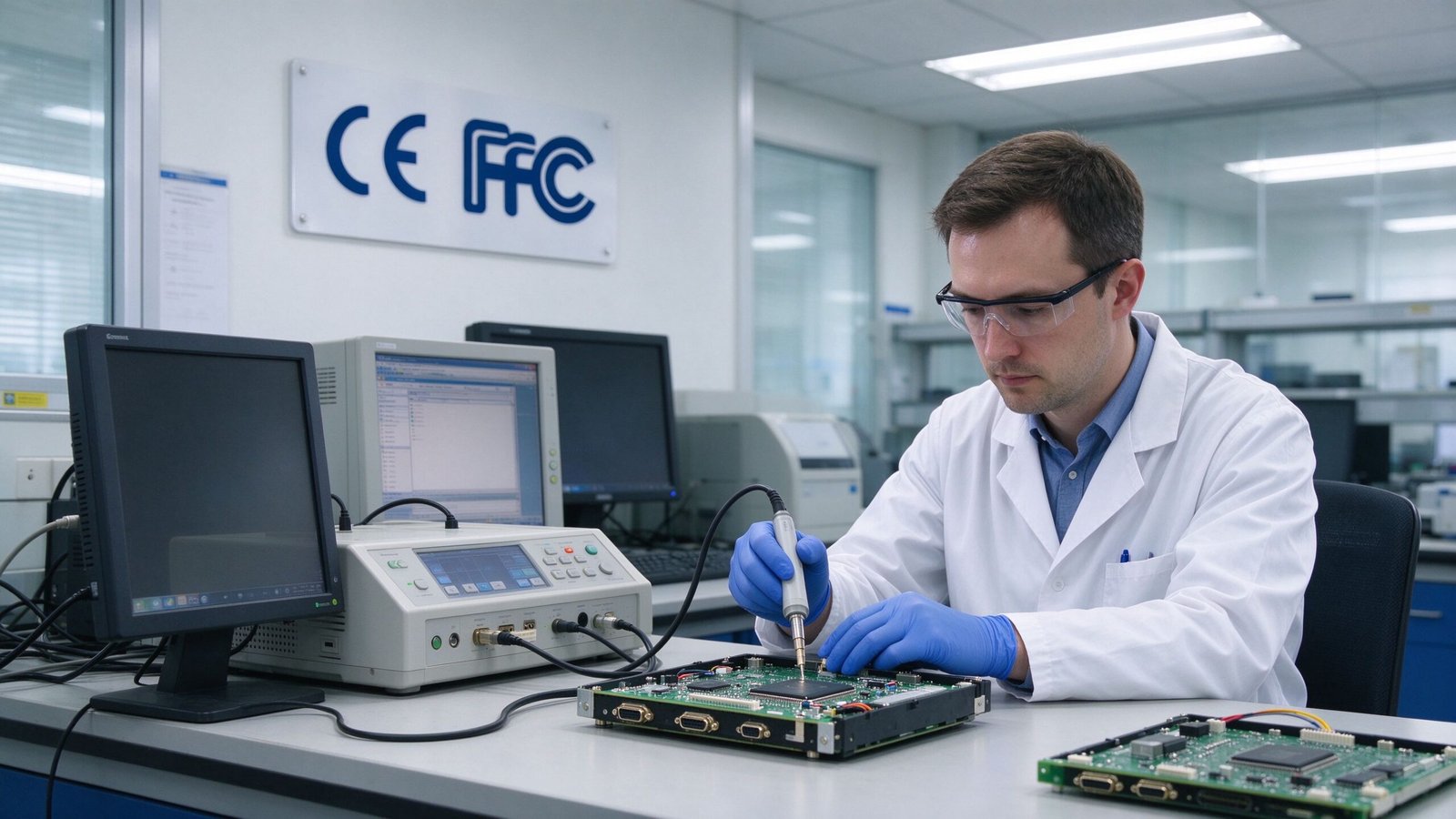
    Your product can’t enter many markets without certification. Understanding CE, FCC, and RoHS — and what your factory must provide — prevents customs rejections and fines.

    Why Certification Matters

    Certificates prove your product meets safety, electromagnetic, and environmental standards. Without them, customs can hold your shipment, and marketplaces can delist your listing.

    CE Marking

    CE is required for many products sold in the European Economic Area — electronics, toys, machinery, medical devices. It covers safety, health, and environmental protection requirements.

    FCC Certification

    The FCC regulates radio frequency and electronic devices sold in the US. Most electronics need FCC testing and authorization before import.

    RoHS Compliance

    RoHS restricts hazardous substances like lead and mercury in electronics. Compliance is mandatory for selling in the EU, with documented test reports required.

    How to Get Certified

    Ask your factory for existing test reports and certificates first — many already have them. If not, a certified lab (TUV, SGS, Intertek) can test samples and issue certificates. Factor cost and 2–4 weeks of lead time into your plan. Verify your product’s certification requirements with our experts.